


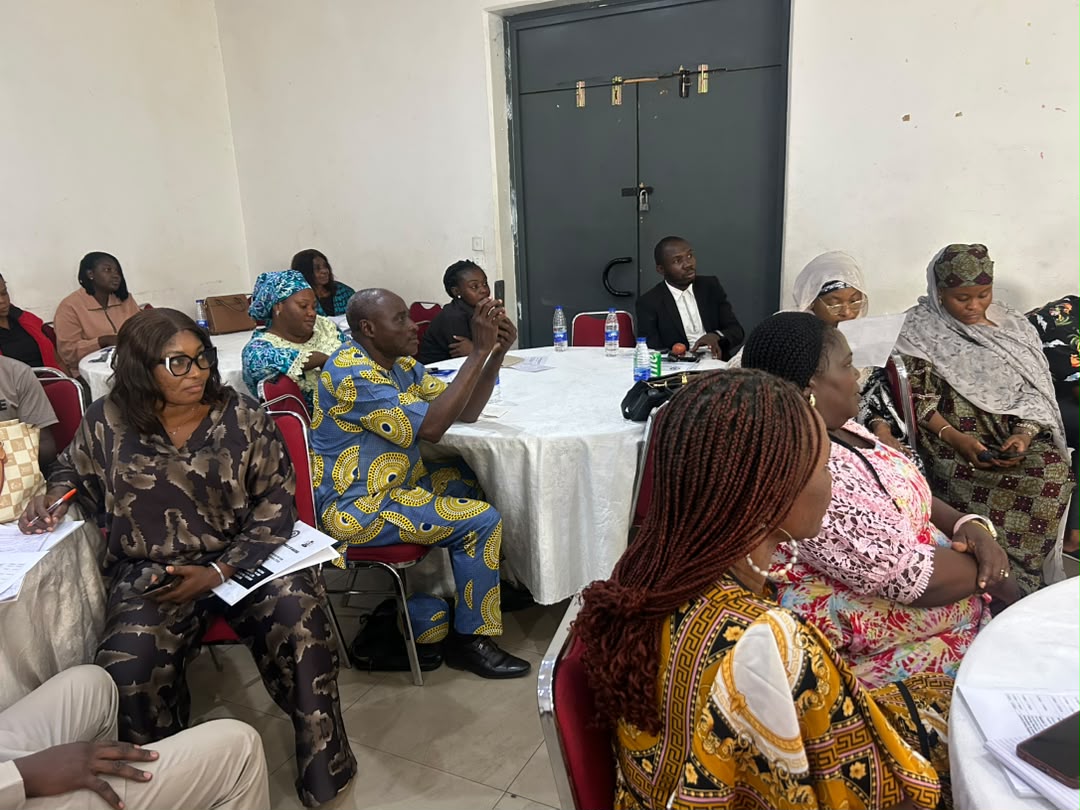
The National Commission for Persons with Disabilities (NCPWD) has intensified efforts to promote genuine inclusive education in Nigeria with a one-day sensitisation workshop for Head Teachers and Principals of public and private schools in the Federal Capital Territory (FCT), Abuja.
Organised by the Education Unit of the Commission, the workshop was aimed at strengthening the implementation of inclusive education and moving it from policy to practice. It focused on key national frameworks, including the Discrimination Against Persons with Disabilities Act, 2018, the Persons with Disabilities Regulations, 2023, the National Policy on Inclusive Education, 2023, and the National Standard Operating Procedures on Inclusion and Access of Persons with Disabilities to Pre-tertiary Education, 2025.
Declaring the workshop open, the Executive Secretary of the Commission, Hon. Ayuba Burki Gufwan, represented by the Head of Education Unit, Dr. Kehinde Ogunbiyitan, said inclusive education goes beyond admitting learners with disabilities into regular classrooms.
He stressed that it requires schools to ensure that every learner can access, participate in, learn and succeed within an education system that recognises and responds to diversity. According to him, schools must identify and remove barriers in their environments, teaching practices, communication, assessment, infrastructure and policies.
Gufwan noted that school leaders are central to the success of inclusive education because their decisions can determine whether a child with a disability feels welcomed, supported and valued or excluded.
He urged participants to share their experiences, identify challenges and explore practical solutions, stressing that disability should never be a reason to deny any child access to quality education.
Speaking on the objectives of the workshop, Dr. Ogunbiyitan said it was designed to sensitise school heads in the FCT on the National Policy on Inclusive Education and the Standard Operating Procedures (SOP) for inclusion and access to pre-tertiary education.
He explained that the policy documents and frameworks were developed by the Federal Ministry of Education and the NCPWD, adding that building the capacity of school heads was essential because they play a critical role in implementation.
Ogunbiyitan described the workshop as impactful and engaging, noting the strong motivation among participants. He said the Commission would continue to strengthen capacity-building and sensitisation programmes on inclusive education.
He urged participants to return to their schools and step down the training to teachers, while also establishing School-Based Committees for Disability Inclusion to oversee implementation of the SOP and identify accessibility challenges.
The Education Unit head assured schools that the Commission was willing to provide support and collaborate with relevant stakeholders to make schools more accessible and inclusive.
On funding challenges, Ogunbiyitan acknowledged that resources remained a major concern but stressed that political will and effective utilisation of available resources were equally important.
He said the Commission would continue to organise capacity-building programmes as funding permits, including programmes that do not require significant capital, and encouraged schools to invite the Commission to conduct training for their teachers.
According to him, the need for the sensitisation was driven by the continued exclusion of many learners with disabilities from meaningful participation in education. He stressed that there is a difference between being physically present in school, being integrated and being truly included.
He said the Commission was therefore working to address communication, institutional and other barriers that prevent learners with disabilities from fully participating in education.
Also speaking, the Technical Adviser to the Commission, Dr. Adebayo Adebukola, said disability inclusion requires more than basic school facilities, security and qualified teachers.
He stressed the need for schools to have special education teachers who can support learners with disabilities, as well as accessible physical environments that enable children with disabilities to access schools from their homes.
Adebukola also highlighted the need for appropriate assistive and adaptive learning tools, including Braille for learners who are blind and sign language interpreters for Deaf learners, describing them as essential to effective learning and participation.
The workshop ended with participants committing to champion inclusive education and work towards making their schools more accessible, supportive and inclusive for learners with disabilities.
Join Inclusive News Network WhatsApp Community For Quick Access To News and Happenings Around You.