


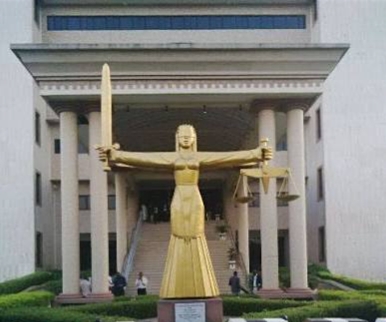
A Federal High Court in Abuja has commenced proceedings in a ₦66 trillion class action suit filed by a group identifying itself as pioneers of Nigeria’s disability civil rights movement over alleged decades of discrimination, marginalisation and systemic neglect of persons with disabilities.
The suit, marked FHC/ABJ/CS/1824/2026, came before Justice Salim Olasupo Ibrahim on Thursday, November 5, 2026, with the claimants seeking general, structural and punitive damages on behalf of more than 40 million Nigerians with disabilities and other vulnerable groups.
According to a statement issued by the Pioneers of Nigeria’s Civil Rights Movement News Network, the ₦66 trillion claim is based on a valuation of ₦1 trillion for each of the 66 years since Nigeria gained independence in 1960. The group said the amount represents what it described as decades of institutionalised neglect, exclusion, state failure and historical trauma.
The claimants have also extended the action to include Almajiris, internally displaced persons, victims of human trafficking, wounded veterans and first responders, while arguing that the consequences of structural exclusion affect the wider Nigerian population.
Lead pro bono counsel, Barrister Victor S. Labesa Jr., appeared alongside Polaris Solicitors, led by Muhammad Muhammad Abubakar, at the opening proceedings before Justice Ibrahim.
The plaintiffs argued that Nigeria had failed to sufficiently transition from the traditional charity-based approach to disability to a rights-based framework, despite adopting the United Nations Convention on the Rights of Persons with Disabilities (UN CRPD) in 2006.
They maintained that, 20 years after the adoption of the convention, persons with disabilities continued to experience discrimination and exclusion rather than being recognised as individuals with equal rights, autonomy and the capacity to make decisions about their lives.
The statement accused successive administrations at the federal, state and local government levels of failing to fully implement key provisions of the UN CRPD, particularly those relating to equality, non-discrimination, legal capacity, access to justice, participation in public life and independent monitoring.
The plaintiffs also raised concerns about what they described as a connection between prolonged social trauma, insecurity and mental health challenges, linking terrorism, kidnapping, banditry, food insecurity and displacement to what they termed a “trauma-insecurity pipeline”. They argued that the psychological consequences of these challenges had not received adequate recognition or culturally appropriate attention.
Beyond government accountability, the suit reportedly raises allegations concerning governance and leadership within Nigeria’s disability community. The plaintiffs accused some individuals of operating under what they described as an unregistered 2011 constitution of the Joint National Association of Persons with Disabilities (JONAPWD).
They also cited a 2023 judgment of the High Court of Cross River State in Suit No. HC/336/2022, claiming that Justice Ayade E. Ayade described the disputed document as a “worthless paper” and recognised the 2008 Corporate Affairs Commission-registered constitution as the valid governing document.
The plaintiffs further alleged that elections, tenure arrangements and other administrative decisions conducted under the disputed constitution were invalid. However, these claims remain part of the plaintiffs’ position in the ongoing legal action.
The group said the case would rely on provisions of the Nigerian Constitution, domestic legislation implementing international treaties and foreign judicial authorities on large-scale class actions and court-supervised mediation.
Among the authorities cited were Abacha v. Fawehinmi, the Supreme Court decision in AG Kogi State & 18 Ors v. AGF, and litigation involving former National Football League players in the United States over concussion-related injuries.
The plaintiffs said they were seeking a court-supervised mediation and oversight framework similar to the approach adopted in the US concussion litigation.
As part of its next steps, the group announced plans to commence a nationwide Freedom of Information campaign ahead of the next hearing, scheduled for January 27, 2027.
It said it would invoke the Freedom of Information Act 2011 to obtain financial records and other government documents relating to decades of public expenditure and budgetary allocations for persons with disabilities and other vulnerable populations. The information, according to the group, would help establish evidence for possible mediation.
The statement described the lawsuit as a major effort to secure accountability for what it called 66 years of state-sanctioned charity, 20 years of failure to implement the UN CRPD and 13 years of alleged internal governance irregularities within the disability community.
However, the ₦66 trillion demand and the allegations of discrimination, government neglect and internal governance failures remain claims advanced by the plaintiffs. The opening proceedings did not establish that the court had made any substantive finding validating the claims or awarding the damages sought.
The case is expected to return before Justice Ibrahim on January 27, 2027.
Join Inclusive News Network WhatsApp Community For Quick Access To News and Happenings Around You.