


By Inclusive News Network | Chukwunyere Kelsey Nwosu. Abuja, Nigeria | September 29, 2026.
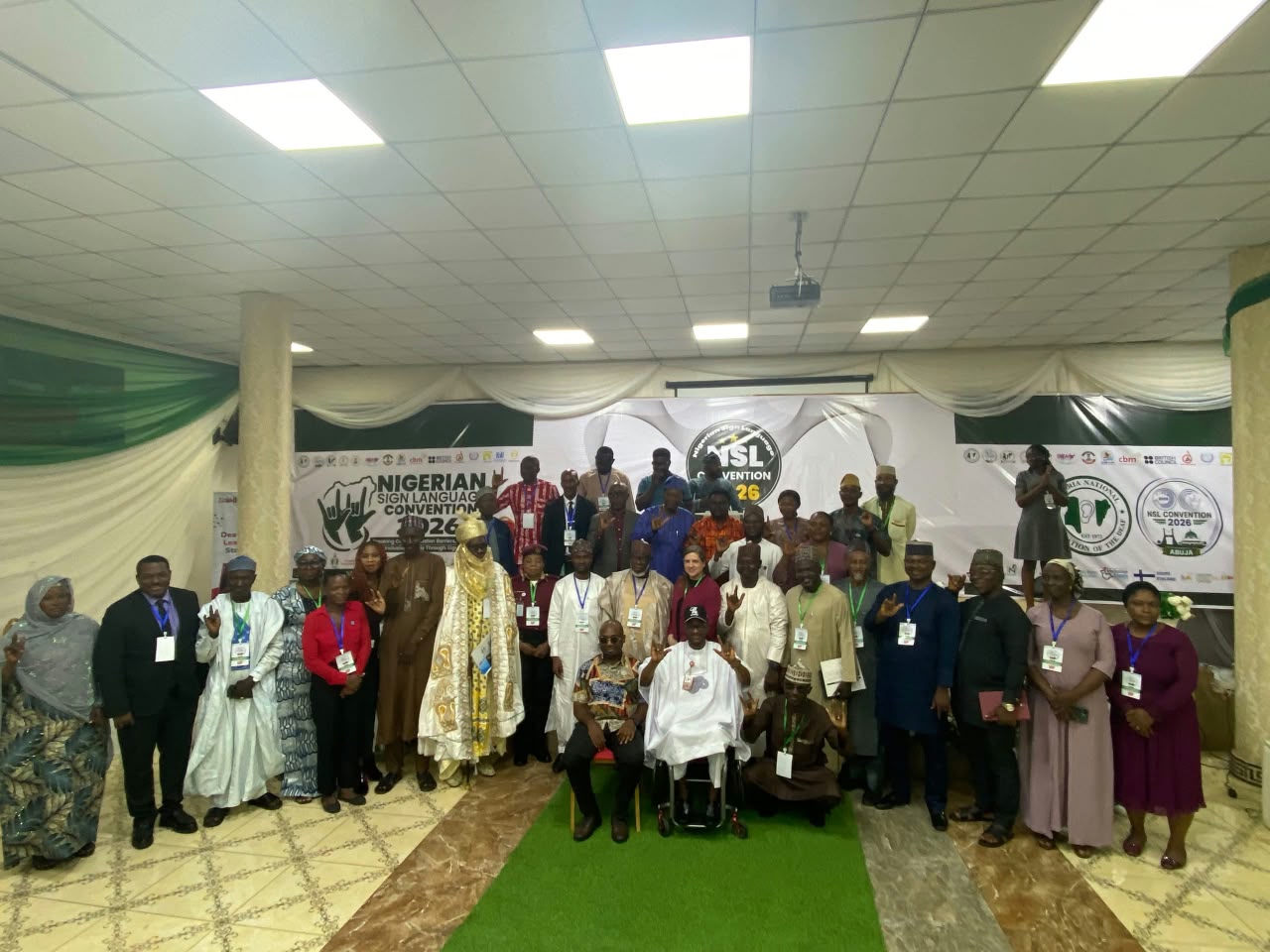
The call for the legal recognition of Nigerian Sign Language (NSL) took centre stage in Abuja on Tuesday, September 29, as Deaf leaders, educators, government representatives, disability rights advocates, development partners and other stakeholders gathered for the Nigerian Sign Language Convention 2.0.
Held at Pave Hotel, Kado, Abuja, the convention was organised by the Nigeria National Association of the Deaf (NNAD) under the theme, “Declaring Deaf People’s Rights Through the Recognition of Nigerian Sign Language.”
The event formed part of the activities marking the International Day of the Deaf and International Day of Sign Languages and preceded the Association’s 36th Annual General Meeting, scheduled for September 30.
The convention brought together members of the Deaf community from different parts of Nigeria, alongside national and international partners, to deliberate on language rights, education, healthcare, employment, accessibility, social participation and the need for a stronger legal framework for Nigerian Sign Language.
“Our Language Matters”
Opening the proceedings, event anchor Timothy Tina set the tone for the gathering by stressing that the convention was more than a ceremonial celebration.
He told participants that the gathering was an opportunity to send a message that the language of Deaf Nigerians matters and deserves recognition and protection.
The emphasis on language rights was central throughout the event, with speakers repeatedly connecting the recognition of Nigerian Sign Language to broader questions of equality, dignity and participation.
NNAD President: Recognition Must Become Law
The National President of the Nigeria National Association of the Deaf, Mallam Muhammadu Haruna Tsafe, used his welcome address to intensify the call for the official recognition of Nigerian Sign Language.
Tsafe said the Nigerian Sign Language Convention serves as a platform through which the Deaf community advocates for the official recognition of NSL and seeks the technical and legal expertise required to translate the demand into law.
According to him, legal recognition is necessary to improve Deaf people’s access to education, healthcare, employment and other essential areas of life.
He also linked the campaign to Nigeria’s obligations under international and regional disability rights frameworks, including the United Nations Convention on the Rights of Persons with Disabilities (CRPD) and the African Disability Protocol.
For the NNAD President, recognition of Nigerian Sign Language is fundamentally a question of equal citizenship.
The Deaf community, he argued, consists of Nigerians who are entitled to the same rights and opportunities as other citizens.
Prof. Saleh Shehu Highlights Education and Inclusion
Among the prominent figures recognised at the convention was Professor Saleh Shehu, Executive Secretary of the National Senior Secondary Education Commission (NSSEC), who was identified as one of the keynote speakers.
His presence was significant given the central place of education in discussions surrounding Deaf inclusion.
Participants stressed that meaningful recognition of Nigerian Sign Language must extend beyond legislation to the classroom, where Deaf children and young people require accessible teaching, qualified personnel and learning environments that recognise their linguistic needs.
The convention also acknowledged the role of educators and institutions in advancing opportunities for Deaf learners and strengthening the teaching and development of Nigerian Sign Language.
Prof. Rufa’i Ahmad: Rehabilitation and Disability Inclusion
Another keynote figure recognised at the convention was Professor Rufa’i Ahmad, Registrar and Chief Executive Officer of the Medical Rehabilitation Therapists Registration Board of Nigeria.
His participation brought a rehabilitation and professional-services perspective to the broader conversation about disability inclusion.
Access to healthcare and rehabilitation services remains an important concern for persons with disabilities, and participants emphasised the need for communication systems that enable Deaf Nigerians to interact effectively with healthcare providers and other essential service providers.
For Deaf people, communication access is not an optional service. It can determine whether an individual can understand medical information, communicate symptoms, give informed consent or navigate public services independently.
World Federation of the Deaf Representative Joins Nigerian Campaign
The convention also attracted international representation through Susanna Tijani, identified during the proceedings as a Sign Language Rights Officer with the World Federation of the Deaf.
Her participation demonstrated the international dimension of the Nigerian Deaf community’s campaign for language recognition.
Tijani was recognised for travelling to Abuja to participate in the convention and show solidarity with the Nigerian Deaf community.
Her presence also provided an opportunity to connect Nigeria’s campaign with the wider global movement for sign-language rights.
Dr. James Lalu Recognised for Disability Leadership
The convention also paid special recognition to Dr. James David Lalu, the pioneer Executive Secretary of the National Commission for Persons with Disabilities (NCPWD).
Lalu was described during the proceedings as a long-standing friend and advocate of the Deaf community.
His presence was particularly significant to participants because of his previous leadership of the national disability commission and his broader involvement in disability rights advocacy.
The recognition of Lalu also reflected one of the recurring themes of the convention: the importance of allies who work alongside organisations of persons with disabilities to advance equality and inclusion.
Experts and Allies Strengthen the Conversation
Other individuals recognised during the proceedings included Dr. Jamilu Umar Usman, who was described as a teacher, academic and long-standing supporter of the Deaf community.
The convention also recognised Professor Ahmad Gudaji, identified during the proceedings as an Executive Commissioner and an advocate who has supported the Deaf community.
Representatives of the Federal Fire Service, Disability Rights Fund, NPF Microfinance Bank, Nigeria Postal Service and National Directorate of Employment were also among the participants acknowledged at the event.
Their participation highlighted the multi-sectoral nature of the barriers faced by Deaf Nigerians.
Language accessibility intersects with virtually every major public service, including education, employment, banking, healthcare, emergency response, government communication and access to justice.
From Advocacy to Legislation
A major issue running through the convention was the need to move from advocacy to concrete legislative action.
The NNAD has been advocating for the passage of the Nigerian Sign Language Bill, which seeks to establish a stronger legal and institutional framework for the recognition and development of Nigerian Sign Language.
The Association’s advocacy intensified during a Deaf community rally and awareness walk in Abuja on September 28, where the passage of the Bill was among the key demands.
The proposed framework has also been discussed in relation to the establishment of a Nigerian Sign Language Council, which would have responsibilities relating to the development, regulation and standardisation of the language.
The campaign therefore goes beyond recognition in name. Deaf leaders are calling for a framework capable of supporting the practical use and development of NSL across Nigerian institutions.
Recognition Must Translate into Everyday Access
For participants, the question is not simply whether Nigerian Sign Language should be acknowledged as a language.
The bigger question is what recognition would mean for a Deaf child entering school, a Deaf person visiting a hospital, a Deaf job seeker attending an interview, a Deaf entrepreneur accessing financial services, or a Deaf citizen attempting to engage with government.
Without appropriate communication systems, formal recognition alone would not automatically eliminate those barriers.
That is why speakers at the convention emphasised the importance of legal recognition, standardisation, education, professional capacity and institutional implementation.
Nigeria and the Global Sign-Language Movement
The convention also drew attention to developments in other African countries.
The NNAD leadership referenced countries including Kenya, South Africa, Uganda and Rwanda, where legal and constitutional recognition of sign language has advanced.
The examples were presented as evidence of what can be achieved when sign-language rights receive formal recognition and institutional support.
For Nigeria, the challenge is to develop a framework suited to its own linguistic, legal and social context while ensuring that Deaf Nigerians enjoy equal rights and opportunities.
A Movement Beyond a Single Convention
The Nigerian Sign Language Convention 2.0 demonstrated that the Nigerian Deaf community’s priorities extend well beyond an annual gathering.
The discussions in Abuja connected language, identity, education, healthcare, employment, human rights and civic participation.
At the centre of those discussions was a straightforward demand: Deaf Nigerians should not have to overcome communication barriers created by institutions that were designed without them in mind.
The participation of NNAD President Mallam Muhammadu Haruna Tsafe, keynote figures Professor Saleh Shehu and Professor Rufa’i Ahmad, international representative Susanna Tijani, disability rights leader Dr. James David Lalu, and other advocates and institutional representatives gave the convention a broad stakeholder character.
As NNAD proceeds with its 36th Annual General Meeting, the attention of the Deaf community and its allies will now turn to the recommendations emerging from the convention and the next steps towards achieving legal recognition of Nigerian Sign Language.
For the Nigerian Deaf community, the message from Abuja was clear: Nigerian Sign Language is not simply a means of communication. It is tied to identity, dignity, participation and the enjoyment of fundamental rights.
The question now is how quickly Nigeria’s legal and institutional systems can translate that demand into concrete action.
Inclusive News Network will continue to report on the Nigerian Sign Language Bill, Deaf rights, accessibility and the wider movement for disability-inclusive development in Nigeria.
Join Inclusive News Network WhatsApp Community For Quick Access To News and Happenings Around You.