


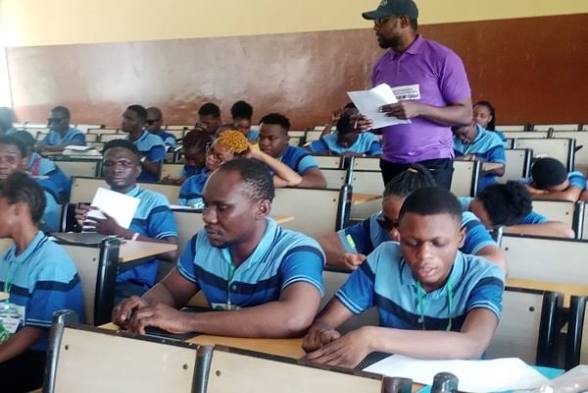
Lagos, Nigeria – The Centre for Infrastructural and Technological Advancement for the Blind (CITAB) has applauded the Joint Admissions and Matriculation Board (JAMB) for its decision to deploy Artificial Intelligence (AI) to improve the conduct of the Unified Tertiary Matriculation Examination (UTME) for blind and visually impaired candidates.
In a statement issued on Monday in Lagos, the Executive Chairman of CITAB, Mr. Jolomi George Fenemigho, described the initiative as a bold and forward-looking step that could significantly expand educational opportunities for blind Nigerians.
However, he cautioned that the success of the innovation would depend on the availability of accessible infrastructure, digital literacy programmes, and specialized training for prospective candidates before implementation.
Fenemigho noted that while AI-powered examinations represent progress, many blind students across Nigeria have had little or no exposure to computers, assistive software, screen readers, or accessible digital learning tools. He warned that introducing AI-based assessments without first addressing these foundational challenges could unintentionally create new barriers rather than promote inclusion.
According to him, true inclusion begins long before candidates enter the examination hall. He stressed that many schools attended by blind learners lack accessible computer laboratories, reliable electricity, and teachers trained to support students using assistive technologies such as screen readers and braille devices.
CITAB therefore urged Local Government Councils and the Federal Government to establish well-equipped resource centres dedicated to blind and visually impaired learners in communities and schools nationwide. The organisation also recommended that these centres be staffed by qualified visually impaired computer instructors, whose technical expertise and lived experiences would enable them to provide effective training and mentorship.
To ensure uninterrupted learning, particularly in rural communities where electricity remains unreliable, the organisation advocated the installation of renewable energy solutions, including solar-powered systems, to support accessible digital learning facilities.
The organisation further called on JAMB and other education authorities to adopt a bottom-up implementation strategy by introducing AI examination tools within schools and resource centres well ahead of their deployment in the UTME. This, CITAB said, would allow blind candidates sufficient time to gain practical experience with the technologies they would encounter during examinations.
CITAB also appealed for stronger collaboration among Local Government Councils, the Federal Government, JAMB, blindness-focused organisations, technology experts, and private sector partners to provide accessible hardware such as screen reader-compatible computers, braille displays, accessible keyboards, and ensure the continuous maintenance of these facilities.
Fenemigho concluded that technology can only become truly inclusive when supported by sustained investment in accessible infrastructure, specialized training, and reliable power supply. He emphasized that if Nigeria genuinely intends to use AI to expand educational opportunities for blind candidates, the necessary systems and support structures must first be put in place to guarantee equal access and meaningful participation.
Join Inclusive News Network WhatsApp Community For Quick Access To News and Happenings Around You.