


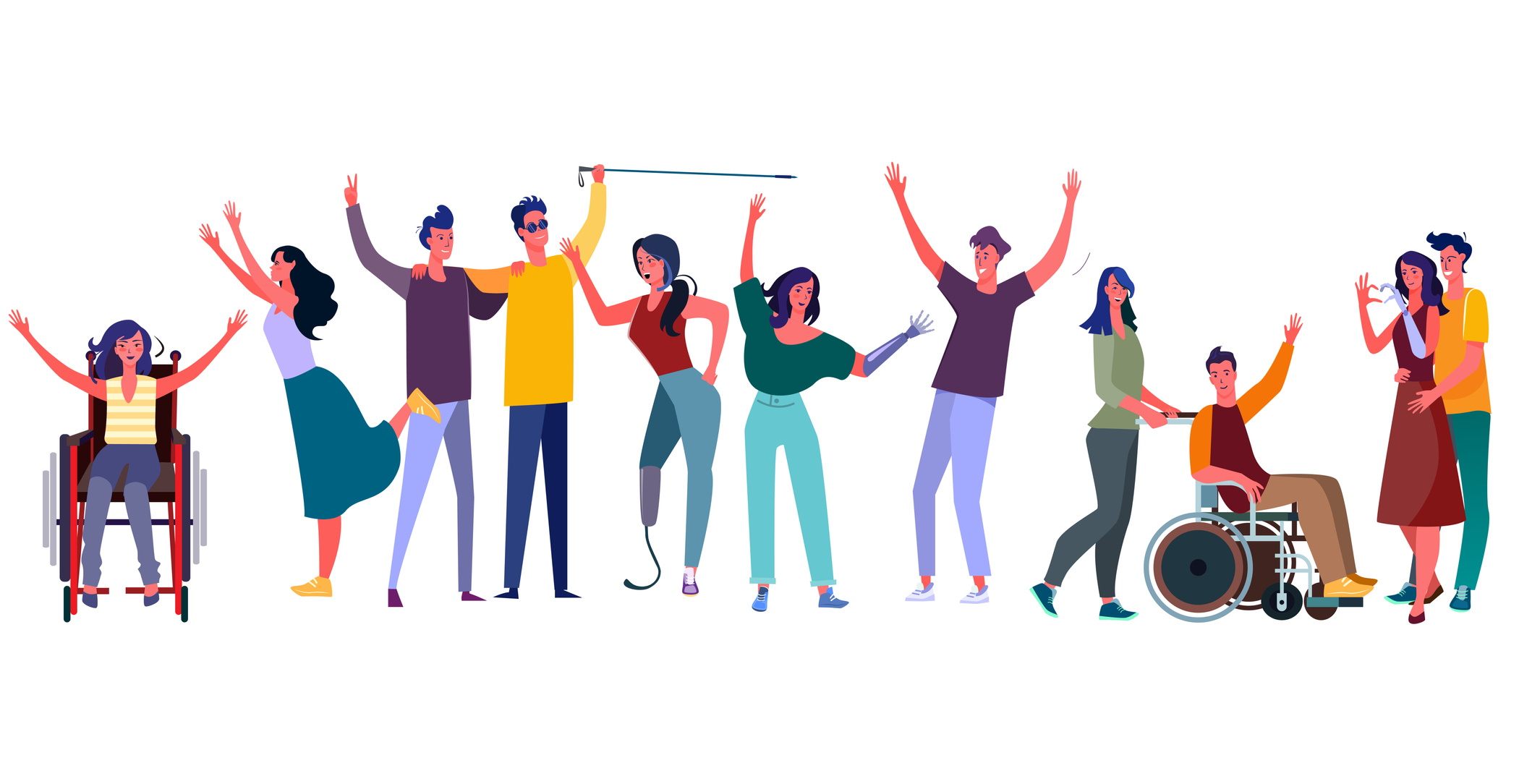
Of over 31 million Nigerians with disabilities, there are only three major disability categories, including the deaf, blind, and the physically-challenged. Limited attention is given to other disability clusters such as folks with intellectual/neurodevelopmental disabilities, learning disabilities, and persons with health exceptionalities.
In fact, it is the people with visual impairment, hearing impairments, and the physically-impaired that have a significant influence on public policies and legislation. In times of agitation for employment and other socio-economic and educational opportunities, the deaf, the blind, and the physically challenged have been individuals who are at the forefront of these struggles.
But competition is rife—among scholars in the field of special education and among ordinary individuals with disabilities, as well as non-disabled members of the society—as to which of these disability categories has superior natural intelligence, or the capacity to learn more rapidly. Are deaf students and individuals more intelligent than the blind and the physically-challenged?
Otherwise, are students with low vision enjoy far superior natural intelligence and record better academic achievement than other clusters? Lastly, people debate whether the physically-challenged students with no significant sensory impairments (with good functional eyes, working ears, and normal brains) enjoy superior ability to process and retain information more rapidly than their disabled counterparts.
It has been a highly contentious debate and there has hardly been a unanimous agreement.
This first segment of this article digs into research and literature developed by scholars around the world regarding the educational implications of disabilities. In the concluding part, we will, in brief, lay out all the talking points in the literature about the unique characteristics of each cluster, and let readers decide which of the disability categories has more natural learning ability, and which is associated with superior academic achievement.
The disabled and Educational challenges
All students and individuals with disabilities suffer one or more inabilities to carry on normal pursuits. People with disabilities experience loss or reduced functionality of a particular body or impairment encountered in interacting with the environment to fully take part in certain activities—be it learning about new information and taking part in everyday physical activities.
All students with disabilities may have significant issues with acquiring education and thus, struggle with academic achievement. The psychological burden that is associated with a disability is also a significant factor.
The blind Student and educational implications
A typical blind student will encounter significant challenges in acquiring information and knowledge with the eyes—as they are also unable to move swiftly and interact smoothly with materials that may aid learning and their psychological wellness.
The deaf Student and educational implications
Academic underachievement of deaf and hard-of-hearing students has been the focus of intense studies among scholars and researchers in special education and educational psychology. A typical deaf or hard-of-hearing student, as a consequence of their hearing loss that s effective for collecting information, encounters a significant challenge with classroom experiences.
The physically-challenged student and educational implications
And for the physically-challenged– who in most cases suffer multiple handicaps—have significant difficulties with learning—in terms of the grueling physical efforts necessary for acquiring academic instructions. Many would often require mobility aids and other mobile assistive devices, such as a wheelchair, crutches, and motorized (customized) footwears to aid mobility.