


Have you noticed–the world is getting “smaller” day after day. New systems and procedures are rapidly emerging—in medical sciences and technology, in anatomy and mechanics. Innovations are sprawling in virtually all disciplines.
It really is amazing, and there has never been anything like it.
Might it occur to you that these new-trend transformations are not only making our world better and better—but also making it “smaller” and “smaller”? Used-to-be-impossible things have now become incredibly possible. Complex entities are now fast becoming profoundly simpler.
In education, long ago experts had wondered about how learners with special needs or disabilities could get as much and good as education as did normal people. There had to be a way to make sure education was more uniquely accessible to children with disabilities like their non-disabled counterparts.
Then there was massive, all-embracing legislation!
In talking about US-originated pieces of legislation, such as the Individuals with Disabilities Education Act (IDEA), an important element of this law is the mandate that all children with disabilities, including children with learning disabilities which accounts for roughly 50% of all students receiving special education in the United States be educated according to their unique needs by virtue of their Individual Educational Plan.
Today, thanks to such innovations in educational practices, more and more individuals with disabilities are now enrolled in special and segregated schools, residential schools, and inclusive schools.
These are some of the innovations in education—inventive ideas to make sure that no child—regardless of their disability— is left behind.
Indeed, among many others, inclusive education has been one of the most interesting educational inventions in this century. Inclusive education has helped millions of learners with disabilities to integrate into society and achieve far more they would otherwise accomplish should they attend a special school.
While special schools have their own unique advantages, several studies have supported the distinctiveness of inclusive education.
Perhaps the greatest problem is the level of unawareness of the true meaning of inclusive education among disabled leaders and special educators in Nigeria.
As famous as the word “Inclusive education” has gotten in this time, it has considerably been misunderstood and abused. A whole lot of people, particularly in the disabled community in Nigeria are oblivious of the principles and significance of inclusive education. We probably understand inclusion in theory and concept, but not in practice and exercise. And that’s a problem.
An amazing number of special education teachers do not care for what inclusive education or inclusive schools practically entail.
There were accounts of newly-recruited Deaf teachers in Oyo State, who after being posted to inclusive schools, were aggressively agitating that classes be separated because they did not want deaf students to be mixed with hearing students. In their hidden chronicle, deaf teachers were saying that deaf people could never be mixed with hearing people because hearing people are not trustworthy.
Perhaps the same went for other physically-challenged special educators who only wished they only had physically challenged students in their classroom.
Apart from the fact that assertions like these divide us as a people—in an era when we need to stick together—people get the wrong idea of what inclusive education is all about. And that’s a problem.
Calls and agitations for separate classes in government schools between students with disabilities and the non-disabled counterparts would always be met with a brick wall.
An inclusive school is designed to be an inclusive school. It is never going to work out if we try and change it or have it diluted to satisfy our passions.
What is Inclusive Education?
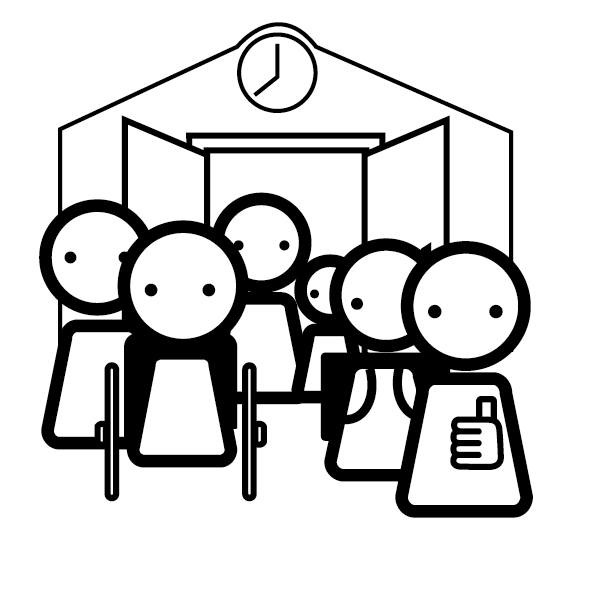
Inclusive education is a learning arrangement where the child with a disability receives instruction in the general education classroom at least 80% of the day. In an inclusion arrangement, teaching takes place in the general classroom disproportionately, and special educators and paraeducators are strategically stationed outside of the regular classroom with a limited group of students with various disabilities, such as the deaf and hard-of-hearing.
Here are TEN (10) fundamental principles of true inclusive education
- Inclusive education is tolerance. Tolerance is acceptance of others’ cultures, systems, and practices even though these cultures and beliefs are in a somewhat opposite direction with ours. It’s essential to have a spirit of togetherness. That’s how to get ahead. It is how to go farther.
- Inclusive education is about all of us, not us and them. If inclusive education is to work well, every community and minority, including factions and parties must recognize that regardless of our differences, we are one nation under God; that what binds us together is greater than what drives us apart.
- Inclusive education is about bringing learners together: Inclusive education isn’t isolation: Inclusive education isn’t saying we are deaf, we are blind, we are quadriplegics, and so we are different than others, and we need to separate ourselves and our classes from others who aren’t deaf, blind and quadriplegic. That’s a self-destructive notion.
- Inclusive education is about TWO, not ONE. Inclusive education isn’t singular. Inclusive education is plural. Inclusive education isn’t mono-cultural. Inclusive education is bicultural. Inclusive education is a multiplicity. It is variance and diversity- banding together bodies despite differences and attitudes for the mutual advancement of all.
- Inclusive education is bridging differences: Inclusive education is about finding less and less of what makes us different, rather than looking for more and more for what makes us distinct. Inclusive education is about closing divides.
- Inclusive education denounces aggression toward others, but advocates for the treatment of others with dignity. Everyone, regardless of sex, station, and disability status, deserves respect. Inclusive education is about treating others with dignity and respect even though we do not know them or we do not agree with them.
- An inclusive education finds common ground. Regardless of the weight of differences and arguments between peoples or a people, an inclusive spirit would look for common ground- and opportunity for closure or agreement.
- Inclusive education attracts not repels. An inclusive spirit accepts. It considers. It accommodates. It draws in. it adopts. It adapts.
- Inclusive education is less sensitive, more stoic, more compassionate: Inclusive education does not easily take offense. It’s has reduced antennae, increased empathy, and a constantly developed sense of earthiness.
- Inclusive education is broad-mindedness. An inclusive spirit isn’t narrow-minded. It’s liberal, yet firm. It’s sophisticated, yet restrained. It’s teachable, yet principled. With an eclectic intake, a broad mind sees wide and wild.
Inclusive education is more than enacting and implementing a piece of legislation or policy that achieves varieties. Inclusive education is culture. It’s a unifying attitude with no technicalities. It is about addressing inequalities. if we, as a community of learners with disabilities, want a real change in government priorities that improve our educational resources and opportunities, a change in our own attitude- how we see the world and our neighbours who may not share the same struggles and strains that we do–is important. But essential to our shared future and prosperity as a community of the disabled is our understanding and acceptance of the principles and practice of inclusive education.