


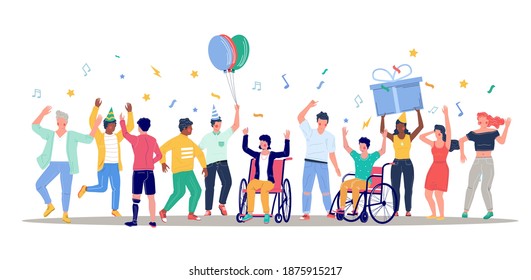
It has been an incredibly challenging year for all people–disabled and non-disabled. For people with disabilities, yet, it’s been an especially hard-hitting and dangerous year for this population. Exclusion still exists, including discrimination, marginalization, and lack of unfettered mobility, and access to information and economic and political opportunities.
A bad economy and a pandemic have made life even more aggravated for people with disabilities. Unable to perceive the communications of others, unable to speak up, and unable to access healthcare institutions, people with disabilities are in experiencing physical and psychological distress, chronic illnesses, and are at higher risk from Covid-19.
PWDs have been dying at higher rates, especially in congregate care facilities, according to a recent UN report.
Holidays for people with disabilities always pose both difficulties and opportunities for innovation. Looking at how people with disabilities experience the holidays even in typical years can teach members of society about how to make the best of less than ideal situations, and find comfort and pleasure in the unexpected.
Physical and/or psychological impairment is hardly a fun thing. Is it?
- Let PWDs know that you genuinely love them. This is a season of giving, loving, and gratitude. It is not a time for patronizing behaviours toward people with exceptionalities. Like everyone, people with disabilities have needs: a need to love and be loved genuinely; a need to give and to be given. PWDs understand the significance of gifting and receiving because it fosters bonding and relationship between people. PWDs place great emphasis on relationships and individuals appreciate authentic bonds.
- Take them out. Spend quality time with PWDS: Many PWDs would love to get together with family and friends for holiday parties and celebrations but are limited by accessibility problems, chronically poor transportation, and other logistical barriers to travel and full participation. PWDs can’t visit every house or party location. They may need to sit in a certain chair or take a certain place at the table so they can better lip-read. Limited by impairment, people with disabilities can’t always come and go as they please. It is interesting to learn that some PWDs need rides from other friends or family.
- Understand that PWDs have unique feelings and needs. Different disabilities prompt different responses from others, including from family and friends. Some disabled people are showered, even overwhelmed with love, acceptance, and nurturing. Other disabled people are more often treated as annoyances, disappointments, in the way. Family feeling and loyalty alone don’t guarantee a supportive attitude or appropriate behavior towards disabled people. Some mean well – mean the best really – but simply don’t understand disability in general, or their disabled child, parent, spouse, or cousin in particular.
- Be their family. The first thing to remember is that not all disabled people have loving, extended families to celebrate with. It’s an unfortunate stereotype that we are all lonely and unmarried. Most disabled people do have family and friends to celebrate with. But some of us aren’t married, attached, or close to large families.
- Ask them directly what they want. do a direct needs assessment of the needs of people with disabilities. A heartbreaking experience that’s learned of is the principle of, “Does he take sugar?” The anecdote here is that of someone who in a bid to serve a person with a disability tea or coffee decides to ask the caregiver of the disabled person whether he or she takes sugar or not when they could simply have asked the person by themselves. For some reason, they would never look you in the eye with excitement and ask if you want sugar. They would rather ask another person on your behalf.
A scenario of such typifies how persons with disability are treated amongst us. Rather than doing a direct need assessment of the support desired by persons with a disability, we tend to make a whole of assumptions. No wonder persons with disabilities often say “nothing for us, without us.”
All of these factors and more can make holiday events as anxious emotionally draining as they can be joyous and fulfilling. It’s true for everyone of course, but people with disabilities must often contend with extra layers of potential difficulty and worry.
Meanwhile, hopefully, we can all look forward to better, safer, more welcoming, relaxing, and accessible holidays in 2021!
Have a wonderful Christmas!