


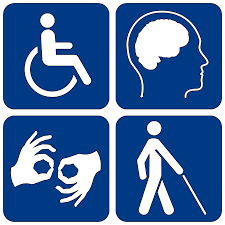
Every type of disability is unique—unique in that each requires a specific kind of management and support strategies in order for an individual to live life to the fullest.
Deaf people, for instance, would certaintly require a number of life skills that effectively manage their ability to cope with communication and social difficulties they encounter. People with visual impairment also require unique life skills that manage their mobility challenges.
Indeed, every disability is unique. From indidvidual with Alibinism to people with physical impaimment and children with intellectual disabilities and hydrocephalus, life skills are essentail as they help individuals to navigate the world with relative strain.
Life skills encourage independence, promoting healthy choices in an individual’s everyday life.
It is important for us to take control, making choices and deciding what is important for us. Each having effective life skills as a person with a disability to enable one to live the most independent life possible. Acquiring life skills for the disabled is like self-empowerment. you to learn and maintain skills for life and support you to live as independently as possible
However, there are universal self-care support skills that are essentail to the personal and professional development for all people with disabilities .
Ours is a society that has become increasingly indifferent to the “needs” of people with disabilities. Society has continually demonstrated stereotyping, discriminatory and stigmatizing attitudes and behaviours toward people with disabilities. And it is time for people with disabilities to take personal responsibilities for themselves—to engaging in attitudes and practices that enable them to live emotionally-healthy lives.
Below are top SIX psychosocial and functional life skills for people with disabilities
- Emotional self-regulation/anger management skills. You should have a more relaxed appriach to life. Don’t be too quick to get angry. The way to control one’s anger is to walk from the situation for a while. You will deal with better when everyone, including yourself , is feeling calmer.
- Managing time. It is important to set realistic goals, priotize wisely, and set a time limit to complete a task. Effective time management can help an indidvidual to manage stress pretty effectively.
- Proficiency to manage stress. Take breaks from from social media and find time and take care of yourself; take care of your body, and make time to relax. Yet, it is important to connect with others and members of your community.
- Ability to use technology. The world has changed a great deal. Advances in technology has required a brand new knowledge and practical skills for individuals, particulaly, people with disabilities who have a pretty significant amount of impairment.
- Ability to be assertive, cultivate confidence. It is important to learn to be assertive, tolearn to speak up about deepest feelings and beliefs despite potential consequances. Learning to be self-assertive can help us be a better communicator and achieve self-confidence.
- Ability to accept responsibility, criticism. It is smart to be tolerant—receptive of the opinions of others. What this means is that we should be broad-minded. We should allow for different ideas and opinions to collide. We should learn from the constructive criticisms of others.
Appropriate life skills, in combination with job training and higher education, can push to a path of personal and professional independence . Because many people with disabilities are just as capable as others by using modified means to complete tasks, there’s no reason employment, for example, has to be a problem. The higher level of education or skill a person has, the easier he or she will find and keep gainful employment.
Other importanht life skills include problem solving, critical thinking, communication skills, decision-making, creative thinking, interpersonal relationship skills, self awareness building skills, empathy and coping with stress skills.