


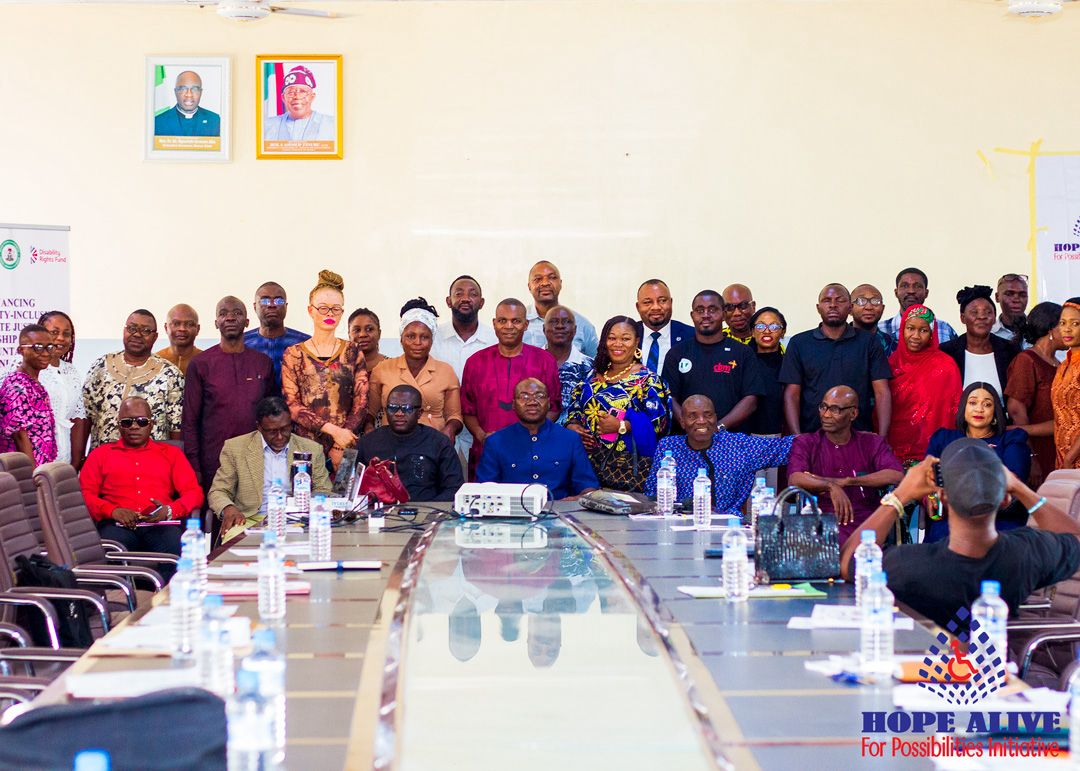
By Kelsey Chukwunyere Nwosu, INN Reporter
Makurdi, Nigeria — Persons with disabilities (PWDs) in Benue State have welcomed the passage of the state’s Climate Change Law by the Benue State House of Assembly, describing it as a major shift toward inclusive governance in climate action.
The legislation, passed on March 31, 2026, followed months of stakeholder engagement and public consultations aimed at establishing a legal framework for climate response in the state.
Reacting to the development, the disability community, through the Joint National Association of Persons with Disabilities (JONAPWD), said the law marks a significant recognition of the role of marginalized groups in shaping climate policies.
Ms. Jacinta Igwilo, Chairperson of the Albinism Cluster in Benue State, noted that the new law goes beyond environmental protection by embedding inclusion into climate governance structures.
“This is not just a climate law; it is a governance reform that acknowledges that those most affected by climate change must be part of decision-making,” she said.
Representation and Climate Justice
A key provision in the law guarantees the inclusion of women and persons with disabilities in the governance structure of the proposed State Council on Climate Change.
Stakeholders argue that this is critical, given that climate impacts—such as flooding, food insecurity, and displacement—disproportionately affect vulnerable populations. Benue State has repeatedly faced climate-related challenges, particularly flooding and agricultural disruption.
For disability advocates, representation is not symbolic; it is functional.
“Without inclusion, policies will continue to overlook accessibility gaps, especially in emergency response and recovery systems,” Igwilo added.
Dedicated Climate Funding for Inclusion
The law also introduces a financing mechanism that sets aside 1 percent of the State Climate Fund for disability-inclusive and gender-responsive climate innovation.
Advocates describe this as one of the most practical components of the legislation, with the potential to support:
- Community-led climate adaptation projects
- Inclusive livelihood programmes
- Innovation driven by women, youth, and persons with disabilities
This provision, they say, could unlock local solutions often ignored in top-down climate interventions.
Accessible Climate Information Now a Legal Mandate
Another major highlight is the requirement for accessible climate communication, including early warning systems.
This means climate information must be delivered in formats usable by persons with disabilities—an area long criticized for exclusion during emergencies.
Experts say this could significantly improve disaster preparedness and reduce avoidable risks during climate events.
Advocacy and Partnerships Behind the Gains
The inclusion of disability-focused provisions did not happen by default; it followed sustained advocacy led by disability groups and supported by development partners.
Organizations such as the Hope Alive for Possibilities Initiative (HAPI), with funding from the Disability Rights Fund, worked closely with JONAPWD leadership to push for equity in climate governance.
These efforts ensured that disability perspectives were integrated into the final legislative framework.
Government Commended, but Pressure Shifts to Implementation
While commending the Benue State Government and lawmakers for passing the bill, stakeholders stress that the real test lies ahead.
Key demands include:
- Appointment of qualified persons with disabilities to the Climate Council
- Transparent management of the climate innovation fund
- Full enforcement of accessibility standards in climate communication
“Passing the law is one step. Implementing it inclusively is the real measure of success,” Igwilo stated.
Join Inclusive News Network WhatsApp Community For Quick Access To News and Happenings Around You.