


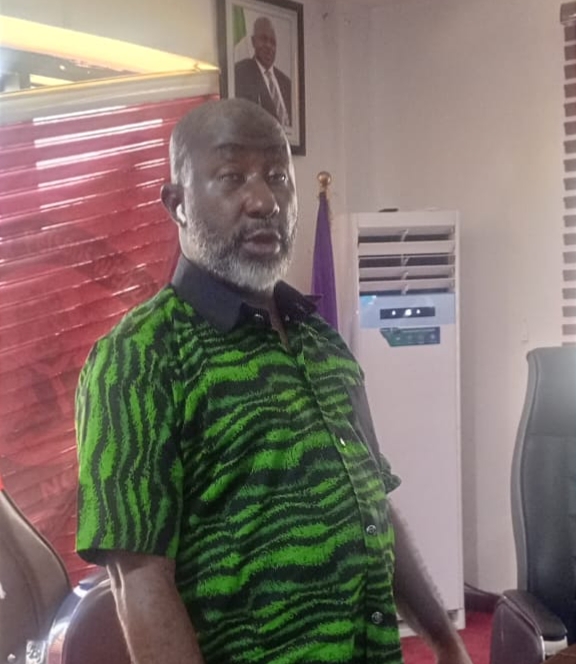
The National Commission for Persons with Disabilities (NCPWD) has organised an orientation and training session for its departments and units on Nigeria’s commitments under the Global Disability Summit (GDS) and the National Action Plan (2026–2030).
The training, held at the Commission’s Conference Hall in Abuja, was aimed at strengthening staff understanding of Nigeria’s global disability inclusion commitments and equipping departments with the knowledge required to translate them into measurable outcomes for persons with disabilities (PWDs).
Speaking at the session, Dr. Adebukola Adebayo, Technical Adviser to the Commission, said the training was designed to build staff confidence, deepen their understanding of the Commission’s mandate and clarify the responsibilities of each department and unit in implementing the National Action Plan.
He emphasised that the Global Disability Summit was not merely a platform for discussions but an international accountability mechanism that brings together governments, United Nations agencies, development partners, the private sector, investors and Organisations of Persons with Disabilities (OPDs).
Adebayo noted that Nigeria had participated in the GDS process since 2018, adding that at the most recent summit held in Berlin, Germany, in April 2025, the country presented a new set of commitments submitted through the Federal Ministry of Humanitarian Affairs and Poverty Reduction.
He explained that Nigeria subsequently organised a National Summit in October 2025 to communicate the country’s commitments to citizens, leading to the development of the National Action Plan (2026–2030) to guide implementation across ten thematic areas.
According to him, the successful implementation of the commitments requires collective responsibility, stressing that every department of the Commission and relevant Ministries, Departments and Agencies (MDAs) must take ownership of the process.
“Commitments are only credible if they are owned and delivered by every department of the Commission and by Ministries, Departments and Agencies. Implementation cannot rest with the Commission alone,” he said.
The Technical Adviser further explained that proposals seeking support from development partners, including the World Bank and United Nations agencies, must align with four key frameworks: the Discrimination Against Persons with Disabilities (Prohibition) Act, 2018; the Commission’s Strategic Plan; Nigeria’s Global Disability Summit commitments; and the National Action Plan (2026–2030).
He also highlighted the efforts of the Executive Secretary of NCPWD, Hon. Ayuba Burki Gufwan, in building partnerships with stakeholders, MDAs, OPDs and civil society organisations to advance the implementation of the Disability Act and the National Action Plan.
Adebayo noted that while the Commission is responsible for providing leadership, coordination, promoting compliance, monitoring progress and supporting implementation, achieving the desired results requires the active participation of all relevant stakeholders.
The ten thematic areas of Nigeria’s Global Disability Summit commitments, which form the pillars of the National Action Plan, include inclusive legal and policy environment; digital information and communication technology; inclusive data, information and publication; access to justice and rights; inclusive education; accessible infrastructure; inclusive humanitarian action and climate response; social protection; health; and inclusive employment.
The session ended with a renewed commitment to strengthening departmental action plans, coordination, financing and accountability mechanisms to ensure that Nigeria’s global disability inclusion commitments translate into tangible improvements in the lives of persons with disabilities.
Join Inclusive News Network WhatsApp Community For Quick Access To News and Happenings Around You.