


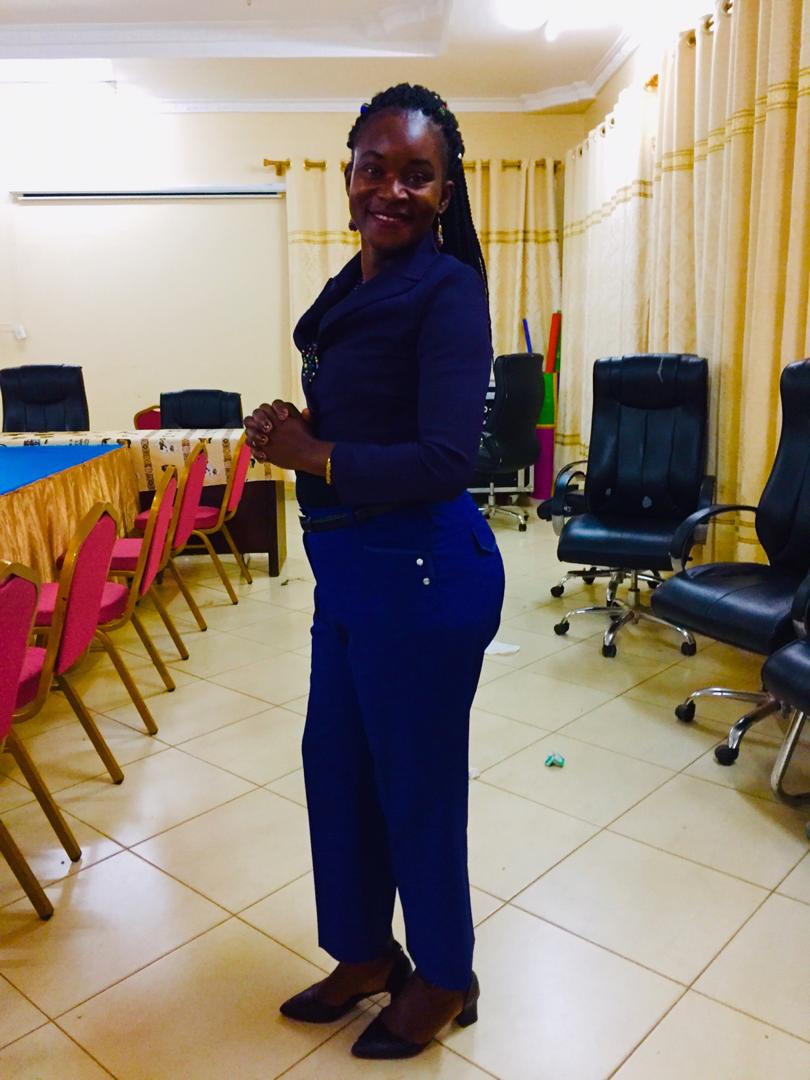
Aneth Gerana Isaya is the founder and Director of FUWAVITA a women-with-disabilities organisation which aims to empower women with disabilities through entrepreunership and leadership program.
She was born in Tabora town, Tanzania, in a village called Urambo, a village with a population of 192,781. She is also an Ambassador of Peace to Global peace foundation. She is a graduate of Sociology at the University of Dar es Salaam and is currently in her final year studying Arts, strategic and peace studies for her Master’s degree at the same University.
In an interview with Sejoro Ekundayo, Aneth took INN down memory lane and wants government to do more for people with disabilities. Read the interview below:
Tell us briefly the history of your disability?
I was born hearing until I reached the age of 4 years, I suffered from mumps disease which caused my total deafness
What were the challenges you faced growing up as a person with disability?
The most challenge I faced as a Deaf person is communication barrier and discrimination in the society. Deaf people use special language which is sign language for communication and many people don’t know that language. For example, I experienced the problem of communication in my education especially at high schools where the school didn’t have special teachers who know sign language, I decided to teach a friend of mine, a classmate sign language who in turn became my sign language interpreter in class and group discussion. The situation become worse when I was at the University of Dar es Salaam because I was the first Deaf person to reach university education in Tanzania. There were no special lectures for the Deaf at the University, I even wanted to move to Gallaudet University in America due to the situation but there was lack of scholarship and I decided to influence the University authorities to hire a sign language Interpreter for me then they hired the first sign language interpreter and it didn’t help me only but helped my fellow Deaf who came after me.
Moreover I experienced discrimination especially during job seeking, many companies and stakeholders refused to hire me due to my Deafness they even dared to drop my name out of the list of interviewees after recognising that I am Deaf person. This is what caused me to found FUWAVITA women with disabilities organisation aimed to empower women with disabilities through Entrepreunership
How would you sum up your family’s attitudes toward you as regard your disability?
When I suddenly became Deaf, my family didnt have experience with People with Disabilities matters. People tried to give up on me except my father. Some claimed that my deafness was caused by witchcraft, but because my father was a God fearing man, he never believed what people were saying. He tried to send me to the hospital where i was admitted for one year but Doctor said I was totally Deaf and no medicines can cure me so he accepted my situation and take me to Deaf school.
My relatives also accepted me but those people who are not my relatives, they looked at me and take me as not normal person they even dare to call me dumb. This really pained my heart that’s why I decided to mobilize and educate the society on a matter of PWDs through mass media, social network.
What do you aspire to achieve in life?
I dream of becoming an amazing Deaf woman in Africa especially in the political field, also to transfer my Entrepreunership skills to African society especial people with disabilities. To me, entrepreunership is the only way which can solve employment challenges of PWDs. I am ready to travel all around Africa to train PWDs in words and in action on Entrepreneurship, example is how to make wine, peanut butter, mango pickles, mbilimbili chill etc
Who is your role model?
My role model Is Michelle Obama, the wife to former USA President, Barack Obama. I wish to meet her one day, she inspires me in all aspects from family level (best mother), the way she is mobilizing Women in the World. Behind every successful man, there is a woman and Michelle contributes to her husband’s success.
Did you face any forms of stigmatization and discrimination while growing up?
Yes and as I explained earlier I experience discrimination especial from the society they even called me dumb and took me as not normal person. They didn’t include me in many social economic due to my disability. Communication barrier hinder me to fully engage in different fields of life until I founded FUWAVITA and use it as a platform to mobilize the society to stop discrimination toward PWDs and also to give equal opportunities to PWDs. Also during job searching, many companies and stakeholders didn’t want to hire me due to my Deafness, they even dared to drop my name out of the list of interviewees after recognising that I am a deaf person. This is what caused me to found FUWAVITA, women with disabilities organisation aimed to empower women with disabilities through Entrepreunership
How will you rate government’s attitude toward persons with disabilities in Tanzania?
Our Tanzania government under Hon John Pombe Magufuli, our President has started recognising and including People with Disabilities in different government positions. We now have a Minister for persons with disability in our government and some MP in our government. People with Disabilities in Tanzania are included in all fields of economic empowerment and political fields. We expect more improvement by our government in the future. For that I thank our President on behalf of Tanzanian persons with disability
What’s the difference between Nigeria and Tanzania and what’s your advise for both countries?
For me there is no difference between Nigeria and Tanzania when we talk on inclusive matters in Africa. The situation of PWDs in Africa is almost the same. What I can advise both countries is to continue including PWDs in all fields of life Social, Economic and Politics by improving accessibility to PWDs, example, the use of sign language, mobility-friendly environment for persons with physical disability, stop killing people with Albinism etc. This will hasten development among People with Disabilities.
Is the government doing enough to provide Inclusive services for Deaf people in Tanzania?
As I explained earlier Our Tanzania government under Hon John Pombe Magufuli, our President has started recognising and including People with Disabilities in different government positions. We now have a Minister for Person with disability and some MPs in our government. This has helped our voice to be heard and hence easy for our government to provide Inclusive services for Deaf people and People with Disabilities in Tanzania are included in all fields of economic, empowerment and political field. We expect more improvement from our government in the future. For that I thank our President on behalf of Tanzanian persons with disability
What are you doing to change the narrative about Deaf and persons with disabilities in your country?
I use FUWAVITA as a platform to change negative attitudes about Deaf person and other PWDs in Tanzania. I always mobilize the society through social media like TV, magazine, social networks like Facebook and instagram to educate them about disability matters. I organize different workshops and conferences to offer inclusive education to different stakeholders including government public servants and private sectors stakeholders. I also presented at International Conferences like how I did at the Paza Festival in Zanzibar organized by Voice global team where I educated and mobilized participants from Kenya and Tanzania It has resulted in positive impact and our voice heard. Now people have started respecting our dignity without considering our disability.
What is the situation report on the Disability rights bill in Tanzania?
The disability bill in Tanzania has been processed and signed by our government. We are waiting for its implementation in action.
Who are the key players that can ensure its implementation? What’s your advice for them?
As I explained earlier our Disability Bill has been processed and signed and we are waiting for it to be implemented officially. I would like to advice my government to focus on improving accessibility for people with Disabilities in Tanzania by ensuring the availability of sign language interpreter in different places like the court, hospitals, schools, in some of government national speeches and at various TV stations. Also ensure friendly environment structures for persons with physical disability .
How will you sum up Interpreters’ attitudes toward Deaf persons in Tanzania?
Now awareness of Deaf people and the use of sign language have increased than before. The number of Sign Language interpreters have increased especially after the University of Dar es salaam started offering special course on Sign language to those who are interested. And by mobilization done by organisations which advocate the right of Deaf people including FUWAVITA, Sign language interpreters are now being respected and hired in different companies, media industry and some Universities so as to help Deaf people
Any message for President, John Magufuli?
To My President Hon. John Magufuli, we thank you for recognising and including People with Disabilities in Tanzania in politics and economic empowerment. Thank you for appointing PWDs in different positions such as Ministers, ambassadors and MPs. We request to appoint Deaf too next time so as to balance PWDs in the Parliament.
Your advice to people living with disabilities?
To my fellow People with Disabilities in Africa. Advocating for our rights is not an easy task. Let’s join our hands together to have one voice, through that, it will be easy to influence our states, stakeholders and international organisations to include us in all spheres of life, economic, social and politics as well.