


By Chukwunyere Kelsey Nwosu | Inclusive News Network
As climate change continues to increase the frequency and intensity of disasters across Nigeria, the Hope Alive for Possibilities Initiative (HAPI) has taken a significant step toward promoting disability-inclusive climate action by empowering young girls with disabilities with essential knowledge and skills in climate resilience and disaster preparedness.
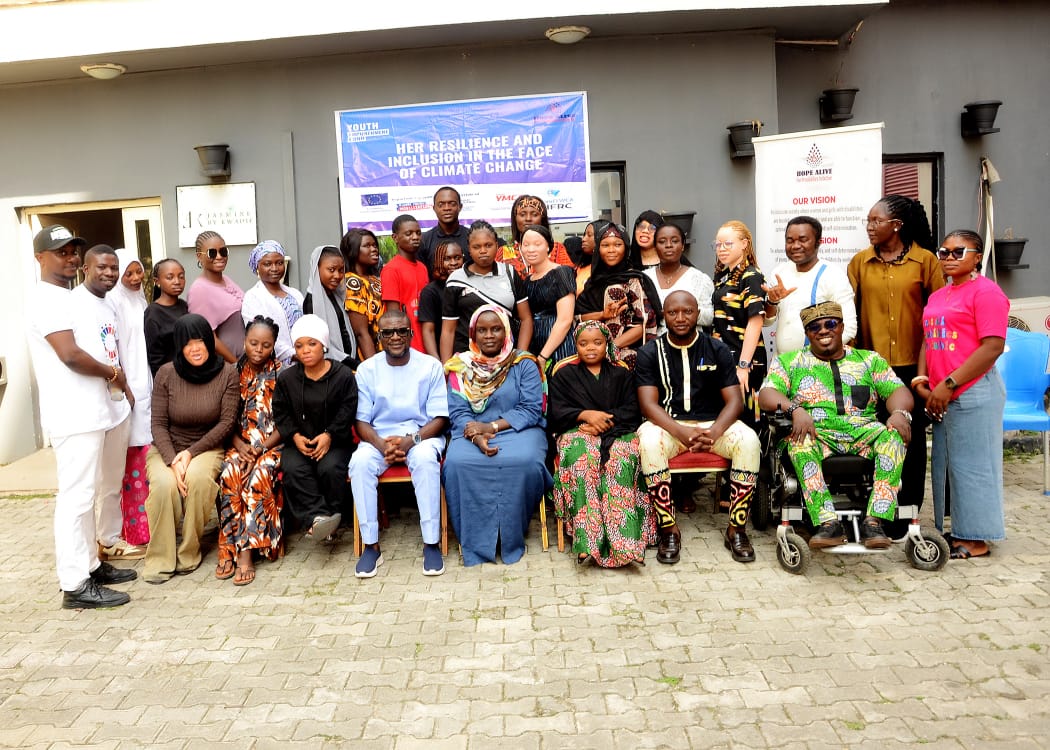
The one-day capacity-building training, held on Wednesday, June 24, 2026, at the Central Business District (CBD), Abuja, brought together young women with various disabilities to deepen their understanding of climate change, disaster risks, and practical preparedness measures while encouraging their active participation in building resilient and inclusive communities.
The programme was designed in response to the growing vulnerability of persons with disabilities to climate-related emergencies such as floods, heatwaves, erosion, disease outbreaks, and displacement. HAPI noted that persons with disabilities often face significant barriers during emergencies, including inaccessible early warning systems, limited access to critical information, inadequate evacuation plans, inaccessible relief services, and persistent social exclusion.
Throughout the training, participants received practical guidance on climate resilience, disaster risk reduction, disability-inclusive disaster management, emergency preparedness, and community action planning. The sessions also equipped them with leadership skills to enable them to serve as advocates for inclusive climate action within their communities.
Facilitators encouraged the participants to recognize their potential as leaders and change-makers rather than merely beneficiaries of humanitarian assistance. They emphasized that the lived experiences, knowledge, and perspectives of persons with disabilities are valuable assets in designing effective climate adaptation and disaster response strategies.
The training further highlighted the importance of integrating disability inclusion into climate governance, humanitarian response, environmental sustainability, and disaster preparedness policies. It stressed the need for accessible communication, inclusive emergency planning, and meaningful community participation to ensure that no one is left behind during climate-related emergencies.
According to HAPI, investing in the leadership and capacity of young girls with disabilities is critical to advancing climate justice and achieving sustainable development. The organization believes that empowering them today will strengthen the resilience of communities against future climate-related challenges.
The initiative forms part of HAPI’s broader commitment to advancing disability-inclusive climate justice, strengthening community resilience, and promoting the meaningful participation of women and girls with disabilities in climate policy, disaster risk reduction, humanitarian action, and sustainable development across Nigeria.
HAPI also expressed appreciation to the Global Youth Mobilization and the Youth Empowerment Fund for their support in making the capacity-building programme a success.
As climate risks continue to escalate across Nigeria, the training serves as a reminder that building resilient communities requires the meaningful inclusion of persons with disabilities—not only as recipients of support but also as leaders, innovators, and partners in shaping sustainable solutions to the climate crisis.