


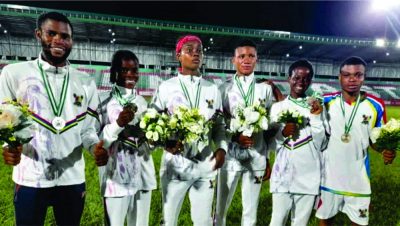
Deaf athletes and stakeholders in Nigeria have expressed outrage over the exclusion of Deaf sports from the list of compulsory events for the 2026 National Sports Festival, warning that the decision undermines inclusivity and violates their rights.
The festival, tagged Coal City Games 2026, is scheduled to hold in Enugu from November 27 to December 11. However, the omission of Deaf sports from the 15 approved compulsory sports has sparked widespread dissatisfaction among athletes, coaches, and advocates.
In a statement signed by Emmanuel Enemona Audu, a technical representative of the Nigeria Deaf Sports Federation, the group described the decision as “unacceptable” and contrary to the principles of equity and inclusion in sports.
According to the statement, Deaf sports had previously been granted compulsory status following years of advocacy. This was formalized during the First National Council on Sports meeting held on May 22, 2024, in Enugu, where the inclusion of up to three Deaf sports as compulsory events was approved to promote inclusivity.
The federation expressed concern that despite this resolution, Deaf sports has now been downgraded to an optional category for the 2026 edition, a move it described as both “strange and a huge mistake” requiring urgent correction.
“Deaf sports is internationally recognised through the Deaflympics and has met all necessary criteria for inclusion,” the statement noted, adding that its exclusion reflects discrimination and contradicts provisions of the Discrimination Against Persons with Disabilities Act.
Stakeholders also questioned inconsistencies in the classification of sports, noting that Para Athletics has been merged with able-bodied athletics, while Deaf Athletics and other Deaf sporting events such as table tennis and badminton were excluded.
The group further alleged that the decision to reduce the number of compulsory sports was taken unilaterally by the leadership of the National Sports Commission without adequate consultation with the National Council on Sports or state sports authorities.
They also raised concerns over what they described as unequal treatment, citing the rapid inclusion of wheelchair basketball as a compulsory sport while Deaf sports—featured consistently since the 1996 Makurdi games—was sidelined.
Referencing the administration’s policy direction, the federation questioned how the exclusion aligns with the Renewed Hope Agenda of Bola Ahmed Tinubu, which emphasizes inclusivity.
“This is not just about sports; it is about equality and recognition,” the statement said. “Deaf athletes have long been treated as third-class citizens, and this must end.”
The federation warned that failure to reverse the decision could trigger nationwide protests and a possible boycott of the festival by Deaf athletes.
They called on the National Commission for Persons with Disabilities to urgently intervene and ensure the protection of Deaf athletes’ rights. They also appealed to international bodies, including the United Nations, to support their cause.
The group urged the National Sports Commission to reconsider its decision and restore Deaf sports to the list of compulsory events, stressing that the National Sports Festival must reflect its core objective of promoting unity, fairness, and inclusion across all segments of society.
Join Inclusive News Network WhatsApp Community For Quick Access To News and Happenings Around You.