


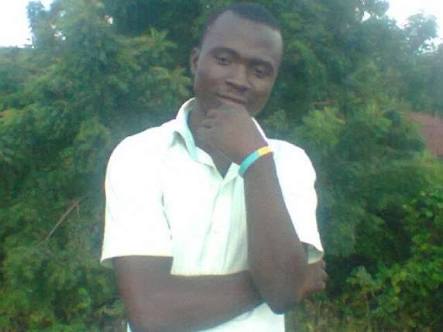
INCLUSIVE NEW NETWROK steals an opportunity to have a personal conversation with ADEKUNLE ADEYEMO, a hearing impaired and new University of Ibadan intake at the Department of Special Education & Rehabilitation Sciences.
Can we meet you?
My name is Adekunle Adeyemo. By nature, I am calm-headed, down-to-earth, amiable, with a very kind personality. I am open-minded and extraordinarily tolerant. And the ability to figure things out on the fly is something that I am very proud of. I am a voracious reader. I read lots of books. My greatest role model is my mother, who I consider the most loving woman on the planet. I also find Helen Keller to be an incredibly inspiring woman.
Why did you come in for Special Education?
You know, special education isn’t just for folks with disabilities. It’s also for persons who are exceptional in terms of talent and intelligence. So, I happen to fall under that category of gifted people. But importantly as a consequence of my twice exceptionality- hearing impairment and giftedness. But when I also look around and see that 95% of people with special needs do not have access to education, I thought something needed to be done about that. I thought that I understood that than anyone because I am living it.
What kind of disability do you have?
Well, I do not hear well. I am hearing-disabled. But I also believe that disability is a very strong word. First, is that we are all disabled. Aren’t we? Tell me that person who is infinitely able: physically, mentally, emotionally, physiologically, spiritually, financially, and many more? Is a man who cannot father a child not a disabled person? What of a woman who cannot conceive? A poor person is said to be financially incapacitated. Many of us use eye glasses without which our vision will be impaired, yet, we fail to realize that we are part of the community of disabled persons.
So to me, disability is part of the human condition and almost everyone will be temporarily or permanently impaired at some point in life. So, I certainly live with a disability.
How are you coping?
I’m coping surprisingly well. Like I said, I am enormously gifted and substantially compensated for my disability-like a lot of people with disability. So I do not have to worry too much.
What have been your challenges as a person with disability since you came into University of Ibadan?
Well, part of the challenges has been about not having direct access to reliable information. I mean, even my abled-counterparts, a lot of time, find themselves news-starved, confused and agitated. Sometimes, we don’t just know what to do, where to go and who to see.
Do you believe you can survive?
Wow! I am a survivor. I always win. That’s the thing with me- ‘long as I am constantly in sync with my values and principles. I believe I am a very special individual. I have believed that I have distinct advantages over others and that reflect in so many ways. So, I think, ultimately, these remarkable traits that I am blessed with, the healthy sense I have of myself, and, you know, like my mother always says, “Raji, you are a destiny child. Just don’t be a quitter”, I have no doubt that my life would go beyond my own imagination.
Are your expectations met in the department of Special Education & Rehabilitation Sciences?
Well, in my view, I think the department has been pretty remarkable, particularly in the academic area. However, structurally and administratively, there’s a lot of work that needs to be done. They need to refocus their attention on how do they practically instruct students with all forms of disabilities, making special resources available to them. I call for practical, pragmatic approach to special education in this department, and not just the theoretical aspect of it.
What are your special aspirations?
You know, like I indicated up there, I’m a highly driven individual with a penchant for always wanting to be best among a bunch. I understand myself. There are a lot of fine things I want to get to do and to be, but the special thing is that I always wanted to be President of the United States. But oh, it beats me when I realized I couldn’t be ‘coz it’s said I had to be a natural-born citizen of the United States. Now, I just want to make improvements on the conditions and have great fun doing that.
What advice do you have for your level mates and for the deaf and hard of hearing?
Here’s what I always had in mind: this varsity is a place to get an education. We all know that! However, you have to realize that much of what we are taught here is not actually what you are going to be using out there at firms and on fields. No! You have got to start looking inwardly, to discovering yourself, and to building up your true self. Because, ultimately, it is this attitude, your intrinsic creativity, wisdom and your social adaptive skills that would set you on the pedestal toward greatness. And ironically, they do not teach us this at school.
So you must develop whatever talents you have observed lie within you. Do not get carried away with being brilliant; be intelligent, too.
Well, be clever. Be clairvoyant. See and sense different!