


The purpose of the visits to the shelter was to evaluate its accessibility to persons with disabilities (PWD) who may require its services.
In November 2021, Deaf Women Included (DWI) conducted community surveys and mapping exercises in the Hurungwe and Guruve districts. The objective of the survey was to map the existing GBV and SRH services in the districts and assess the extent to which they are accessible and adapted to people with disabilities, as well as the extent to which service providers understand disability inclusion. in the provision of services. This builds on community dialogues with community leaders and women with disabilities that showed that women and girls with disabilities did not have access to some essential GBV and SRH services. In the two districts, DWI held focus group discussions with service providers and visited two GBV shelters located in Karoi (managed by FACT) and Chiweshe (managed by Musasa). The purpose of the shelter visits was to assess its accessibility to persons with disabilities (PWD) who may require its services.
DWI interacted with the staff of the Chiweshe shelter which is managed by Musasa, from the engagement it was noted that the staff still face challenges in offering counseling to women and girls with disabilities and, in particular, to deaf victims. Deaf women and girls in the district indicated the need for shelter staff to be equipped with skills that also enable them to provide services to them effectively as well. The shelter was praised by OPD for having an accessible infrastructure for people with mobility problems. DWI indicated that the presence of ramps around the shelter and materials translated into Braille is a positive step towards disability inclusion.
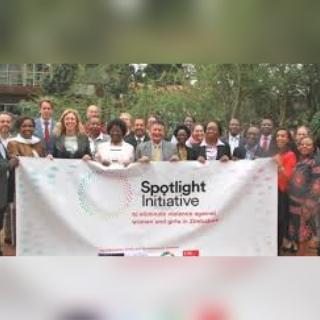
With the support of the Spotlight initiative, deaf women included in phase 1 developed a guide on integrating disability in preventing and responding to violence against women and girls with disabilities and during phase 2, DWI will use this tool to train community stakeholders and service providers. on providing disability-inclusive services and ensuring that existing referral pathways become disability-inclusive.
UNESCO Regional Office for Southern Africa is working with deaf women included in activity 3.2.6 on promoting a culture of inclusion for women and girls with disabilities in community-based Spotlight initiative programs and address SGBV, SRHR, HP among women and girls with disabilities. Within phase 2, DWI is focusing more on strengthening community referral systems and training GBV service providers and community stakeholders to ensure they have adequate awareness of disability issues and are trained to meet the diverse needs of women and girls with disabilities, thereby ensuring their inclusion in community-based initiatives that address gender-based violence and harmful practices.
In this mapping exercise, a total of 42 stakeholders were reached, including personnel from the Victims’ Friendly Unit, staff from GBV Shelters, representatives from the Ministry of Women’s Affairs and the Ministry of Justice. Social Welfare, as well as people with disabilities. The results of the mapping in the two districts indicated that cases of sexual and gender-based violence among women and girls with disabilities are rampant in gender-based violence shelters, indicating that they receive more cases, but the ELV indicated that there is still a underreporting of cases involving people with disabilities.
Communication barriers, especially with the deaf, were found to be a critical challenge in accessing essential services for GBV survivors. Most stakeholders indicated that they do not have staff equipped with basic sign language skills. Some VFU and Musasa staff who had received the training a few years ago indicated that they are slowly forgetting as they have not had the exposure to constantly interact with the deaf community. One of the VG service providers in Karoi indicated that “people with disabilities in our district are not happy, because there are no sign language interpreters in most of the VG and SSR centers, most of the buildings are not accessible and the staff is not suitable for the disabled