


While there’s no denying the fact that passable progress has been made on paper by the Nigeria Disability Community in the quest for “inclusion” and the war against discrimination of PWDs, it must be admitted too, that there are many limitations to what extent paper declarations can transform society’s stereotypical views of Persons With Disabilities.
When it comes to unbiased attitudes towards PWDs, mouthing platitudes from a distance is easy, however many unabashedly fail the test faced with it up close. Attitudes under such close tests often go beyond mere discriminatory to outrageously superstitious. Imagine identifying a building as Disabled because it houses children with Disabilities.
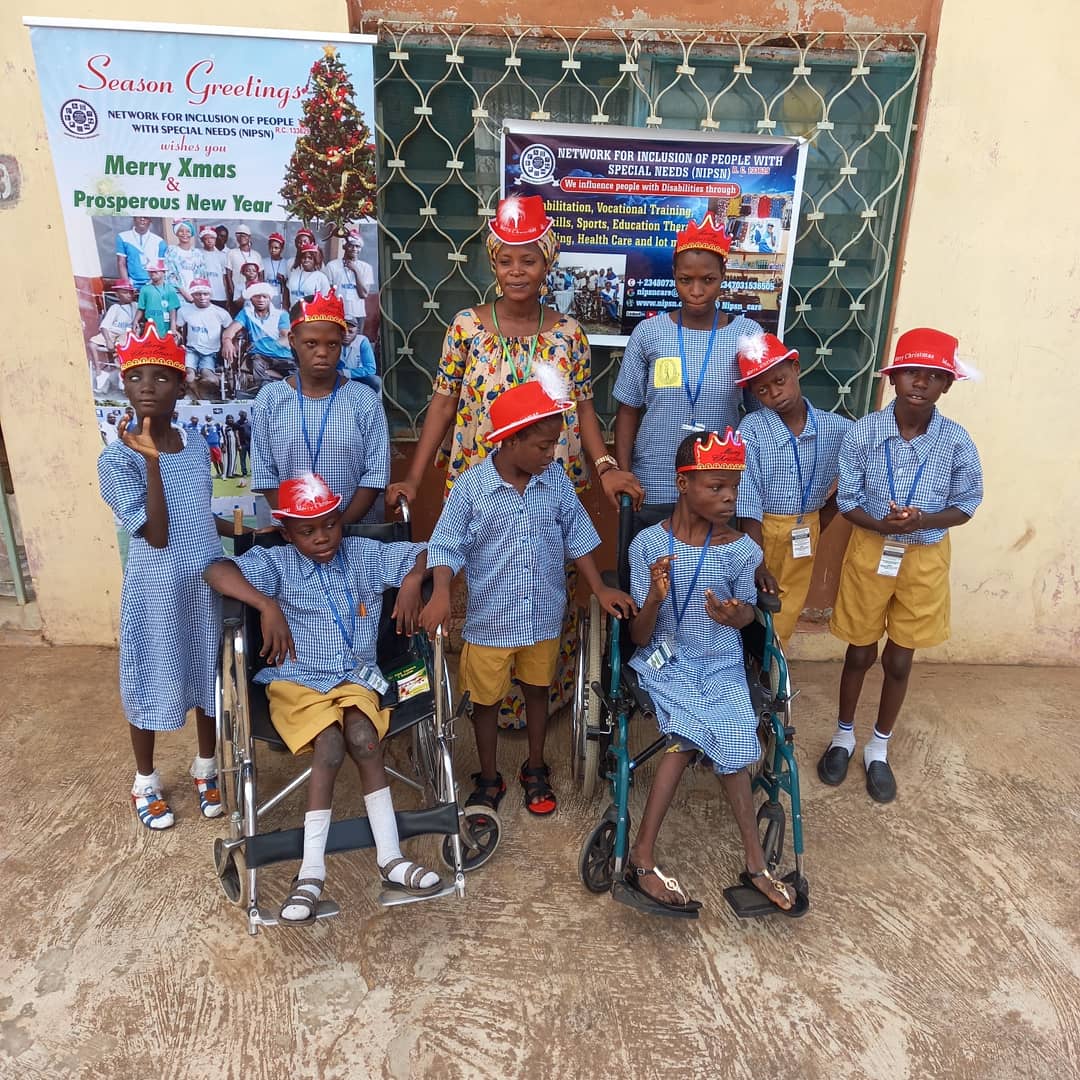
Inclusive News Network, INN recently had an interview with Network for Inclusion of People with Special Needs (NIPSN) Founder and Chairperson, Mrs. Hammed Sekinat. In the interview, she tells how her landlord is planning to eject her from the rented space which serves her Special Needs Initiative because the community people now infer Disability undertones to the building. According to her, the rented space has actually been tagged a “disabled house”!
Faced with imminent eviction from the premises, Mrs. Sekinat is soliciting support from well meaning Nigerians to build a home for her students.
Below are excerpts from the interview with our correspondent, Sejoro Ekundayo.
Tell me about NIPSN?
NIPSN is a Non Governmental Organization (NGO) that positively influences People with Disabilities through schooling, rehabilitation, vocational skills, sports, health care, counselling, education therapy and social skills. It also aims at promoting inclusiveness, and much more.
What is the motivation behind NIPSN?
Seeing a lot of people with disabilities going through hard times in their day to day lives, especially during my Youth service days in Delta State was the main motivation to step into the gap and make what little difference I can. Then I got exposed to people with disabilities being largely neglected by parents, relatives and the society
Also, I studied special education which brought me close to Persons With Disabilities. So I was able to listen to them talk about challenges. It was such close interactions that got me to thinking of establishing a network that will influence their rights.
What category of disability do you accommodate? What special services do your NGO offer?
We accommodate persons with visual impairment, the hearing impaired, intellectual disability, physically challenged, Autisic, among others. Presently we have over 23 persons with special needs in primary and secondary school. We have done vocational skills for some, and thus empowered them. We already rehabilitated up to five visually impaired adults and they now live normal lives in the society.
Have you had any support from the Government or Private Sector?
We have not had any support from the Government. Right now, we have just one private individual supporting the organization.
What do you love about this job? What’s your biggest challenge?
I love making IMPACT. I am always happy seeing those trained here doing great in their fields – most especially seeing them become independent and contributing to society.
Accommodation is the current challenge, I rented a three-bedroom apartment for our students. That space is no longer conducive. We have 23 students who we cater for freely. However by mid year our rent will expire. How do we get another one, we don’t know. We have been asked to leave the place because the landlord said people now look at his house as disabled house. Luckily, we do own an acre of land.
Any plan with the acre of land?
For now, we are soliciting for help. If we can build at least 5 rooms there, we can accommodate our students there after our current rent expires. As it stands, I have no where else for their accommodation.
Any plans in the pipe about this discouraging situation?
Yeah.. We have written letters though no positive response yet
What are NIPSNs’ objectives?
Our Mission At NIPSN For People With Disabilities are
1. Independence (ability to conquer needs)
2. Socialization and access to information technology.
3. Empowerment to be productive and important to the society.
4. Good communication skills and interaction in the society.
5. Connection to Government and Private Organizations for employment.
6. Ability to achieve dreams and desire more than following the available path.
7. Empowering them after graduation with necessary equipment to aid their skills.
8. Entrepreneurship so they can be free from discrimination, segregation and other possible challenges.
9. Ability to compete with their able-bodied counterparts.
10. Creativity, innovation and skill acquisition to meet up with the future world of advanced technology.
11. Build self-esteem and familial acceptance.
12. Creating educational and conducive atmosphere for team work for persons with disabilities.
What do you plan to achieve in the future?
In nearest future, we plan to educate many more Persons with Disabilities from primary to tertiary level, provide skills training for self reliance, as well as advocate for inclusion of people with special needs in social life.
What do you say about the Disability Rights Law and the Disability Commission?
If they can implement it, it will be helpful.
What’s your parting message to the Government, other NGOs and People with Disabilities?
Let’s keep up the advocacy and work towards including our beloved PWDs, and very soon inclusion will be possible