


By: Chhun Sun
Confined to a wheelchair, Paul Spotts was “poking” away at his work computer the other day.
He doesn’t have much dexterity in his hands, but that has never stopped him from doing his job as an assistive technology specialist at the Colorado Springs Independence Center, which provides disability services. Spotts helps other people with disabilities modify their homes to fit their needs. He specializes in on-site surveys at homes to see if someone needs to install wheelchair ramps, widen hallways and doorways, or install special phones or other devices to help make their lives easier.
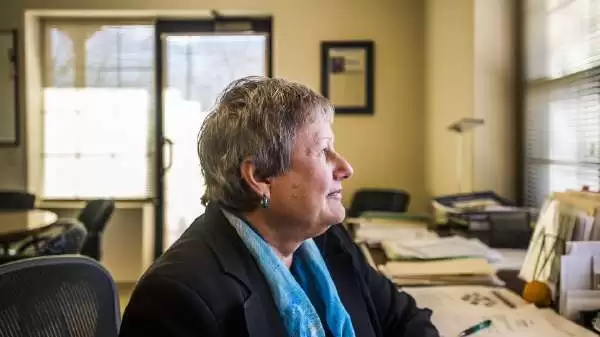
photo – CEO Patricia Yeager is pictured in her office at the Independence Center on Wednesday, December 28, 2016. Photo by Stacie Scott, The Gazette
“Working here, it’s very gratifying to help other people with disabilities and let them see that there is life after being injured, or you can become independent if you choose to,” said Spotts, a quadriplegic who is paralyzed from the chest down.
The center’s Independent Living Program has about 70 employees, about 80 percent of whom have disabilities. That’s more than the 51 percent the center is required by the Rehabilitation Act. And the center’s CEO, Patricia Yeager, believes it’s people like Spotts and others who help make the work environment a special one.
She believes each employee is a role model for others with disabilities.
“We have people with all kinds of disabilities,” Yeager said. “Working in this field, you can’t just say everybody with (a disability lives in a certain way). It teaches you about taking everybody as an individual. To me, good employment practices are about what you need to do the job, I need to let go of my view of it has to be done one way.”
Most of the employees are found through recommendations and community gatherings. That way, Yeager and others who make the hires can learn about someone’s work habits and personality.
“People come here to set goals,” the CEO said. “Do I want to go to work? Do I need to get benefits? Do I want to go to school and have a career? What kind of life do I want to create? What kind of life do I want to have?”
The center accommodates visitors and employees with many ADA-accessible features, including adjustable furniture, braille signs and color-coded floors to let those with low vision know where they’re going. On any given day, you’ll find employees tutoring clients on how to fill out job applications or paperwork for school, helping them apply for the right benefits, or reviewing their home health care needs.
The center has peer support groups and advocacy coaching, and also trains clients how to prepare for and survive emergencies and disasters. The central idea of the 29-year-old center is to model empowerment.
It also provides many people with disabilities their first work experience.
Nina Kamekona, 18, is one of them.
A graduate of the Colorado School for the Deaf and the Blind, she started as an intern before she landed a part-time position as a youth advocate. She organizes workshops to teach high schoolers about people with disabilities. Her work allows her to give back, which is something that she never expected to do growing up as a legally blind person.
“I really like to share information with people and share my story just because it shows that somebody with a disability can achieve, especially with youths,” said Kamekona, who attends Pikes Peak Community College. “That’s why I love my job because I get to share that with individuals just like me.”
Source: Gazette