


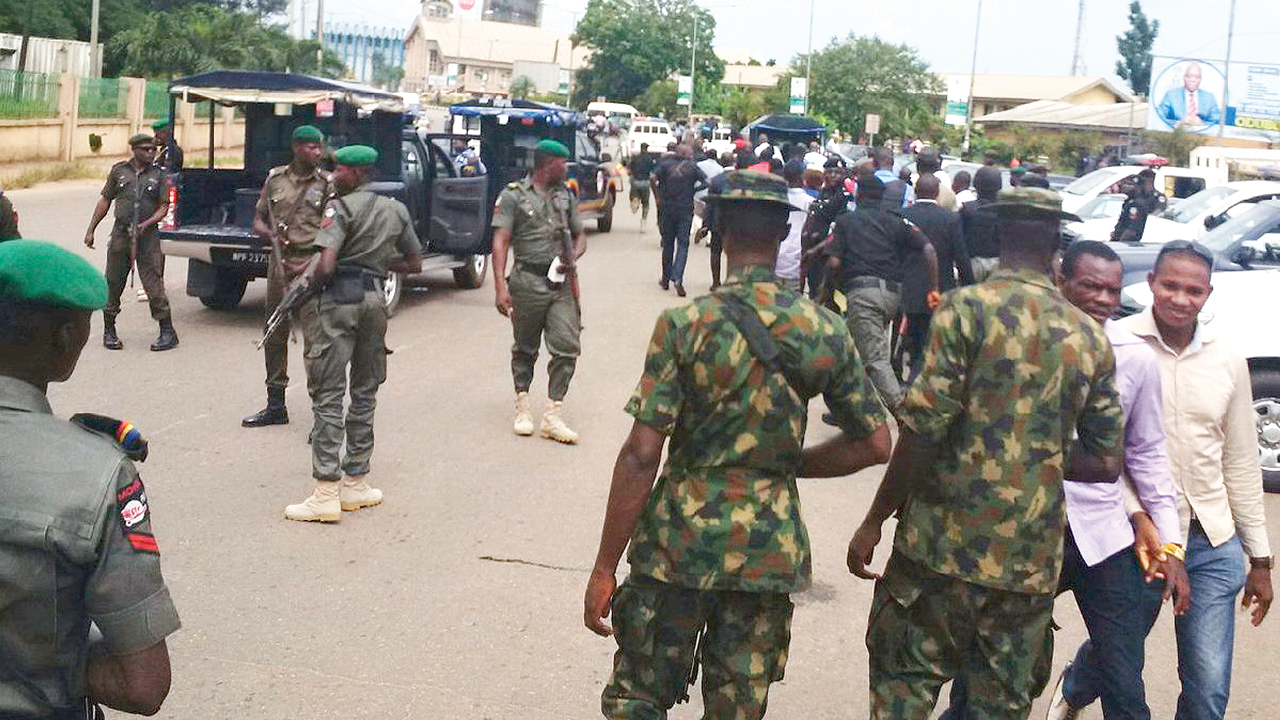
The security of our nation isn’t just the safety and protection of lives and properties. The security of our nation also includes a psychological sense of balance and harmony everyone feels, without regard for status or disability. Our security as a nation is very essential- particularly in a nation of over 170 million people with incredible cultural and linguistic diversity, as well as the numerousness of its ethnicity. Yet, the challenges that we face are extraordinarily numerous.
Indeed, we can have a secure Nigeria when every citizen regardless of socioeconomic status or disability feels proudly like a native- that we are shielded from harm, that our lives and properties are safe. But even critical to our security is the sense that we are all one, that out of many we are one. That we can include the excluded, give sight to the blindfolded and a voice to the gagged. That we can be that nation, that community of abled and disabled that looks out for each other without regard for status or station.
I want us to be that nation. I challenge each of us- individuals and families, organizations and social institutions, law enforcement and government agencies, to learn and acquire the sign language. Sign language should cease to be the sole language of the deaf. Rather, sign language should be everyone’s language, in addition to our respective native languages. Then, undoubtedly, we will begin to see a beautiful reshape of the arc of our nation. We will become truly one nation under God. Our nation will prosper.
Here are five powerful ways that the learning and acquisition of sign language can aid national security.
- It makes for economic and political participation by the Deaf community: full participation is better than half participation. The community of the deaf is growing. The deaf community is one of the most populous of all disability clusters, but also one of the most incredibly talented segment. Yet, communication problem remains the single-greatest challenge that is faced by the deaf. Learning to communicate with them in “native” language is one of the best things that we can do for them. With this, our nation has the tremendous chance to tap and benefit from the incredible pool of talents that are had by this community.
- It puts a stop to the injustice that’s done against the deaf community by security forces: In the maintenance of law and order by our law enforcement personnel, Deaf persons remain some of the most vulnerable people, as they are often unjustifiably manhandled- treated badly long enough before it is discovered that they are unable to hear, and perhaps make a clear and coherent speech in the defense of themselves. The acquisition of sign language can help to prevent this and bring in deaf people, s sense of safety and dignity.
- It creates in all of us a sense of unity: The learning and acquisition of sign language by the general public can create in all of us a belief that we are one people. As ethnically and linguistically diverse as our nation is, embracing the sign language can bring us together as a singular, unified nation.
- It provides us with a sense of national identity: Making the culture of a certain disabled community ours is an exceptional thing. Yet, learning to use the language of the deaf- making it ours can provide us with a sense of distinctiveness- a universal recognition that we all Nigerians, that we rise and fall together as one nation.
- It fosters social cohesion: Sign language can be a powerful social tool that connects us all together regardless of our differences or the multiplicity of our culture and ethnicity.
Sign language is not just the language of the future, it is beautiful and romantic, too. It can improve the security of our nation because its inclusivity will bring into the psyche of the deaf a sense of safety and belong in a nation where there’s a great number of incidences associated with this vulnerable population segment.