


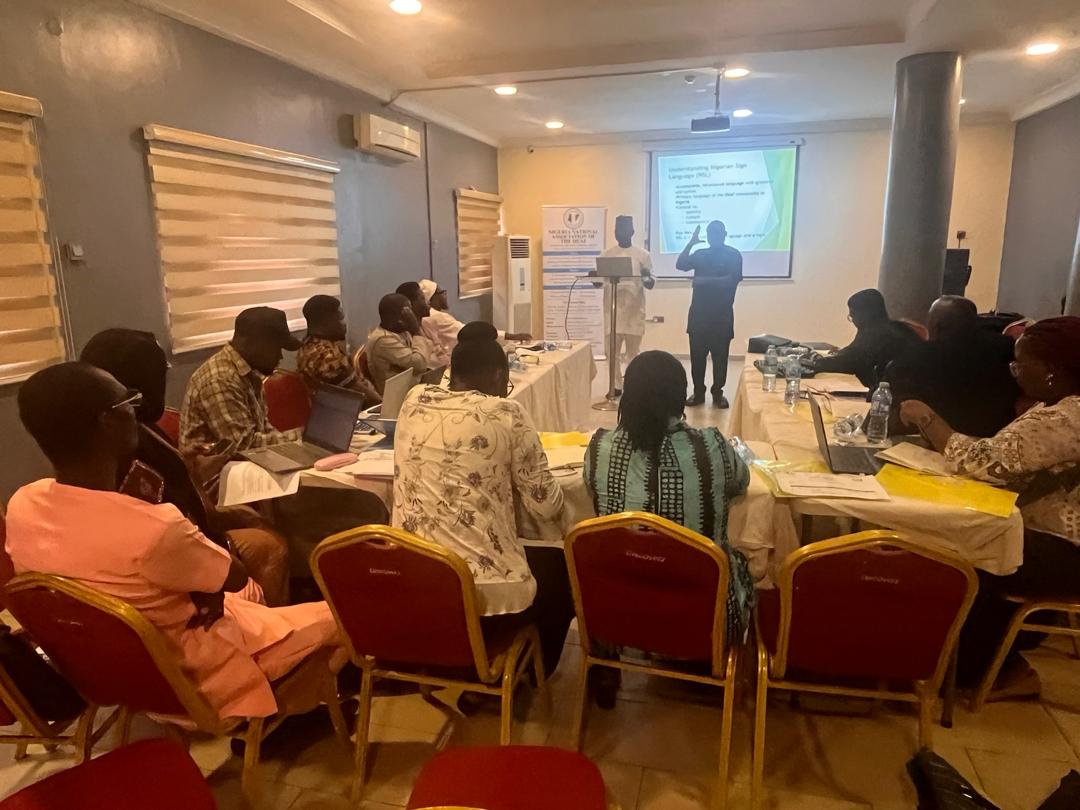
The Nigeria National Association of the Deaf (NNAD) has convened a multi-stakeholder engagement to validate a position paper aimed at strengthening disability inclusion and advancing the recognition of Nigerian Sign Language in Nigeria.
The engagement, held on April 8, 2026, brought together more than 30 participants drawn from government institutions, civil society organisations, academia, and organisations of persons with disabilities to review and provide input into the draft document.
Speaking on the importance of the initiative, NNAD noted that Nigeria is home to an estimated 10 million Deaf persons, with more than nine million relying on sign language as their primary means of communication. However, the association observed that Nigerian Sign Language has yet to receive full legal recognition, a situation that continues to limit access to healthcare, education, information, and social participation for Deaf persons across the country.
According to findings by the Global Deaf Research Institute (GDRI), about 75 percent of Deaf persons in Nigeria lack access to critical information in various aspects of life. NNAD explained that the current leadership of the association is pursuing strategic advocacy efforts to address these longstanding barriers and promote greater inclusion for Deaf persons nationwide.
Participants at the meeting were sensitised on key international and national legal frameworks, including the United Nations Convention on the Rights of Persons with Disabilities (UNCRPD), the African Disability Protocol (ADP), and the Discrimination Against Persons with Disabilities (Prohibition) Act, 2018. Discussions also examined best practices from countries such as Kenya, Uganda, and South Africa in promoting sign language recognition and disability inclusion.
Speaking during the engagement, NNAD leadership stressed the importance of collective action and collaboration among disability groups.
“This position paper for the official recognition of Nigerian Sign Language represents a unified voice for persons with disabilities in Nigeria. By working together across disability clusters, we can strengthen our advocacy, influence policy decisions, and ensure that no one is left behind in national development,” the association stated.
The meeting produced the first draft of the position paper, which will undergo further review and harmonisation before finalisation. The document is expected to serve as a strategic advocacy tool for the official recognition of Nigerian Sign Language, while also supporting broader policy reforms and disability inclusion efforts across the country.
Despite minor logistical challenges encountered during the engagement, participants commended the initiative and called for sustained commitment and increased investment in disability inclusion in Nigeria.
The statement was signed by Aliyu A. Mai, Director of Programme, Nigeria National Association of the Deaf (NNAD) Headquarters, Abuja.
Join Inclusive News Network WhatsApp Community For Quick Access To News and Happenings Around You.