


Over the past several years, there has been a lot of talk about the most effective approach to educating the special needs in Nigeria. A core principle of the Universal Basic Education enacted by the administration of Olusegun Obasanjo in 1976 is a free and compulsory education for school-aged children and young adolescents- to be able to get a free, functional and quality education regardless of sex, race, ethnicity, religious beliefs and location. However, the scheme has failed- woefully. Its failure is not just seen in its incapacity to provide a universal education for all and sundry, but as just important, its inability to consider the learning pace and differences in learners. The Universal Basic education has failed to provide exceptional provisions for special needs learners in terms of individual differences, learning characteristics and pace, physical makeup, and sensory perception and achievement levels.
But in fact, special schools, a handful of its distinct relevance of which had been discussed on this page, is no longer the gold standard. We need a multidisciplinary approach to the education of the special needs, as opposed to the education of the disabled via special schools. The unavailability of inclusive schools in the country has further made education of the disabled a particularly abysmal one. And we have to change that.
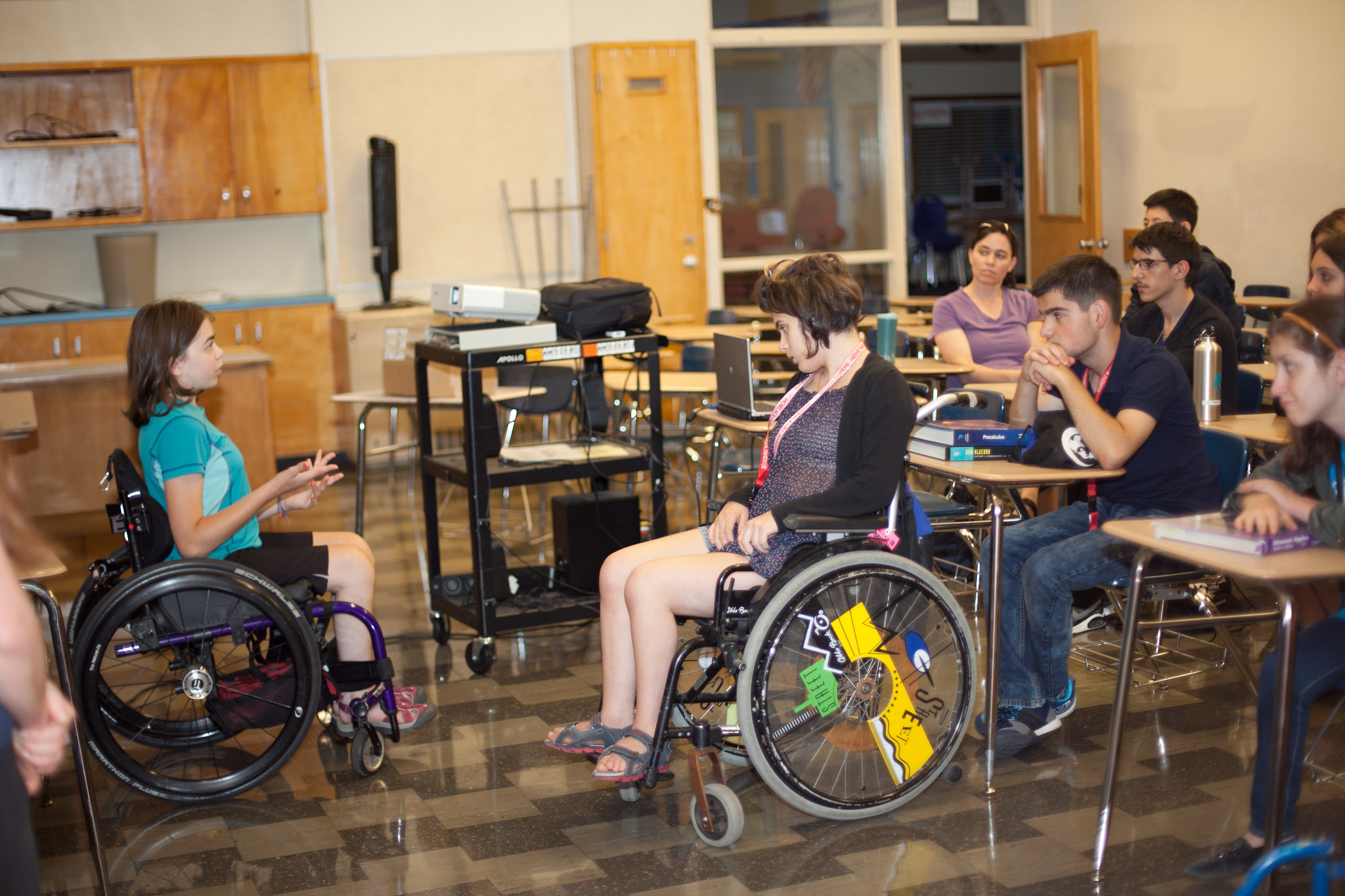
Separate from segregation, inclusion is an education system in which learners with special needs learn together with learners with no special needs. In this system, the structure of the class and the modus operandi of the teaching change to accommodate the needs of special students.
The following are five most distinct reasons inclusive schools should be established in Nigeria:
- Inclusive Education Acts as A Multidisciplinary Approach: It is multidisciplinary as it employs a wide variety of ways to educate persons with special needs. The structure of the class is altered accordingly to meet certain needs and conditions at a particular period of time. And another moment, the mode of teaching is changed and moderated so that every student, abled and disabled included, can be carried along.
- Inclusive Education Taps into The Blessings Of Diversity: Diversity is a blessing- across settings and nations. As opposed to uniformity- a special school system that brings together only learners with special needs, inclusive schools will merge together all students with differing cultures and ideas irrespective of disabilities so that every learner can have a total educational, social, and emotional experience seen in diversity.
- Inclusive Education Fosters Social Relationships: Schools aren’t just places for learning. Social relationships that are essential to emotionally-healthy life can be built there as well. An inclusive system that holds all students and learners- disabled and non-disabled, assist in fostering relationships because the ones with disabilities are conditioned to be loved and accepted in this particular academic environment.it is good for everybody. And everyone learns and has an excellent school experience.
- It Develops Empathy in Learners: Empathy is a highly essential personal quality that the world is increasingly yearning for in individuals. A key leadership attribute, empathy is the ability to feel others’ pains, to connect with their grief, to understand what it is like to be sick, to be unwell, to be disabled. Getting regular and non-regular students together in a classroom enhances students’ abilities to understand the emotions of one another and increase their individual personal effectiveness.
- Inclusive School System Improves the Academic Performance of Students with Disabilities: When students with special needs, rather than segregated, are included with students with no special needs, morale is enhanced and attitude burned on the part of the special needs students, and consequently, the academic performance of special students is improved. In fact, a raft of research in the past years has found that the act of mixing students with special needs and regular ones has provided remarkable stability in learning rate of students with exceptionalities.
Inclusive education is a fairly new concept, but should be practiced in Nigeria. Not without a number of disadvantages, inclusive schools demonstrate some of the characters that are necessary for the upward mobility of our present era- an inclusive world that accommodates all and sundry, an environment that is wide in scope but also well integrated, a society that appreciates diversity and are advanced by its blessings. Most of all, at inclusive schools, we will see non-disabled teach disabled, disabled teach non-disabled, and a community is built. And need it be told to you, inclusive school system is less costly- as opposed to special education whose services naturally require huge expenses on resources.
The question to you is if you are non-disabled, why would you not prefer to be combined with special needs learners in the classroom? And if you are disabled, why would you rather not be in the same classroom with a person with a disability.
Please, let’s have a discussion.