


By Lanre Olagunju
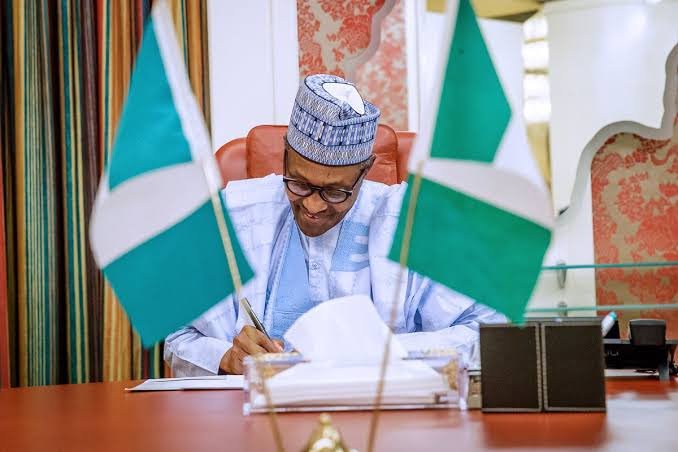
The community of Persons With Disabilities in Nigeria will forever be grateful to the administration of President Muhammadu Buhari for signing the Discrimination Against Persons with Disabilities (Prohibition) Act, 2018 into law. By this singular act, Nigeria has been strategically positioned into the global awareness of disability inclusion development. The provisions of the Act, if adhered to, will go a long way in ensuring social justice, equality under the law and the inclusion of PWDs in the society.
The Law prohibits discrimination in public facilities which includes, transportation facilities, it also mandates that all service providers must make adequate provision for the physically challenged, visually impaired, hearing impaired those with learning and developmental disabilities, Albinism. Etc. The Act gives a five-year grace period within which public structures and automobiles must be modified to be accessible for all PWDs. Approvals shall not be given to building plans that do not pass the accessibility test. Government officials who approve a building plan that contravenes what is stipulated in the law shall either pay a fine of N1,000,000 or face a jail term of 2 years or both.
The law also clearly states that a National Disability Commission will be established with an Executive Secretary as the head, to monitor compliance and more importantly, address complaints of harassment, discriminatory practices against Persons With Disabilities. It was exactly one year on the 23rd of January, 2020 that the Act was signed into law. And there are no clear signs that the commission will be established anytime soon. The year 2020 appropriation bill says nothing about making financial provisions for the commission, this implies that the commission saddled with the responsibility of providing guidelines, policy directives to ministries, departments and agencies can’t cater for the needs of PWDs. If it has taken this long for the commission to be established, it has become important to consider how effective the said commission will be? Is the commission the topmost concern of the community of PWDs, how will it deepen our national commitment to the welfare, security and the sociocultural challenges attached to disability issues? Will it be managed by passionate people who are concerned with the pulse of the community of PWDs?
How effective are the several government-owned commissions here and there, are we sure the proposed disability commission will not be another opportunity to enrich a few, increase government spending and open ways for corrupt practices, while we keep moving in circles? We must ask and be sure that establishing a commission will bring about positive outcomes for PWDs, else why waste resources?
We must be reminded that it is not the inability to see, walk or hear that is disabling, rather it is the lack of accessibility to key amenities and structures that proves to be the greatest challenge of people with diverse forms of disabilities. The stigmatization and discrimination PWDs are faced within our society is largely a social issue, and only a sustainable social model can birth an inclusive society. The commission when established might reduce the collective approach to solving this challenge, other government agencies might have to lazily wait or look up to the National Disability Commission to drive the implementation of the Nigerian Disability Act. Why can’t the Act make it mandatory for all ministries to have a special department that caters for the rights and dignity of Persons With Disabilities in their ministries? Such that the Federal Ministry of Women Affairs and Social Development, Ministry of Youths and Sports, Ministry of Humanitarian Affairs, Disaster Management and Social Development, Ministry of education and other relevant ministries and agencies begin to take issues around disability inclusion as a major task. As a nation, we might be able to record far-reaching achievements than settling up a commission that might be redundant after a few months.
According to the United Nations, 15% of the world’s population experience some form of disability which is more pronounced in developing nations. Out of this global figure, Nigeria accounts for about 10% of the global figure of people with disabilities. According to the National Population Commission of Nigeria (NPC), it is estimated that 27 million Nigerians are living with disabilities, making the community of Persons With Disabilities the largest minority group in our nation. To adequately cater to this community, the challenge of discrimination and lack of
access requires a collective effort from government, relevant civil society organisation and more importantly the media. The media must constantly engage strategies to raise awareness and change attitudes towards the physically challenged. The organised private sector also has an enormous task because disability issues are essentially human rights-based and they have ripple effects on social and economic development.
As a nation, we can combine effort towards achieving an inclusive society same as it
was done to gender discrimination, children protection and the most recent, HIV/AIDS. It will require that we mainstream disabilities into our policies, processes and programs, that way, we can keep disability inclusion issues at the front burner so as to record phenomenal improvements. It’s high time we looked at disabilities issues beyond the medical and charity prism and begin to examine it from an angle of productivity. Persons with disabilities can also be productive if we equip them with the right skills. Ministries and agencies across should embark on building the capacity of PWDs, and also design, and implement interventions towards the inclusion of persons with disabilities in their initiatives. Skills such as ICT and entrepreneurship will go a long way in enabling them to develop healthy self-esteem, and in addition, keep them aware of their rights. With this, they can contribute meaningfully to the GDP of the nation.
Lanre Olagunju, Lagos State