


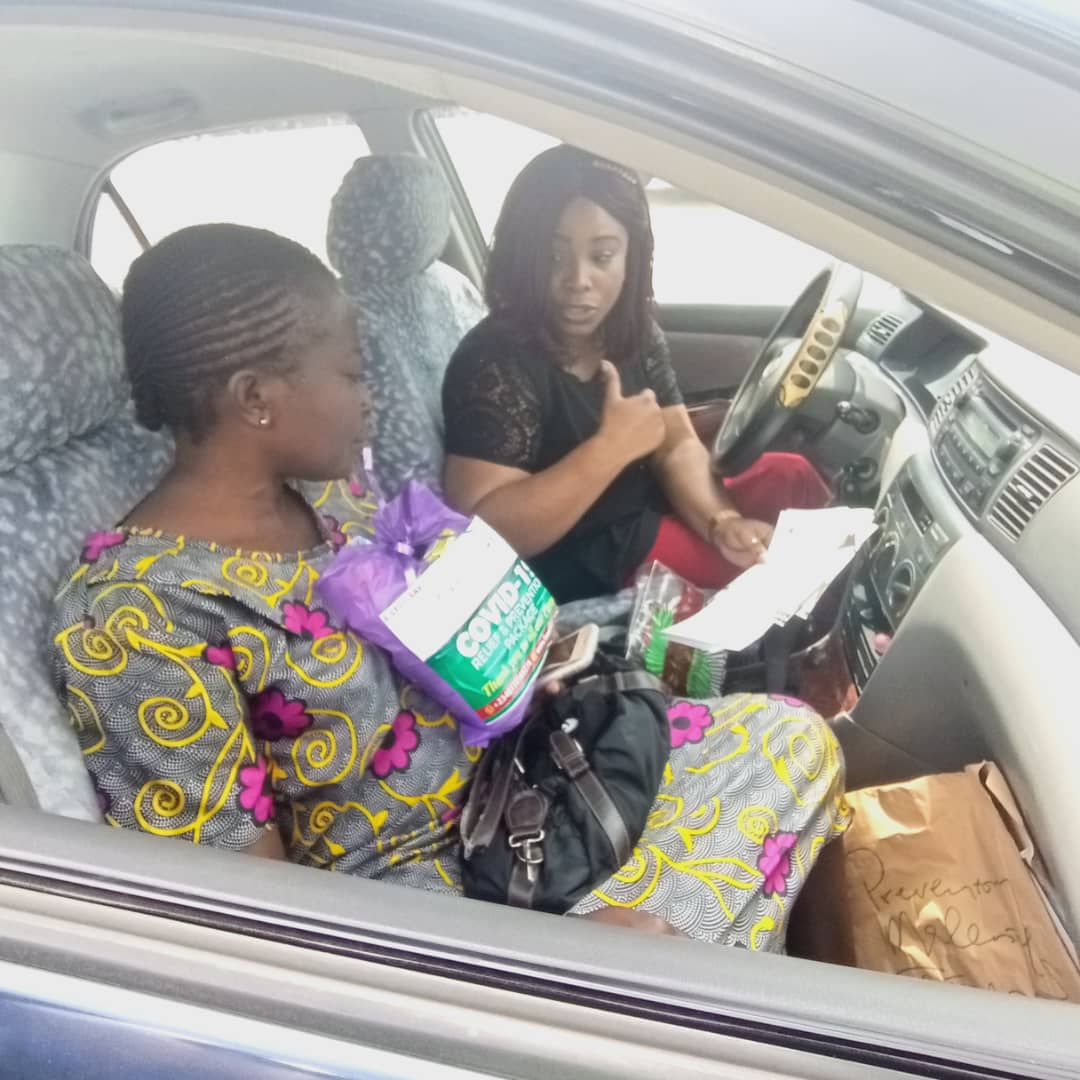
ED FACECARE Foundation, Ndifreke Andrew-Essien with a beneficiary of the palliative
In it’s effort to cushion the effect of Covid-19 FAECARE Foundation has distributed relief and prevention packages to over 100 Women with Disabilities in the South-South / Niger-Delta Region of Nigeria.
Executive Director of FAECARE Foundation, Ndifreke Andrew-Essien who spearheaded the outreach, said the world is currently experiencing an unprecedented demand on individuals to play a greater role in protecting their health with this COVID-19 pandemic.
She said this demand includes persons with Disabilities especially women with Disabilities in Nigeria.
To this end, she said the Foundation focused it’s Covid-19 Relief and Prevention Campaign strategy on persons with Disabilities especially women with Disabilities.
“As part of our strategy, FAECARE Foundation is providing COVID-19 Relief and Prevention Packages for Women with Disabilities in some local Government areas in Rivers and Akwa Ibom State (South-South, Nigeria).

The relief packages distributed
“Prevention packages for women with Disabilities containing hygiene products and items that can be used to carry out all recommended preventive measures and food palliative packages to persons with Disabilities especially women with Disabilities,” Andrew-Essien said.
She said with the support of partners, over 100 Women with Disabilities have been reached in the ongoing effort to reduce the effects of COVID-19 pandemic and the effect of some of the measures put in place, via door to door delivery and well coordinated dispatch.
Andrew-Essien also encouraged government at all levels and leaders at the grassroots, other civil society and faith based organisations as well as well meaning individuals to be inclusive in all necessary measures provided to protect persons with Disabilities in situations of risk like this COVID-19 pandemic.
“Neglect on the grounds of disability are inadmissible. Remember Coronavirus anywhere is a threat to everyone,” she said.
Besides, she reminded that as established by the World Health Organisation (WHO), Disabled People’s Organisations (DPO’s) and the disabled community, Persons with disabilities are at greater risk of infection from COVID-19 due to a number of issues ranging from barriers in accessing information concerning prevention and hygiene and the impact of measures put in place to curb the spread.
She emphasised that Women with Disabilities face a heightened risk, hence, interventions should be inclusive and equally accessible to them.
“In the article of the UNCRPD, article 11, it says that State Parties shall take, in accordance with their obligations under international law, including international humanitarian law and international human rights law, all necessary measures to ensure the protection and safety of persons with disabilities in situations of risk, including situations of armed conflict, humanitarian emergencies and the occurrence of natural disasters,” Andrew-Essien said.