


By Gabriel Olawale
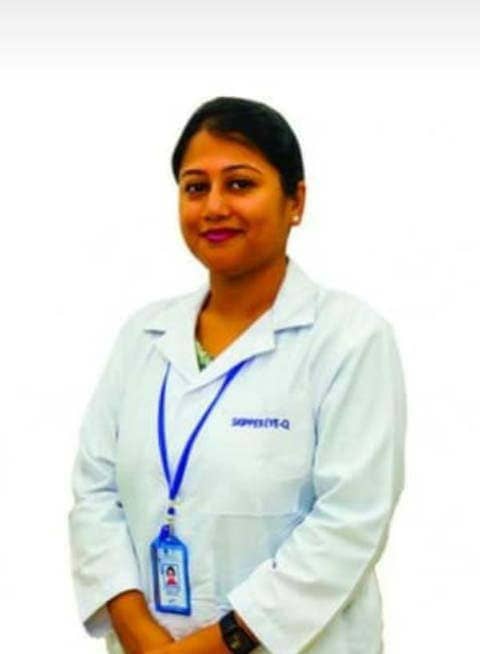
Consultant Vitreo-Retina Surgeon at Skipper Eye-Q Superspeciality Eye Hospitals, Dr. Zeenat Shah has called on people with diabetes to seek treatment for vision problems related to diabetes, sayings that early detection and treatment can lower the risk of blindness by 95 per cent.
Speaking during the commemoration of Diabetic Eye Disease Awareness Month, Shah said that the longer a person has diabetes, the greater their risk of developing a diabetic eye disease, “but the good news is that early detection and treatment can lower the risk of blindness. Managing diabetes with diet, exercise, and medication is the best way for people with diabetes to lowering the risk of vision loss.
“It is estimated that about 10 per cent of people with diabetes aged 40 years or less in Nigeria may have sight-threatening diabetic retinopathy. Treatments such as scatter photocoagulation, focal photocoagulation, and vitrectomy can prevent blindness in most people.”
“The sooner retinopathy is diagnosed, the more likely these treatments will be successful. The best results occur when sight is still normal. In photocoagulation, the eye care professional makes tiny burns on the retina with a special laser. These burns seal the blood vessels and stop them from growing and leaking.
“In scatter photocoagulation, the eye care professional makes hundreds of burns in a polka-dot pattern on two or more occasions. Scatter photocoagulation reduces the risk of blindness from vitreous hemorrhage or detachment of the retina, but it only works before bleeding or detachment has progressed very far.
Shah explained that when the retina has already detached or a lot of blood has leaked into the eye, photocoagulation no longer useful, “the next option is vitrectomy, which is surgery to remove scar tissue and cloudy fluid from inside the eye. The earlier the operation occurs, the more likely it is to be successful.
“There are two types of treatment for macular edema: focal laser therapy that slows the leakage of fluid, and medications that can be injected into the eye that slows the growth of new blood vessels and reduces the leakage of fluid into the macula.
She noted that several factors influence whether people get retinopathy or not, “blood sugar control, blood pressure levels, how long you have had diabetes or genes.
“The longer you’ve had diabetes, the more likely you are to have retinopathy. Almost everyone with type 1 diabetes will eventually have nonproliferative retinopathy. And most people with type 2 diabetes will also get it. But the retinopathy that destroys vision, proliferative retinopathy, is far less common.
“Your retina can be badly damaged before you notice any change in vision. Most people with nonproliferative retinopathy have no symptoms. Even with proliferative retinopathy, the more dangerous form, people sometimes have no symptoms until it is too late to treat them. For this reason, you should have your eyes examined regularly by an eye care professional.”