


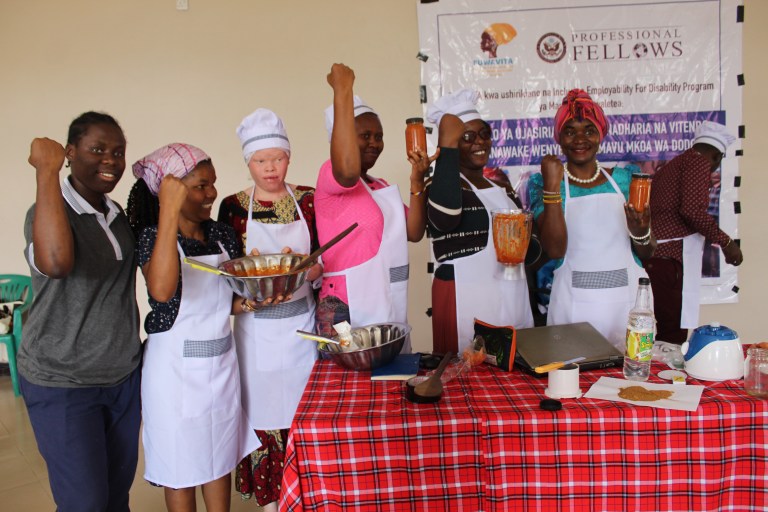
The Founder and CEO of FUWAVITA (Tanzania Joy Women Entrepreneurship for the Deaf) and 2020 Professional Fellows alumna (PFP-IDE Virtual Fellowship), Aneth Gerana Ishaya has trained 50 women with disabilities to be independent leaders in business as she completed groundbreaking self-employment and business leadership training initiative for women with disabilities in Dodoma Region, Tanzania.
The trainees were taught on practical and business skills for those who aspire to own and manage small enterprises that produce and sell food.
The 50 women with disabilities which include various auditory, visual, physical, and developmental disabilities have graduated from Aneth’s new program, which has helped them start and strengthen their own small enterprises.
Read Also: FUWAVITA Trains 50 Deaf Women on Prevention of COVID-19 In Tanzania
They learned how to produce widely marketable local food staples, such as bread, jam, peanut butter, mango pickle, and nutrition powder.
Aneth’s training initiative also taught Tanzanian women with disabilities on how to market their products via social media platforms such as Facebook and WhatsApp, and how to advocate for themselves as small business owners. As many of her trainees have limited or no access to online markets, she created official WhatsApp groups and pages on social media networks that trainees could use to sell their food products once they graduated from the program. Aneth also recruited other women entrepreneurs with disabilities who are strong role models for her trainees and interviewed them to share valuable advice with her classes.
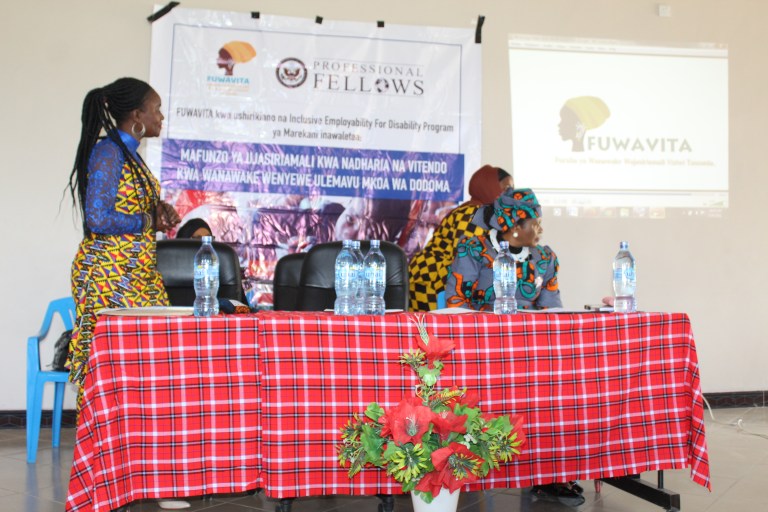
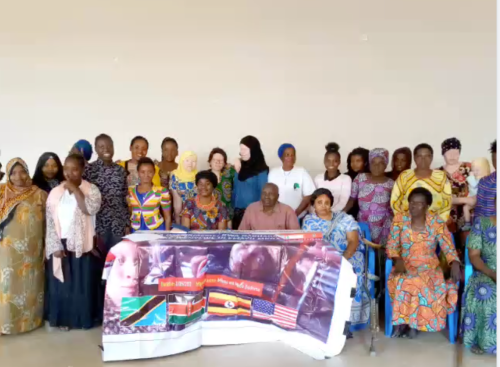
She acquired essential start-up loans for her trainees’ businesses by partnering with the Dodoma City Council and two of Tanzania’s largest financial institutions, NMB Bank and CRDB Bank. She credits her great success in engaging public officials and banks to the lessons she learned about disability policy and private sector advocacy when she was a virtual Professional Fellow (PFP-IDE) in 2020.
90% of Aneth’s training graduates have fully launched their own small businesses that produce local staple foods in Tanzania, and 88% have experienced an improved standard of living by using the business and self-advocacy skills she taught them.
Aneth is currently planning to expand the project to other parts of Tanzania, beginning with Mbeya Region in the southwest part of the country. She is preparing a new entrepreneurship training site that will be sponsored by Mission 21, a Swiss faith-based initiative that supports inclusive development.