


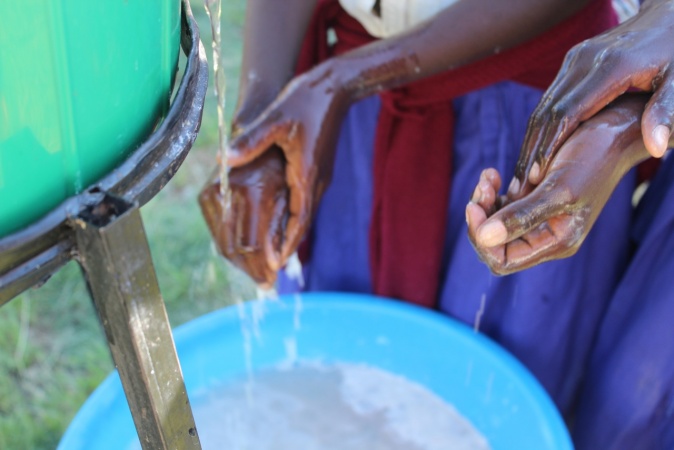
Children from 12,043 households in 11 internally-displaced persons’ (IDP) camps and informal camps/host communities in Maiduguri and Jere LGAs of Borno State are accessing basic sanitation and hygiene kits through a new humanitarian cash transfer initiative that supports beneficiaries’ access to hygiene items of their choice.
The Cash4Wash initiative is the first of its kind to be implemented by UNICEF in Nigeria.
The pilot programme aims to demonstrate the effectiveness and acceptance of cash-based interventions in support of IDPs in camps and host communities, as compared to the distribution of pre-determined water, sanitation and hygiene (WASH) non-food items.
A statement by UNICEF said Friday that the initiative was launched with support from the UK Government’s Foreign Commonwealth and Development Office (FCDO).
“The learnings and experience from the initiative will be used to scale up cash transfers for WASH services to improve access to sanitation and hygiene facilities in humanitarian settings”. The statement said.
According to UNICEF, “improved access to hygiene items would mean enhanced ability of families and communities to avert and mitigate outbreaks of illnesses like cholera and diarrhoea and the transmission of COVID-19. Cash-based transfers have the potential not only to increase access to WASH services in humanitarian settings, but also to support the local economy, as cash is spent in local markets.
“Displaced households in north-east Nigeria living with high rates of open defecation and low rates of handwashing are at a higher risk of disease outbreak and preventable deaths. Left with no livelihood opportunity, these families lack disposable income to purchase basic hygiene materials, including sanitary towels, water containers, face masks, toothpaste, cups and soap for handwashing, bathing, laundry and other cleaning”.
Recall that in its 2020 Report, the WASH National Outcome Routine Mapping, disclosed that in Borno state, only 14 per cent of households have access to handwashing facilities and sanitation.
Poor hygiene and sanitation have been linked to high infant and child mortality, including dysentery, diarrhoea, typhoid, cholera and malnutrition – the underlying cause of nearly 50 per cent of deaths in children under five globally.
The five-month pilot project is being implemented by UNICEF through local partner Centre for Integrated Development and Research (CIDAR). The project supports mostly female-headed households with a 20,000 naira (about USD 40) cash voucher.
In view of this, “Cash-based interventions help to restore communities’ self-sufficiency, dignity and determination, particularly during crisis situations. Crucially, it will also improve living conditions for children, the most vulnerable in crisis situations,” said Phuong T. Nguyen, UNICEF’s Chief of Field Office in Maiduguri.
He explains: “This initiative will provide us with lessons and possible evidence for the potential of cash-based interventions as a way to help displaced families and communities to access water, sanitation and hygiene commodities and services. It will also help to test its effectiveness in helping vulnerable families to access other basic services like nutrition and education in the future”.