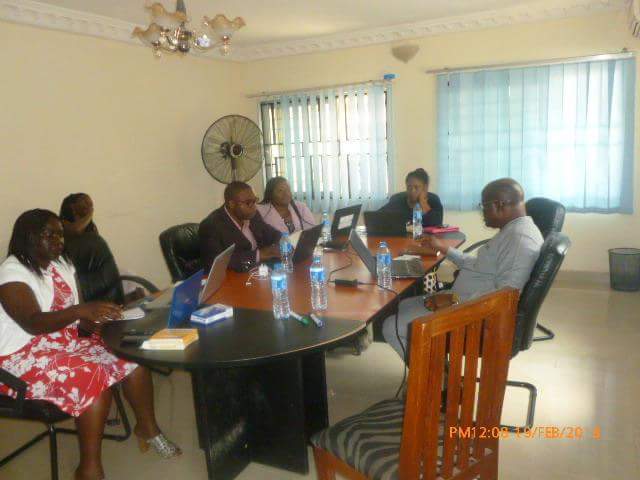
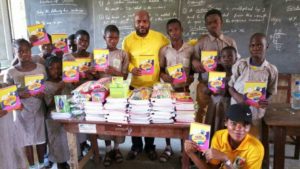
Deaf Technology Foundation has rolled out a campaign called #DeafKidsCode2018, Their mission is to train 1000 deaf kids of ages between 5-19 across Nigeria for free training in computer programming. Any school that is interested should fill the form through the link below https://goo.gl/forms/841uvupmWbgPqiP82
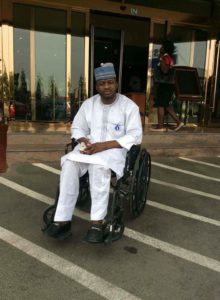
Nigerian Bride Involved In Accident Few Weeks To Her Wedding, Leaves Hospital
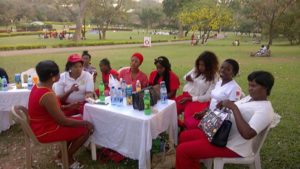
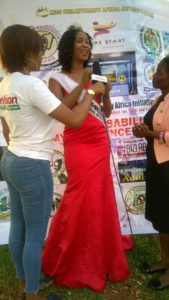
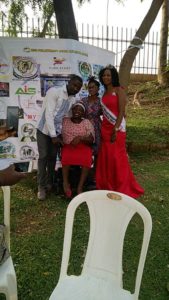
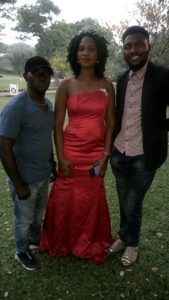
A Nigerian bride who was involved in accident few weeks to her wedding, leaves the hospital ward in a wheelchair to have her wedding. (Photos)
Somebody please pass the tissue paper, this bride has us shedding joyful tears after these lovely photos of her leaving the hospital in a wheelchair for her wedding, emerged online.
INN gathered that the stunning bride, who had had a taste of tragedy few weeks before her wedding, was involved in an accident which had her hospitalized – but she is such a fighter that she wouldn’t let that setback stop her from having her day of joy.
According to a photographer, who had taken her pre-wedding photos, shared her story on social media…INN reports.
Earlier on, the photographer expressed his amazement by what she saw, “I must say all my years of photography I’ve never seen a scene like this”, to her it was touching and heart melting, “yes she got it right because you can’t imagine a bride of her type or fashion will take to the aisle with a perfect man, yes I call him the perfect husband he is a rare gem a man of honor, he is the man for 2018, he said it and he saw to it that it came to pass”.
“I was in the studio when they walked in to take their pre-wedding pictures, a handsome man who is ready to settle with his beautiful bride, not up to a week the next call I received was that she had an accident and someone whispered to me that the marriage won’t happen again I had to think for a while but I told her it will definitely work”.
Today history repeated itself again as the bride was rolled from Federal Medical Centre Lokoja in her wheelchair, you could see smiles on the faces of other patients in the ward their hope came alive and they were filled with joy, she concluded.
See more pictures below


Inclusion: What It Means for The Community of the Disabled and The Entire World
For the entire world, including everyone and everything inside of it, it has, and will always be about survival- the single greatest denominator of mankind. The biosphere mustn’t only breathe, mankind must constantly design and develop a culture that enables it to compete well and survive.
In the 20th century, we spent an awful lot of time on matters, including industry, efficiency and the need for aggressive industrialization. In this century, we spend a lot of time talking about creativity, communication, and collaboration. Now called a knowledge-based economy, today, it seems to be that the more the quality of our knowledge and innovative capacity, the better off our quality of life is going to be.
Yet, man, for the sake of his future, has recognized the need for inclusion in every facet of its affairs- in social and cultural practices, in leadership and management, and in policy and legislation. We have now recognized the significance of inclusion in the business of man. All of us, particularly in the disabled community, now understand that incorporating the principles of inclusion is how we can all get ahead.
However, as famous as the word “inclusion” has gotten in this era, it has considerably been misunderstood and abused. A whole lot of people in and outside of the disabled community, in particular, are oblivious to what the word inclusion practically signifies. We understand inclusion in theory and concept, but not in practice and principles. And that’s a problem.
Here are TEN (10) fundamental principles of inclusion:
- Inclusion is tolerance: Tolerance is acceptance of others cultures and attitudes even though these cultures and beliefs are in a somewhat opposite direction with ours. It’s essential to have a spirit of togetherness. That’s how to get ahead.
- Inclusion is about all of us, not us and them: If inclusion is to work well, every community and minority, including factions and parties must recognize that regardless of our differences, we are one nation under God; that what binds us together is greater than what drives us apart.
- Inclusion is about bringing people together: Inclusion isn’t isolation: Inclusion isn’t saying we are deaf, we are blind, we are quadriplegics, and so we are different than others, and we need to separate ourselves from others who aren’t deaf, blind and quadriplegic. That’s a self-destructive notion.
- Inclusion is about TWO, not ONE: Inclusion isn’t singular. Inclusion is plural. Inclusion isn’t mono-cultural. Inclusion is bicultural. Inclusion is a multiplicity. It is variance and diversity- banding together bodies despite differences and attitudes for the mutual advancement of all.
- Inclusion is bridging differences: Inclusion is about finding less and less of what makes us different, rather than looking for more and more for what makes us distinct. Inclusion is about closing divides.
- Inclusion denounces aggression toward others, but advocates for the treatment of others with dignity: Everyone, regardless of sex, station, and disability status, deserves respect. Inclusion is about treating others with dignity and respect even though we do not know them or we do not agree with them.
- Inclusion finds common ground: Regardless of the weight of differences and arguments between peoples or a people, an inclusive spirit would look for a common ground- an opportunity for closure or agreement.
- Inclusion attracts not repels: An inclusive spirit accepts. It considers. It accommodates. It draws in. it adopts. It adapts.
- Inclusion is less sensitive, more stoic, more compassionate: Inclusion does not easily take offense. It’s has reduced antennae, increased empathy and a constantly developed sense of earthiness.
- Inclusion is broad-mindedness: An inclusive spirit isn’t narrow-minded. It’s liberal, yet firm. It’s sophisticated, yet restrained. It’s teachable, yet principled. With an eclectic intake, it sees wide and wild.
Inclusion is more than enacting and implementing a piece of legislation or policy. Inclusion is culture. It’s attitude. It’s all about attitude- no technicalities. If we, as a community, want a significant change in government priorities that improve our resources and opportunities, a change in our own attitude- how we see the world and our neighbours who may not share the same struggles and strains that we do, is very consequential. But more essential to our shared future and prosperity as a community of the disabled is our understanding of the principles and practice of inclusion
It is hoped that we may consider fitting in a true inclusive spirit in our own personal cultures and outlooks.
We wish you every success.
Happy New Year!
The Monitoring Officer, Justice, Development and Peace Centre (JDPC), Mr. Abiodun Abacha Adebesin, has called on the International Monetary Fund (IMF), World Bank and Central Bank of Nigeria (CBN) to lead agitations for the insertion of Braille signs on currency notes.
Inclusive News Network, gathered Braille to be a tactile writing system used by people who are visually impaired or blind and is traditionally written with embossed paper.
INN, also obtained information that Braille users could read computer screens and other electronic supports thanks to refreshable braille displays available nowadays.
Mr. Adebesin, opined that was high time global financial institutions consider adding Braille signs on our paper currencies in fulfillment of the one of the 2030 Sustainable Development Goals (SDGs) of not leaving any one behind.
“The blinds have been cheated on so many occasions because they rely on people to determine the denominations of the money they are holding and this is really saddening”, Adebesin lamented.
“If this is done by all financial institutions in the world with the support of IMF and world bank, this will be in line with agenda 2030 ‘Leave no one behind’, he concluded!
Pastor Godfrey K. Augustt, the General Overseer of Christ Chosen Deaf Generation (CCDG), has appealed to government to assist in addressing challenges facing deaf people in the country.
He said although most of them were skilled, unemployment was still rife amongst them.
This was a situation he prayed could be solved to curb if not totally done away with to reduce the number of hearing impaired persons who beg on streets and places.
Pastor Godfrey said this while speaking at the 60th anniversary symposium of Deaf Christian Mission and Education in Ghana to give thanks to God and commemorate the African-American deaf, Dr. Andrew J. Foster, who established the deaf mission in the country.
The objective of the symposium was to provide a platform for policy advocates, sign language educators, Deaf education and Christian mission’s researchers, as well as other stakeholders to critically examine the progress made 60 years on and discuss the way forward towards addressing the inherent challenges.
He said the establishment of the Deaf Christian Mission in Ghana in 1956 saw the education and effective communication of deaf people in Ghana, but they still remained unemployed.
He said although most of them were skilled, unemployment was still rife amongst them.
This was a situation he prayed could be solved to curb if not totally done away with to reduce the number of hearing impaired persons who beg on streets and places.
According to him deaf people formed part of the population and have various skills as well as talents and therefore needed the support of government to better their lot.
“Government should try as much as possible to train teachers in sign language since the absence of this skill is not making deaf students to benefit in schools especially the training colleges”, he said.
The Pastor therefore opined that the acquiring of sign language skill should be encouraged and enshrined in the constitution; be made a language of necessity to enable everyone learn it.
“What we are seeing now is not good for deaf people at all, as teachers are not teaching with love, there is so much pressure, oppression, discrimination and no equal access for hearing impaired persons towards education,” he stated.
He called on stakeholders to be concerned with the problems of deaf people because if they are well educated they could be useful in society.
He said another major problem deaf people faced was parental discrimination as they paid less attention to them.
He said it was not the fault of such children and advised parents to give them the needed support in education and other mandatory entitlements.
“Many other individuals, civil society, and governments, continue to provide support in various kinds and advocate the challenges of the Deaf Ghana, but the state of Deaf Education and employment and deaf Christian Mission is still a matter of great concern.”
Pastor Thomas Marfo, the first Deaf Pastor in Ghana, also appealed to government to understand the plight of deaf people and not be left out of the educational, heath, political and economic spheres of society, as they are active contributors to development.
He also called on the government to pay more attention to the legislative instruments that would strengthen the effective implementation of policies to ensure the well-being and employment rights of deaf people in Ghana, INN reports.
Here are top 10 common misconceptions about deaf people. We have had them resolved.
- Deaf people are aggressive and are easily aroused to anger. YES.
A large percentage of deaf people, including deaf teenagers and adults are combative people. We are easily aroused to anger. Deaf people aren’t always calm especially when they are in communication with hearing strangers.
- Deaf people are very emotional people with low tolerance level. YES
If deaf people have aggression, it is safe to admit they are very emotional people with low tolerance level. Although this popular opinion may not be associated with all deaf persons, many deaf folks of today cannot live and function in peace with other people who do not share their culture.
- Deaf people are not as intelligent as hearing people. NO. ABSOLUTELY NO.
This assertion isn’t true. Deaf people are some of the most intelligent, brightest people in every society around the world. Their inability to perceive sounds has allowed them to innovate, to look at other ways they can learn about culture and values so that they can function in the society and compete well. They are adequately compensated for their disability.
- Deaf people do not talk. NO.
This isn’t true. Gone are the days when deaf persons did not talk. Today, very many- increasingly a number of deaf people can talk. However, some, depending on the onset of the loss, including the severity of the hearing loss, can speak clearly and intelligibly
- Deaf people have attitude issues. YES. NO.
We don’t know for sure what constitutes good or bad attitude. Culture is a pretty big influence here. We are all different people from different places. But when the definition of attitude issues means being disrespectful, lacking sense and mannerisms, talking irresponsibly, well, there may deaf people who are very much like that. However, very other many deaf persons are some of the most decent, civil, and respectful persons around.
- All deaf people are completely and totally deaf. NO.
This isn’t true. In fact, research has shown that deaf people, no matter the weight of the deafness, has something called “residual hearing”. By all means, deaf people aren’t totally unable to perceive sounds.
- All deaf people know and can use sign language. NO
Not all deaf understand and can use the American Sign Language (ASL). There are a number of deaf- young and adults, who do not know how to sign but often communicate with others via lip reading and other means. Not every deaf person can sign.
- All Deaf People understand and participate in Deaf Culture. NO.
Not all deaf people choose to embrace and participate in Deaf culture. Deaf culture requires a common language, shared values, beliefs, norms, behaviours. Like we said, there are a good number of deaf people around the world do not care about learning and using the sign language, who do not care about “special fellowship” or community with fellow deaf persons. These persons, instead, choose to assimilate into the hearing world as much as possible and not associate with other deaf people.
- Deaf people do “lowly” jobs. NO.
Some do. Some don’t. but like hearing, there are deaf people who also do low-end, “uneducated” jobs. It is it for everyone and every culture. Nonetheless, there are outstanding deaf people around the world who do outstanding job.
- Sign Language is bad for Deaf people because they will depend on it too much which will them unable to communicate with hearing people. NO
This absolutely isn’t true. Sign language- a system of communication among the deaf that involves the use of fingers and other manual means to convey information, is good for language and cognitive development. Research has shown that preventing deaf children from learning sign language causes a linguistic and intellectual delay in these kids because not all deaf kids can access a spoken language as a consequence of their deafness. Furthermore, research has also shown that sign actually facilitates speech instead of stopping it.
What is, however, important to know is that mastery of sign language alone isn’t enough for the deaf. The deaf need the abilities to communicate in spoken and written English with politeness and clarity, need to have interpersonal skills that are good for the relationship and emotional wellbeing. On top of all, deaf people must learn how to talk to others in a way that is civil and generally acceptable. That is very essential.
We wish you a happy and healthy new year.
Spinal Injury Association Presents proposal; Receives Special Consideration For 2018 Budget
Representatives of Kano State Spinal Injury Association (SIA) at the Public Hearing for 2018 budget, lead by Engineer Abdul B. Haruna, presented a proposal to the State House that emphasized on health issues from MRI, cost of Surgery, rehabilitation center and spinal ward in a newly Muhammadu Buhari Specialist hospital.
Expressing his joy and appreciation was Abdulrahman Uba, a member of the SIA community, who broke the news on his Facebook page. He went further to give us insight into the damning effects of Spinal injury. He says: ” The Spinal injury is inevitable in a society, It causes a lot of damages to the human life. It’s one of the most expensive health condition to care. Spinal injury has no class status as of some other diseases, it involves a donkey rider, air traveller, biker, building collapse, an ordinary pedestrian may be hit by the running object or a vehicle not to talk about car accidents which is the most commonly caused. To reduce the trauma by the victims, their families and it’s effect in a society the SIA community under the leadership of Engineer Abdul B. Haruna present a proposal to the State House that emphasized on health issues from MRI, cost of Surgery, rehabilitation center and spinal ward in a newly Muhammadu Buhari Specialist hospital.”
“And also education, inclusiveness among others” he concluded.


The General Overseer of the Redeemed Christian Church Of God (RCCG), Pastor Enoch Adeboye, has wished death on his foes over his wife. Inclusive New Network obtained news concerning pastor Adeboye promising to kill anyone who touch his wife, Pastor (Mrs) Foluke Adeboye.. Read on;
The General Overseer of the Redeemed Christian Church of God (RCCG), Pastor Enoch Adeboye, said this during a Sunday service while delivering a message titled “Activating Your Destiny” at the National Headquarters of RCCG, Throne of Grace Parish, Ebutte Meta, Lagos, as he gave a sermon on marital related issues. He said that he would kill anybody who touches his wife, Pastor (Mrs) Foluke Adeboye.
He said, although he could not do anything to anybody who slaps, criticizes or lies against him, but to do such against whoever did it against his wife; he would kill the person.
The man of God, however, enjoined couples to be ready to lay down their lives for their partner if they truly loved them.
Daddy G. O, as he is fondly called by his endearing followers, urged those seeking life partners to marry for love because, such love endures for long.
He said despite the fact that he has been married to his wife for about 50 years now, he still felt like he is on a honeymoon.
He also urged ladies to marry a pastor if they wanted an influential man.
Pastor Adeboye, however, pointed out that he would not do the killing with knife or gun but would ask his Daddy above (God) and the person will sleep and not wake up again.
According to him, “Be ready to lay down your life for your partner if you’re truly in love. My wife doesn’t like me saying this…”
“You can slap me; you can lie against me, you can criticise me, it doesn’t bother me, but touch my wife, I’ll kill you!” He exclaimed.
“I want the world to hear. They’ll say if I killed, they’ll arrest me, jail me, that is if I killed with cutlass or gun”
“If you tamper with my wife, I will talk to my Daddy and you’ll sleep and will not wake.”
He went on, “If you want to marry a person who’s influential, marry a pastor. If he does not fall into sin, he’ll remain a pastor forever.”
“Marry for love. It’ll endure. I’ve been married for 50 years and still on honeymoon. I was the poorest among those lurking around the girl I married.”
“One was a lawyer who had a car; I had nothing. But I told the girl that if you marry me, whatever I am, wherever I ever become, will be yours”.
“I was not a Christian, but I was an incurable optimist. We struggled over ‘pomo’ as you usually hear me say, but today if we want to eat a cow now, God will provide.”
“After our wedding in September 8, 1967, we faced challenges. The baby came 1968. It was tough. We were happy because we were in love.
“I had no car, no house, and I married into a rented room and parlour. We have stories to tell. If you marry for love, the reason it will last is because God is love.”
“You must continue to tend the fire, meaning: no matter how little, you must constantly give gifts to your partner. If it’s given in love, it’ll be appreciated”.
“When two people are in love, they exchange gifts. Always open your mouth to say to your partner “I love you” he concluded.
Source: Vanguard News
Plateau State Set For Accessible Tertiary Institutions And Employability For PWDs
Plateau state has put in place plans to further ensure accessible Tertiary education and employability, for people with disability, within the institutions in the state.
According to a Facebook post by the Plateau state Disability Rights Commission Chairman, James Lalu, admission into all plateau state owned institutions has from henceforth been made accessible for all citizens with disablities. He further gave insight that employment into the institutions shall be on equal opportunity with zero discriminations.
And that Disability service centres have also been instituted and courses on disability studies introduced into all institutions.
Reading him, the elated Chief Lalu, with the enabling support of the deputy Governor of plateau state Prof. Sonny G. Tyoden, says;
“Thank your Excellency, the Deputy Governor of Plateau State Prof. Sonny G. Tyoden for creating the perfect platform for access to Tertiary Education for People with Disabilities in Plateau State. Admission into all the Plateau State owned Tertiary Institutions has today been eased for all citizens with Disabilities; Employment into the Institutions shall be on equal opportunity basis with zero discrimination for qualified People with Disabilities. Establishment of Disability Services centers have today been approved to provide in-campus comprehensive disability support services to facilitate learning and independent living. Provision of Accessibility to the built environment shall commence with immediate effect and the introduction of general courses as GST tagged ‘’Introduction to Disability Inclusive Development’’ was accepted to commence in the next academic session creating awareness to all students on Disability and Development. New academic courses on ‘’Disability Studies’’, will soon emerged. The Plateau State Disability Rights Commission to provide technical support and assistive devices. These were achieved during an interactive meeting with all heads/CEOs of Tertiary Institutions in Plateau State today and the Disability Rights Commission.”
Congratulations to plateau state citizens with disablities
Happy New Year.
This is going to be a very powerful series of articles about community and nation, about cultures and characters, about realities and values. We are simply going to be looking for a balance and closure. We want to learn about ourselves and be better persons.
In every community- disabled or non-disabled, rich or poor, elites or the regulars, each has certain ideas and notions that are often identified with them. Although not often fair and true, we usually see a fair amount of truth in many of these assertions, about certain a community or group.
At least, for example, we know and obviously believe that people with blindness often have superior intelligence. Well, thankfully, that’s an admirable popular opinion. However, can we admit that truly people who are originally from Ijebu are very stingy with money, and are often annoyingly frugal with possessions and properties?
Well, these are common stereotypes, and we can never know for sure whether they are true or not. But one thing is that if we are told something enough times, we are sure to begin believing them.
Typically called misconceptions by the society- misconstructions are popular, critical assertions which many people believe to be true, but which upon closer inspection, reveal that commonly-held assumptions such as “Deaf people are very aggressive and easily aroused to anger” are, in fact, not quite as true as they seem.
For the deaf community, it sure has an astonishing number of misconceptions that are often leveled against it. But in fact, the deaf, among all disability clusters, tend to have the most “profound” of all of the misconceptions that are had against the community of the disabled- among all. The deaf people are quite extraordinary.
We want to look at these misconceptions that the society has about the deaf. But we just won’t mention them, we are going to look at the truths in these public declarations about the deaf community and see if we can agree with the world and accept our realities and hopefully consider challenging these stereotypes.
Nonetheless, every one of us always wants to be a better person. But even more realistic is our desire to be a better version of ourselves as deaf individuals- in the spirit of this season.
In our next article, we look at the top 10 common misconceptions about the deaf and have them resolved.
We wish you a healthy and happy year 2018.
As we are celebrating New year. Our team has removed all pop ups and glitches from our site. You should be able to scroll through our site now without any problems. Start storming our site immediate and read all your favorite news you had wanted to read long time ago and don’t forget to subscribe to our website, like our Facebook page, Twitter, Google +, Instagram for your favorite news. Thanks for trusting us.
Happy New Year!
Executive Director
Sejoro Ekundayo Peter
Even Dead Persons Got Appointed but None from Nigeria’s World’s Most Populous Educated/Lawyers Black Nation of Persons with Disabilities- Physically Challenged Man Said
- A physically-challenged man expresses his embarrassment at the President’s appointment of dead persons
- Even more embarrassing is the president’s disregard for the appointment of Educated/Lawyers Black Nation of Persons with Disabilities
- The livid physically challenged man, Eric Ufom, said persons with disability are treated as “objects” of charity
- He wants persons with disability to be seen as “subjects” with equal rights.

President Buhari’s appointment of 209 chairmen and 1,258 members of the governing boards of agencies and parastatals on Friday, 29, December, has caused serious controversy among Nigerians over 3 dead persons who were included in the lists of appointees.
Among them were Reverend Christopher Utov, as a member of Nigerian Institute of Social and Economic Research. Reverend Utov, the proprietor of Fidei Polytechnic, Gboko passed away on March 17, 2017, Chief Donald Ugbaja was also appointed by president Buhari as a member of the Consumer Protection Council (CPC). Chief Ugbaja, a former DIG of the Nigerian Police, died on November 29, 2017. The third man Senator Francis Okpozo, was appointed as chairman of the Nigerian Press Council. While Okpozo, a senator in the second republic, died on December 16, 2016
The outraged physically challenged man, Eric Ufom, said persons with disablity are treated as “objects” of charity but wants persons with disability to be seen as “subjects” with equal rights. Read what he said below;
“The Convention follows decades of work by the United Nations to change attitudes and approaches to persons with disabilities. It takes to a new height the movement from viewing persons with disabilities as “objects” of charity, medical treatment and social protection towards viewing persons with disabilities as “subjects” with rights, who are capable of claiming those rights and making decisions for their lives based on their free and informed consent as well as being active members of society.”
Nigeria’s Charles Onu Has Developed an App That Detects Asphyxia in Babies from Their Cry
- An Artificial Intelligence (AI) health start-up in Nigeria has designed a machine learning system that can detect asphyxia in babies
- With the technology, the cry of a baby is taken as input, essayed- including the amplitude and frequency patterns in the cry so as to generate instant diagnosis of birth asphyxia
- This condition is a leading cause of physical and intellectual disabilities in newborns
- The Artificial Intelligence (AI) solution has achieved over 95% prediction accuracy in trials with nearly 1,400 pre-recorded baby cries
The Nigerian Artificial Intelligence (AI) Health Start-up, Ubenwa Intelligence Solutions founded by Charles Onu has developed a machine learning system that can take as input the cry of a baby, analyse the amplitude and frequency patterns in the cry, to give instant diagnosis of birth asphyxia. This condition which according to World Health Organisation is one the three major causes deaths of new-born babies worldwide, accounting for 23% of deaths, can now be easily diagnosed without medical expertise or the use of clinical methods.
Asphyxia is a technical term for suffocation that arises as a result of physical blockage of the airway or inhalation of toxic gases, causing lack of oxygen and unconsciousness.
The diagnostic system is now deployed as an embedded model on an Android app called Ubenwa (which means baby’s cry). This app uses a technique that have been developed for speech recognition leverages the audio processing and computational capabilities of smart mobile devices to analyse the new-borns’ cry and give a qualitative assessment of whether or not the new-born has or is at risk of asphyxia.
This big Health-Tech innovation helps parents and caregivers detect asphyxia earlier without having to wait on doctors. Ubenwa is a response to the pressing need for useful, affordable and sustainable medical tools/devices that can help tackle the increase in neonatal morbidity and mortality.
According to Charles Onu, the AI solution has achieved over 95% prediction accuracy in trials with nearly 1,400 pre-recorded baby cries. and according to Ubenwa website, the test results from the diagnostic software have shown a Sensitivity of over 86% and Specificity of 89%. The app is non-invasive and can be over 95% cheaper than existing clinical alternative.
This innovation will be having the strongest impact on the continent of Africa where death caused by Birth Asphyxia is the highest globally as the continent still records high infant mortality rate from the condition even though there are already methods and equipment that can detect it. It has caused the death of 280,000 babies a year (on their first day of life) in sub-Saharan Africa alone.
This is because only few public hospitals in Africa have the diagnostic equipment due to its high cost, and those that have the equipment still have to deal with factors like poor electricity and an unrealistic routine application for every child.
Charles Onu, the Founder and Principal Innovator of Ubenwa Software is an AI researcher, and software engineer. He obtained a Bachelor degree in Computer Science from the Federal University of Technology, Owerri in Nigeria. He is currently studying for a Master degree also in Computer Science in McGill University in Canada. He is an Associate Fellow of the Royal Commonwealth Society and was one of 12 Fellows selected globally to take part in the Jeanne Sauve Public Leadership Program in 2015.
The start-up is now raising funds to acquire more data to improve accuracy and get clinical approval from health institutions with clinical validation exercises currently being conducted in Nigeria (at the University of Port Harcourt Teaching Hospital) and Canada (at the McGill University Health Center).
“We want to do the tests in the hospital, interact directly with the babies, and compare how Ubenwa performs given all the new environmental challenges that would come up. The reason we are able to pursue this real-time validation in the clinical setting is as a result of the success of our earlier work,” Onu said.
The Start-up is already garnering international attention and is in the second round for the global IBM Watson AI XPRIZE competition, which has a $5 million prize though it is yet to figure out a definitive monetization business strategy.
“We are still finalizing a hybrid model. But in the meantime, we are planning to make it free for individuals and paid for organizations such as hospitals, clinics, governments, and others),” Onu said.
- A driving test technology has been invented for deaf would-be-drivers
- Introduced by state-run Korea Road Traffic Authority (KoROAD), the driving test uses a head-up display for the hearing impaired
- Before this time, a tester seated on the passenger seat had to manually give directions to a a deaf applicant
- The technology has now made it possible for the deaf to receive driving instructions while looking right ahead the windshield
The state-run Korea Road Traffic Authority (KoROAD) has introduced a driving test that uses a head-up display for the hearing impaired, it said Tuesday.
The head-up display, or HUD, refers to technology that projects navigation information onto the windshield. It is often installed in vehicles to boost driver’s safety and convenience.
Before the introduction of the latest system, a tester seated on the passenger seat had to manually give directions to a hearing-impaired applicant, KoROAD said.
An image of instructions projected on the windshield using a head-up display (Korea Road Traffic Authority)

“The tester would point out whether to take a left, right, U-turn or to go straight when applicants with hearing disabilities took the road test,” said a spokesperson of KoROAD.
“The HUD-incorporated system is more realistic, safer and convenient.”
The new system gives directions 300 meters, 200 meters, and 100 meters before a point of change through the HUD.
Korea has been using an audio-guided course instruction test system since 2012 to prevent confusion while navigating.
SSA to Anambra State Government Condemns Libya Slave Trade, Wants Federal Government to Create More Jobs Opportunities for Youths
- A top special assistant to Anambra Governor has bemoaned slave trade that is currently ongoing in Libya
- The top state official condemns the ugly situation where Blacks sold Blacks in Libya.
- Barrister Chucks Ezewuzie, challenges the government on creation of jobs and improvement of living standards of people
- He also calls for “Ndi” Anambra and Nigerians in general to come back home to develop Anambra state and Nigeria.
The Think-Home philosophy of the state government was, yesterday, re-echoed by the Senior Special Assistant to Governor Willie Obiano on Disability Matters, Barrister Chucks Ezewuzie, who wants Ndi Anambra and Nigerians in general to come back home to develop Anambra state and Nigeria.
In a chat with ABS correspondent, Nneka Anoliefo, in Awka, Barrister Ezewuzie, condemned the ugly situation where Blacks sold Blacks in Libya.
Regretting that young Nigerians- even those with academic qualifications, abandoned the country to seek greener pastures in countries where they are subjected to inhuman treatment, Barrister Ezewuzie advised Nigerians to shun the quest to get rich fast, urging them to stay back in the country to tap from its rich endowments.
The Governor’s aide seized the opportunity to appeal to the federal government to create more employment opportunities for youths to enable them become self-reliant, even as he enjoined the youths to say no to people that offer to take them abroad for white collar jobs.