According to news published by Premium Times and obtained by INN, the President of Liberia, George Opong Weah, has requested the Nigerian government to provide 6000 teachers to his country as part of the Technical Assistance agreement between the two nations, INN reports
Speaking Monday shortly after a closed-door meeting with President Muhammadu Buhari at the State House Presidential Villa in Abuja, Mr. Weah said his government inherited many problems which can only be tackled with assistance from countries like Nigeria.
Mr. Weah was inaugurated into office on January 22 after defeating immediate past vice president Joseph Boakai of the Unity Party.
Addressing journalists after his meeting with Mr. Buhari, the Liberian leader identified some of the urgent problems facing his country as youth unemployment, as well as the need to revive the education, agriculture, mining and health sectors.
“Your sustained technical assistance for capacity building in these sectors is most welcome. For example, Nigerian teachers and medical volunteers to Liberia, under the Technical Assistance Corps (TAC) Agreement with Liberia, have been very crucial in boosting capacity development in Liberia, and it is my hope that this assistance can be considerably increased to address with urgency our most pressing socio-economic needs at this time.
“More specifically, under the Bilateral Teacher Exchange programme, we are seeking 6,000 plus teachers to make up for the shortage of good teachers in our educational system,” he said.
Mr. Weah thanked Mr. Buhari for the invitation extended to him and said his delegation was on a mission of “gratitude and respect for the extraordinary and exceptional role that you, our Nigerian brothers and sisters, have played and continue to play in maintaining peace and stability in the West African sub-region, and more particularly, in Liberia”.
He said although Nigeria is the largest economy in Africa, “with the most powerful army in our sub-region, you have never used your wealth and military prowess to expand your territory, threaten your neighbours, or destabilise any sovereign nation in the region”.
He also said the prices of Liberia’s two basic export commodities, rubber and iron ore, continue to fall on the world market, which have diminished the country’s foreign exchange earnings from the export of the commodities.
He asaid most export earnings of Liberia is used mainly to import food and other commodities, causing massive trade deficits while youth unemployment is at an all-time high, and prices of basic commodities continue to increase.
“Our people have voted for change, and for hope. And change is finally here. But mere political change is meaningless without development, prosperity and growth.
“Your Excellency, we need Nigeria’s help to jump-start our economy. You played a major role in bringing peace to Liberia, you reformed our Army and today it is performing its duties to the highest professional standards. As we speak, they are serving in a peace-keeping mission in Mali.
“You have also built and expanded the capacities of Liberians in so many ways. For example, during our recent observance of Armed Forces Day in Liberia, we were informed that two of our military personnel will soon be graduating as pilots from one of your esteemed institutions.
“We would like to see a continuation and expansion of that programme, for both men and women,” he said.
Liberia is open for Nigerian businesses
Mr. Weah also declared that Liberia is now open for business to the Nigerian private sector.
He said there is a need to address the current volume of trade between the two countries, which is very low and does not exceed five million dollars, by some estimates.
“Yet, the Liberian banking sector is dominated by Nigerian banks, and I am made to understand that their Head offices in Nigeria may be considering reducing their support or even shutting them down because of the recent downturn in our economy.
“If this is true, I urge them not to do so, as l am optimistic that trade and commerce will increase in the near future.
“ There are also major shortcomings in the electricity and power sectors, in road construction, in housing, in mining, and in fisheries, to name a few, that could be of serious interest to Nigerian investors, either as individuals or companies, or through joint-ventures or public-private partnerships.
“ We invite all of you to come to Liberia and explore the many new opportunities for investment that abound to increase under this new political dispensation. I promise you that you will find a government that is not only business friendly, but ready to do business.
“ On a personal note, President Buhari, it is my intention, with all due respect and affection, to frequently seek your wise counsel and advice as we embark upon this arduous task of nation-building, reconstruction, and transformation of my country.
“ Nigeria’s historical benevolence towards Liberia cannot be quantified. And once again, we seek your urgent and critical assistance,” he said.
The US Embassy Abuja represented by Mr Franz Seitz Philip paid a working visit to JONAPWD Secretariat on the 1st of March 2018 to explore New areas of partnership with JONAPWD, INN reports
This information was contained in a Facebook post shared on the JONAPWD’s page
According to the post, Part of the outcome of the laudable visit was a commitment on the part of the Embassy to build a working relationship with JONAPWD targeted towards ensuring Visibility and an all inclusive development interventions for persons with Disability in Nigeria.
It must be recalled that JONAPWD operates in 36 States of Nigeria and FCT, with a national headquarter located in the FCT. JONAPWD programmes in line with its objectives includes policy influencing through advocacy, training and capacity building for registered member associations, awareness, mobilisation and welfare through entrepreneurship and service delivery; all programme delivery approach utilises rights based approach ensuring that systems and structures at all levels are transformed with equitable power sharing.
See photos below…

- As INEC Director Adopts PWDs frameworks
The Economic and Financial Crimes Commission (EFCC) has resolved to extend its searchlight to political parties to stop them from further corrupting politics with money, INN learnt from source
As the 2019 general elections get closer, EFCC is taking steps to stop money sharing at conventions of political parties.
The Chairman of the anti-graft body, Mr. Ibrahim Magu, said EFCC is working with the Independent National Electoral Commission (INEC) to stop politicians from sharing money at party conventions or at polling centres.
According to source, Magu unveiled his new anti-corruption shift, during “Question Time’’, a live programme of Channels Television.
Quoting him, Magu said, “We are working with INEC to make sure that we seal every window, and every leakage before the election.”
“We will block any avenue where people can move a lot money either physically in cash or through banks”, further assured
“We will prevent people from using money to buy votes or use money during conventions for delegates. We have the machinery in place”
Adopts PWDs frameworks
Meanwhile, Directors’ at the Independent National Electoral Commission (INEC) have adopted the draft Framework on Access and Participation of Persons Living with Disabilities ahead 2019 General Elections.
Appraising the document before its adoption in Keffi area of Nassarawa State, the National Commissioner and Chairman Information and Voter Education Committee of INEC, Prince Adedeji S. Soyebi said the document was good enough right from initial stage and INEC was committed to promoting the participation of all social groups in the electoral process.
He said that the document would be presented to other critical stakeholder groups for further scrutiny before its final adoption.
Soyebi equally confirmed the election scheduled for 2019. The Presidential and National Assembly elections for Saturday, 16th February, while the Governorship and State Assembly/Federal Capital Territory (FCT) Council elections have been scheduled for Saturday, 2nd March 2019.
Deaf Lady Emerges As First American Deaf Council Mayor in Sacramento State
Sacramento State has a new female mayor in the person of Amanda Folendorf who is a Sac State graduate. She was sworn in last month as she breaks barriers, INN reports
Folendorf is being recognized as not only the youngest member of the city council but the first female deaf mayor in American history.
Notable figure took time to shower her with praises for being the first female deaf to enter the city council as Mayor, “I think Amanda is an inspiration to our community and an inspiration for others” said Melissa Eeds.
The elated Folendorf says, “It’s an honor that my peers appointed me and believed in me taking on this leadership role.”
INN learnt that she was born with a rare birth defect called diaphragmatic hernia, the 31-year-old had to take medications as a baby that ultimately damaged her hearing.
During her interview with CBS13, Folendorf says she can only pick up low-frequency noises, and she was reading lips to get through the questions.
But she does not see her deafness as a disability.
“Hearing impaired and disability, I’m trying to throw that label out. We’re no different than anyone else; we just can’t hear,” happy Folendorf said
We may be curious to know how she goes about her daily mayoral duties.
“There’s a team of interpreters. They help me get through my meetings. Without them, I’d be so lost,” she explained.
From interpreters to the use of various technologies Mayor Folendorf is able to get by. Growing up in Angels Camp, she credits her parents for never making her feel inferior.
In 2007, while advocating for deaf rights, she was crowned Miss Deaf California.
“There was never the word can’t, you can and you will. It was an amazing experience, helped me build confidence, confidence to be in front of people,” said Folendorf.
And now this hometown girl turned mayor wants to give back to her community and wants the deaf community to know, anything is possible.
“I think that if you believe it, and you want it, there should be no reason why you can’t get to that goal,” she further said.
Folendorf said that her first goal as mayor was to bring economic growth to the city.
And by sharing her story, she hopes to inspire others not to allow obstacles to stand in their way.
Ministry Of Health Officer Runs 21.1km To help raise 21M For Deaf Education In Tanzania
- As Deaf Association launches campaign awareness for the deaf
Community development officer for gender and children, Ministry of Health, Aneth Gerana recount her experience in running 21.1km race with the Shuledirect team in Tanzania during the 2016 Kilimarathon16 to raise Tshs 21millions, which when converted to Naira is #3,346,225.92 (according to current exchange rate), to support alternative learning through contents Lab for secondary School students with hearing disabilities in Tanzania, INN reports.
INN obtained the information from the post she shared on Facebook on 3rd march, 2018 which was equally tagged to Inclusive New Network founder, Ekundayo Sejoro. The content was written in Swahili but translated through Facebook translations. She wrote, “A moment with consolation, it was great to work with you madam. I remember this was 2016 I joined the Shuledirect Tanzania team in the efforts to improve deaf education in Tanzania, I was ready to travel to Moshi Kilimanjaro and ran 21.1km to help collection of money to buy a special computer for deaf students.”
“Comfort is an example to all stakeholders of education in Tanzania, let’s participate in improving the education of the deaf Tanzania” she concluded

Meanwhile, the Tanzania Association for the Deaf (Chavita) has launched an awareness campaign for educating government officials on basic human rights of people with hearing impairment.
The campaign, which will be held in Mwanza, Arusha and Morogoro regions, aims at ensuring the people with hearing impairment are involved in formulating government policies and helping them to monitor and implement government development activities.
INN learnt that the Ward executive officers, local leaders and civil servants from district councils will participate in the awareness campaign.
It will help the people with hearing impairment enjoy their basic human rights.
This was said last week by Chavita gender officer Lupi Maswanya during the launch of a two-year education campaign funded by the Civil Foundation Society at Sh160 million. More than 600,000 people in the country have hearing impairment, according to the National Policy on Disability (NDP), 2004.
Chavita country public relations officer Msafiri Mhando said the campaign would also help the people with hearing impairment to understand that they were citizens of this country and were protected by the law as any other citizen in society. “Their abilities are overlooked, their capacities are underestimated and their needs are not given priority,” Mr Mhando noted.
Mr Mhando said time had come for the government and nongovernmental organisations, including media houses to use interpreters for the deaf to ensure they were included in development activities.
The Nigerian Police Salary Scale… This article will enlighten you more on how much Nigerian Police pay its officers starting from the highest rank to the lowest vacant position. See full information as INN share from source.
Nigerian Police Salary Structure
The Nigerian Police (formally the Nigerian Police Force) is becoming a really cool employment-wise. The salary is considerable. And you’re pretty confident you will get it at the end of every month. This is a post about the Nigerian police ranks and their salaries in 2018.
Inn learnt in total, that the Nigerian police is responsible for the peace and order in the country. That the police force number consists of about 372 000 people but this number is not enough to prevent all the criminal cases. This was the reason why it was recently approved that the police staff would increase to about 650 000 police officers.
Inn learnt that the Nigerian police was rather serious structure which main responsibility waa to fight crime and protect lives and properties. It was established in 1930. Inn also learnt that the Nigerian Police consists of 36 teams which are spread across the country and are classified into 12 various zones. It should be noted here that all these zones are operated by the seven various administrative organs. There are over 2000 police stations in Nigeria.
The Arms of the Nigeria Police includes :
- Administrative arm
•Anti-Fraud Section
•The Central Criminal Registry
•Special Anti-Robbery Squad
•X-Squad, General Investigation
•Special Fraud Unit
•Legal Section
Forensic Science Laboratory
•Interpol Liaison
•Homicide
•Police Mobile Force
•Anti-Human Trafficking Unit
•Force Intelligence Bureau
•DCI Kaduna Annex and; - Counter Terrorism Unit.
INN also learnt that a Nigerian police officer’s salary is dependent on his or her rank in the Nigerian Police and grade. That being said, we shall take it from the recruit to the Inspector General of Police and you will learn about new salaries of different ranks in the Nigeria police force.
1. Police Recruit
Salary per month – N9,019.42
Annual Salary – N108,233
2a. Police Constable Grade Level 03
Salary per month – N43, 293.80
Annual Salary – N519,525.6
2b. Police Constable Grade Level 10
Salary per month – N51,113.59
Annual Salary- N613,363.08
3a. Police Corporal On Grade 04 (1)
Salary per month – N44,715.53
Annual Salary – N536,586.36
3b. Police Corporal On Grade Level 04 (10)
Salary per month- N51,113.59
Annual Salary – N613,365.08
4a. Police Sergeant On Grade 05 (step1)
Salary per month – N48,540.88
Annual Salary – N582,490.56
4b. Police Sergent On Grade 05 (step 10)
Salary per month – N55,973.84
Annual Salary – N671,686.08
5a. A Sergeant Major On Grade 06 (step 1)
Salary per month – N55,144.81
Annual Salary – N661,737.72
5b. Sergent Major On Grade 06 (step 10)
Salary per month – N62,204.88
Annual Salary – N746,458.56
6a. Cadet Inspector On Grade Level 07 (step1)
Salary per month – N73,231.51
Annual Salary – N878,778.12
6b. Cadet Inspector On Grade 07 (step10)
Salary per month – N87,135.70
Annual Salary – N1,045,628.4
7a. Assistant Superintendent Of Police On Grade 08 (step1)
Salary per month – N127,604.68
Annual Salary – N1,531,256.16
7b. Assistant Superintendent Of Police On Grade 08 (step10)
Salary per month – N144,152.07
Annual Salary – N1,729,824.84
7c. Assistant Superintendent Of Police On Grade 09 (step1)
Salary per month- N136, 616.06
Annual Salary- N1,639,392.72
7d. Assistant Superintendent Of Police On Grade 09 (step10)
Salary per month -N156,318.39
Annual Salary – N1,875,820.68
9a. Deputy Superintendent Of Police On Grade 10 (step1)
Salary per month -N148,733.29
Annual Salary -N1,784,799.48
9b.Deputy Superintendent Of Police on Grade 10 (step10)
Salary per month -N170,399.69
Annual Salary -N2,044,796.28
10a. Superintendent Of Police On Grade 11 (step1)
Salary per month – N161,478.29
Annual Salary -N1,937,739.48
10b. Superintendent Of Police On Grade 11 (step 10)
Salary per month – N187,616.69
Annual Salary-N2,251400.28
11a. Chief Of Superintendent Of Police on Grade 12 (step1)
Salary per month – N172,089.06
Annual Salary -N2,065,068.72
11b.Chief Of Superintendent Of Police On Grade 12 (step8)
Salary per month-N199,723.96
Annual Salary -N2,396,687.52
12a. Assistant Commissioner Of Police Grade 13 (step1)
Salary per month – N183,185.73
Annual Salary -N2,198,228.76
12b. Assistant Commissioner Of Police Grade 13 (step10)
Salary per month – N212,938.16
Annual Salary – N2,555,257.92
13a. Deputy Commissioner Of Police On Grade 14 (step1)
Salary per month – N242,715.65
Annual Salary – N2,912,587.8
13b. Deputy Commissioner Of Police On Grade 14 (step7)
Salary per month – N278,852.79
Annual Salary -N3,346,233.48
14a. Commissioner Of Police on Grade 15 (step1)
Salary per month – N266,777.79
Annual Salary -N3,201,333.48
14b. Commissioner Of Police on Grade 15 (step6)
Salary per month- N302,970.47
Annual Salary-N3,635,645.64
15. An Assistant Inspector General Of Police
Salary per month – N499,751.87
Annual Salary – N5,997,022.44
16. Deputy Inspector General Of Police
Salary per month – N546,572.73
Annual Salary – N6,558,872.76
16. Inspector General Of Police, (IGP)
The highest rank in Nigeria Police Force is the Inspector General of Police. He is appointed by the president and can be sacked by him also. The IGP is usually appointed on a four year term. He must leave office and the president will appoint another person to replace him when his tenure expires or if he is sacked. His monthly salary is more than what the other police officers earn; see it below:
IGP Salary per month -N711,498
IGP Annual Salary – N8,537,976
Those are Nigerian police salary structure as listed above.
We also take a cursory look at the hierarchy at the Nigeria Police Force starting from the highest position which is currently held by the Inspector General of Police down to the least rank which is the Police recruit.
The Inspector-General of Police
The Deputy Inspector-General of Police
The Assistant Inspector-General of Police
The Commissioner of Police (In-charge of contingents in a state)
The Deputy Commissioner of Police
The Asst. Commissioner of Police
The Chief Superintendent of Police
The Superintendent of Police
The Deputy Superintendent of Police
The Asst. Superintendent of Police
The Inspector of Police
Sergeant Major
Sergeant
Corporal
Constable
Police recruit
Now that we know the hierarchy in the force, lets know how the Nigerian police salary scale per month and their yearly take home pay looks like, so you can judge for yourselves whether the Nigerian police is being paid well or not.
Police Recruit’s salary per month is N9,019.42 and his salary per annum is N108,233
Police Constable Grade Level 03’s salary per month is N43, 293.80 and his annual salary is N519,525.6
Police Constable Grade Level 10’s Salary per month is N51,113.59 and his annual salary is N613,363.08
Police Corporal On Grade 04 (1)’s Salary per month is N44,715.53 and his Annual Salary is N536,586.36
Police Corporal On Grade Level 04 (10)’s Salary per month is N51,113.59 and his Annual Salary is N613,365.08
Police Sergeant On Grade 05 (step1)’s Salary per month is N48,540.88 and his Annual Salary is N582,490.56
Police Sergeant On Grade 05 (step 10)’s Salary per month is N55,973.84 and his Annual Salary is N671,686.08
Sergeant Major On Grade 06 (step 1)’s Salary per month is N55,144.81 and his Annual Salary is N661,737.72
Sergeant Major On Grade 06 (step 10)’s Salary per month is N62,204.88 and his Annual Salary is N746,458.56
Cadet Inspector On Grade Level 07 (step1)’s Salary per month is N73,231.51 and his Annual Salary is N878,778.12
Cadet Inspector On Grade 07 (step10)’s Salary per month is N87,135.70 and his Annual Salary is N1,045,628.4
Assistant Superintendent Of Police On Grade 08 (step1)’s Salary per month is N127,604.68 and his Annual Salary is N1,531,256.16
Assistant Superintendent Of Police On Grade 08 (step10)’s Salary per month is N144,152.07 and his Annual Salary is N1,729,824.84
Assistant Superintendent Of Police On Grade 09 (step1)’s Salary per month is N136, 616.06 and his Annual Salary is N1,639,392.72
Assistant Superintendent Of Police On Grade 09 (step10)’s Salary per month is N156,318.39 and his Annual Salary isN1,875,820.68
Deputy Superintendent Of Police On Grade 10 (step1)’s Salary per month is N148,733.29 and his Annual Salary is N1,784,799.48
Deputy Superintendent Of Police on Grade 10 (step10)’s Salary per month is N170,399.69 and his Annual Salary is N2,044,796.28
Superintendent Of Police On Grade 11 (step1)’s Salary per month is N161,478.29 and his Annual Salary is N1,937,739.48
Superintendent Of Police On Grade 11 (step 10)’s Salary per month is N187,616.69 amd his Annual Salary is N2,251400.28
Chief Of Superintendent Of Police on Grade 12 (step1)’s Salary per month is N172,089.06 and his Annual Salary is N2,065,068.72
Chief Of Superintendent Of Police On Grade 12 (step’s Salary per month is N199,723.96 and his Annual Salary is N2,396,687.52
Assistant Commissioner Of Police Grade 13 (step1)’s Salary per month is N183,185.73 and his Annual Salary is N2,198,228.76.
Assistant Commissioner Of Police Grade 13 (step10)’s Salary per month is N212,938.16 and his Annual Salary is N2,555,257.92
Deputy Commissioner Of Police On Grade 14 (step1)’s Salary per month is N242,715.65 and his Annual Salary is N2,912,587.8
Deputy Commissioner Of Police On Grade 14 (step7)’s Salary per month is N278,852.79 and his Annual Salary is N3,346,233.48
Commissioner Of Police on Grade 15 (step1)’s Salary per month is N266,777.79 and his Annual Salary is N3,201,333.48
Commissioner Of Police on Grade 15 (step 6)’s Salary per month is N302,970.47 and his Annual SalaryisN3,635,645.64
Assistant Inspector General Of Police’s Salary per month is N499,751.87 and his Annual Salary is N5,997,022.44.
Deputy Inspector General Of Police’s Salary per month is N546,572.73 and his Annual Salary is N6,558,872.76.
Inspector General Of Police, (IGP) is the highest ranked officer in the Nigeria Police Force. His Salary per month amounts to N711,498, while his Annual Salary is N8,537,976.
Inclusive News Network reports from source.
Disability Community Must Be Given Better Recognition In Hollywood -Columnists
Nic Novicki and Mark Whitley, the two American columnists, have shared their opinions about Disability community and the need to give them better visibility in Hollywood. They wrote in a column written by them, INN reports
They opined that diversity and inclusion are two important cultural topics gaining attention and focus by employers nationwide, including Hollywood. And yet, disability is almost always overlooked in this conversation. They pointed out that in the current award season, there were little or mention awards for Persons with disabilities in looking across the many films and television shows honored. They queried why there were so few that represent their country’s most diverse population — the disability community?
According to them one in five Americans has a disability, making it the largest minority population, some 57 million strong. They stated, however, that their stories, meaningful and varied, often go untold.
They further pointed out that People with disabilities are the most underrepresented population across entertainment and media, with too few opportunities afforded in front of or behind the camera. INN discovered that variety’s recent article on a USC study noted of the top 900 films between 2007 and 2016, just 2.7% of characters were portrayed as having a disability. What’s more, in most cases these characters are played by an actor without a disability, further limiting industry opportunities for the talented actors with a disability, INN learnt
According to Nic and Mark, People with disabilities “have virtually no influence in cinema and the enduring myths that are being created about them are by able-bodied filmmakers,” notes a recent op-ed article for the Guardian. “The industry is not giving a voice to a huge section of our society and that needs to change,” the piece concludes, making the point that diversity is good for business; it sells tickets. Just look at how female-directed and -starring films like “Wonder Woman” or largely diverse casts like “Get Out” are outperforming at the box office. Likewise, it’s time for genuine disability-forward projects to grace the big and small screens.
INN also learnt that many global brands agreed that there were anomalies. Fortune 500 companies, like Toyota, Gerber, Target and Guinness, have dedicated national advertising to reflect disability in constructive and relatable ways, while using this same airtime to promote their products. Comcast NBCUniversal and Google make significant R&D investments in “disability-friendly” products and marketing them, as such. From product innovations such as Nike FlyEase, to athlete sponsorships, and global marketing campaigns, Nike has a long history of serving athletes with disabilities, according to Nic and Mark.
“National media is beginning to provide more prominent space for disability viewpoints. For example, the New York Times established the first ongoing disability opinion series to give people with disabilities a national platform”, they said
In their own words, Nic and Mark said “Entertainment is one of the most effective ways to influence public perception and advance social change. The industry has the incomparable ability to help shape the way the world defines and views disability.
We are not asking for your altruism. Iconic brands now understand the potential buying power, waking up to this virtually untapped disability market. Recent estimates show people with disabilities represent a market of more than $200 billion annually. This demographic represents new buying potential for the entertainment industry to creatively leverage”
Suggesting a way out, Nic and Mark talked about been more inclusive in in hiring practices and casting as first step. The next time you cast a project, and also by making it commonplace to give people with disabilities a chance. Secondly, that extras for a crowd shot should include at least one person with a disability, when hiring, they concluded.
IFA Tasks Women With Disabilities To Be Proactive On Political And Electoral Matters
- As INEC Mainstreams PWDs Into The Electoral Process
The Inclusive Friends Association (IFA) have task women with disabilities to be proactive on political and electoral matters. It said this at an organized forum at Riyom LGA of Plateau State, INN reports
In a facebook post share on it’s page, IFA carried out a Voter Education Forum for women with disabilities. The forum stressed on the need to maintain a proactive attitude in Nigeria’s political and electoral processes.
The Executive Director of IFA, Grace Jerry, reiterated the reason why all participants should obtain a voter card. She stated that the vioter card is their power without which their voices can’t be heard.
Jiritmwa Goyit, the guest speaker, in her powerful session enjoined participants to join a political party, attend party meetings, make meaningful contributions, vie for position within the party, contest election and stay united.
Participants were thankful for the enlightening opportunity and made a commitment to make a difference.
INEC Mainstreams PWDs Into the Electoral Process
Conscious of the voting rights of every citizen of Nigeria, the Independent National Electoral Commission (INEC), convened a one-day workshop in Keffi, Nassarawa State, to review and adopt a Framework on Access and Participation of Persons Living with Disabilities (PWDs) in the Electoral Process ahead 2019 General Elections.
Declaring the workshop open, the National Commissioner and Chairman, Outreach and Partnership Committee of INEC, Dr Adekunle L Ogunmola restated the commitment of INEC towards mainstreaming the PWDs in electoral matters. He said “the Commission aims to ensure that disability issues are mainstreamed into electoral matters, more so against the backdrop of the fact that, the 2011 World Health Organization report on disability estimates that fifteen percent of the world’s population have one disability or the other, and 80% with disabilities live in the global south”.
Dr Ogunmola also cited the statistics of PWDs in Nigeria which he said stood at well over 25 million men, women and children, of various age groups.
Speaking on the experience of INEC at the development of a durable and acceptable PWD Framework, Dr Ogunmola said time, knowledge, expertise and consultation were necessary, adding that “the first input to the draft came up based on consultation with PWDs groups”.
The Commissioner also added that “Nationwide consultations have taken place with principal external stakeholders” in which an acceptable template was developed. Dr Ogunmola further said the content and direction of INEC PWD Framework was guided by the national and international instruments on PWD issues, which include; the United Nations Declaration of Human Rights (1948); International Covenant on Economic, Social and Cultural Rights (1956); International Covenant on Civil and Political Rights (1966) among other things; as well as the Constitution of the Federal Republic of Nigeria 1999 (as amended) and the Electoral Act 2010 {as amended)
In her own remark, the Deputy Director and Head of CAIVIL Society Organizations, Dorothy Bello, said the workshop was aimed at providing yet another opportunity for the higher cadre of Commission’s staff to make inputs into the draft policy with a view to improving its contents.
Mrs Bello was also optimistic that participants would appreciate the importance of the Framework, take ownership and adopt it for planning and future engagement with PWDs.
Earlier in his welcome address, the INEC Administrative Secretary, Nassarawa State, Engr. Emmanuel Akem expressed delight over the hosting of the workshop in Nassarawa State and thanked INEC for responding to the consistent advocacy for greater participation of the PWDs in the electoral process.
Nigeria is the only member country in the Organisation of Petroleum Exporting Countries (OPEC) that imports petrol and is currently the largest importer of Premium Motor Spirit (PMS) in the world, Group Managing Director of the Nigerian National Petroleum Corporation (NNPC), Dr. Maikanti Baru, said in Abuja yesterday, INN reports from Source
Baru, who spoke through NNPC’s Chief Operating Officer (COO), Upstream, Alhaji Bello Rabiu, at the 2018 Oloibiri Lecture Series (OLEF) while responding to questions from delegates, said the country had reached such import level because the refineries had not worked to their maximum capacity, INN learnt
The OLEF, organised annually by the Society of Petroleum Engineers (SPE), Nigeria Council, in commemoration of the first oil well drilled in Nigeria at Oloibiri in Bayelsa State in 1956, brings
together key industry players to chart the right path for the oil sector.
“As we speak today, Nigeria is the only OPEC country that imports petrol and we are the largest importer of PMS in the world,” Baru said.
“We actually import one million tonnes of PMS every month into a country that produces oil and gas and has refinery. It is a shameful thing, it doesn’t make sense and that is what we are trying to address,” he added.
He said the refineries have not been operating at maximum capacity, but that the NNPC was working to address these challenges with the imminent announcement of investors who would bring in funding for the repair of the plants.
Explaining further he says, ““Upgrades of our refineries from the current nameplate capacity of 445,000 barrels of crude oil per day (bpd) to at least 1 million bpd is the focus. Discussions with relevant investors and financiers are ongoing. The expectation is that the refineries will be fully back on stream by December 2019,” he said.
Furthermore, INN learnt that the Chairman of SPE Nigeria Council, Mr. Chikezie Nwosu said the SPE-OLEF now in its 18th year, had become a forum that brought together key industry players to discuss on topical issues in the energy industry with a view to influencing the right policy direction to enable the growth of the industry and the economy.
Earlier, in an oil industry address, the GMD announced that Nigeria had seen the most aggressive drop in gas flaring from a peak of 2.5 billion standard cubic feet per day few years ago to about 700 million standard cubic feet per day.
House Moves Against Persons With Disablity; Passes Bill to Weaken Disability Protections
- As Advocates protest the move
A bill that threatens to weaken the landmark Americans With Disabilities Act (ADA) by making it more difficult to prove the law has been violated passed the House of Representatives last Thursday, INN reports
This new action by the House will force the 16 million elderly Americans with disabilities to comply with a rigid new rules in order to enjoy their civil rights.
INN learnt that the bill requires people with disabilities who want to sue over their inability to access specific businesses to give comprehensive detailed information in written form how they were denied access and which sections of the ADA they believe were violated. Business owners would then have 60 days to acknowledge the problem and an additional 60 days to either correct it or make “substantial progress.”
INN further learnt that the bill does not set a deadline for a business to fix the problem if any.
However, INN discovered that advocates have kicked against the new move saying that the measure would undermine the Americans With Disabilities Act.
Further investigation shows that lack of mobility is the most common disability among older Americans.
Advocates for people with disabilities were outraged by the House’s action. As House members cast their votes, protesters in the visitors’ gallery tried to drown out the proceedings by chanting, “Hands off ADA! Don’t take our rights away!” The ADA was enacted in 1990, INN confirmed
“We are extremely disappointed and downright angry to see this blatant attack on the civil rights of people with disabilities to access places of public accommodation,” the American Association of People With Disabilities said in a statement after the vote.
The bill, “ADA Education and Reform Act,” passed the House by a vote of 225-192. Lawmakers who support the measure say its intent is to protect the interests of business owners by making it more difficult for lawyers to file unfounded ADA lawsuits.
But in a letter to House leadership, Joyce Rogers, senior vice president of government affairs at AARP, said that while frivolous lawsuits have been a problem in several states, that does not justify the imposition of difficult notice requirements and lengthy waiting periods. Rogers pointed out that states already can impose sanctions on lawyers for frivolous litigation.
Rogers also emphasized the importance of the ADA in preserving the quality of life of older Americans with disabilities: “Mobility is the most common disability among older Americans,” she wrote. “Of those age 65-plus with a disability [about 40 percent of older adults], two-thirds report trouble walking or climbing.” she explained.
No companion bill has been introduced in the Senate. If this measure were to become law, it would have a significant impact on older adults with disabilities. “People of all abilities and ages should be able to enjoy services and community features that meet their needs, allowing them to live in the setting of their choice,” Rogers said.
How The Disability Rights Bill Got Missing- Bukola Saraki
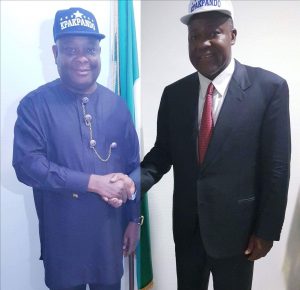
The Sanate President, Bukola Saraki, on Wednesday met with the members of the Kpakpando Foundation let by its founder and Chairman, Senator Osita Izuaso, as he explains on how the Disability bill was misplaced, INN reports.
The Senate President shared the information on one of his social handles online about meeting the Kpakpando Foundation. He says, “…ahead of my courtesy call with the Kpakpando Foundation for Physically Challenges Persons, led by its Founder and Chairman, Senator Osita Izunaso, I called the Clerk to find out about the status of the ‘Discrimination Against Persons Living with Disabilities (Prohibition) Bill, which is also known as the Disability Rights Bill” he said.
“I was very disappointed to learn that due to some administrative mishaps, this Bill, which passed both the Senate and the House of Representatives, and should have already been on the President’s desk for his signature, has failed to make its way out of the National Assembly system. I have therefore directed the Clerk to query all involved.. This is how the bill got missing”, he said while giving insight into what happened about the missing documents
While assuring the Kpakpando Foundation, he says, “Make no mistake, both the Senate and the House feel very strongly about the impact of this Bill. This is because its passage will further empower people living with disabilities (PLWDs) and ensure that they are not discriminated against in anyway.”
“Moving forward, I would like to make this promise: 30 days from today, this Bill will be sent to Mr. President for his assent.”
“We will fast-track the harmonization process in both houses, because there is no doubt that once this Bill is passed, it will transform the lives of millions of Nigerians across the country, hence, the sooner that we start implementing the act, the better for all of us.” He concluded while further assuring the pending Kpakpando delegates.
Meanwhile, INN observed that the Centre for Citizens with Disabilities (CCD) have been following Development arounding the Nigerian Disability bill as it shares updates on issue about Disability matter on its social handles.
INN had on Monday, 26 february reported the dastardly attack inflicted on Sarafa the Salawudeen of Onsa Otolu village. Information reaching us now is that the case have received an out-of-court amicably, INN reports
In a facebook post shared by the same Omobosola Oladipupo, he gave further updates concerning the attack by Herdsmen. Quoting him, he says “about a week ago, precisely last week Saturday, I reported a case of herdsmen attacked on the victim.The case was taken up and we ensured a thorough follow up of both the prosecution and health of the innocent victim. I’m glad to report to you that the case has been resolved”, he explained.
Elucidating further he say “…Though, we intended to ensure thorough litigation in the competent court of law, the family of the victim decided to settle for settlement with some cash and let go of the matter. So we remain helpless without choice than to let go as they insisted they are not interested in a court case.”
He said at the time of the report, the victim had regained consciousness and was doing well with his health, “kudos to staff and management of Oyo State hospital management, Oyo. Most importantly, nurses and other staff of accident and emergency unit of the hospital for the quick response and quality service delivery rendered.” He said.
Explaining the situation on the part of the Herdsmen he says, “The criminal Fulani herdsmen has fully paid the bill for both the treatment and vandalism as well as havoc caused both on human and farm land.”
“Many thanks to those who responded to the call, those who commented on the post and many others who did one thing or the other while the pressure lasted.”
“Precisely, Coun. Adeniran Joel, Dr Rashidat Adeola, Generalissimo for the Masses, Olatunde A o ni fi iru e gba oooo.
Our commitments to safeguard and protect the interest of our people, particularly the less privilege and the vulnerable is rekindled” he said while showering praises on the notable figures who took interest in the matter.
“No retreat, no surrender aluta continua..” he concluded.

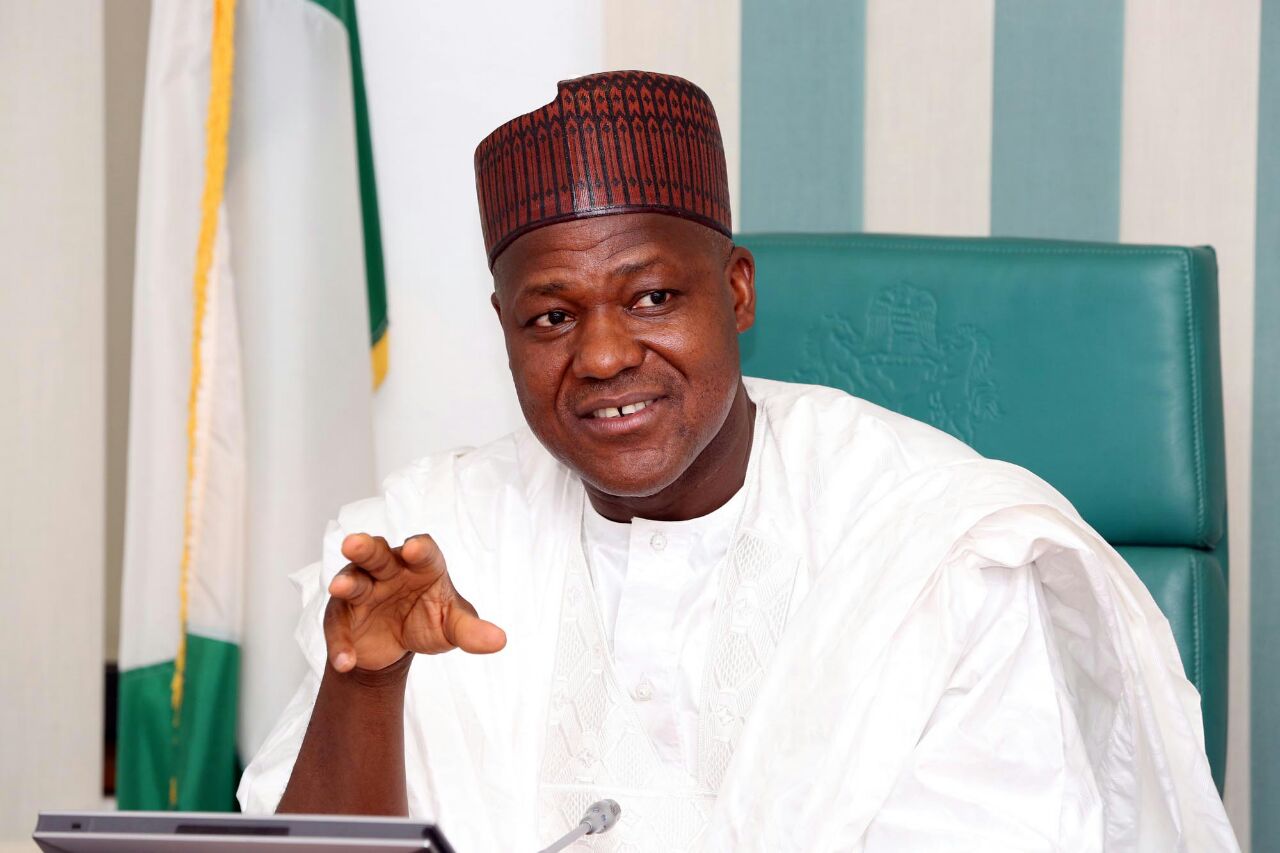
The Speaker, House of Representatives, Hon. Yabuku Dogara, on Monday 26th February 2018 declared Six (6) Disabilities and Special bills open for deliberation in a just constituted public hearing, INN reports.
He made the declaration while speaking at the meeting organized by the House committee on WOMEN AFFAIRS AND SOCIAL DEVELOPMENT, held at conference room 034, new building, House of Representatives, National Assembly, in Abuja,
In his opening remarks, he welcomed the dignitaries to the commencement of the public hearing on the six disability bills. He took time to elaborate on the content of the said bills. He outlined the bills to include:
i. A Bill for an Act to Establish the National Council for Public Assistance to Widows, Dependent Children and Orphans;
ii. A Bill for an Act to Establish a Welfare Trust Fund and Management Commission for Effective Management of the Welfare of the Unemployed, People with Disability (temporal/permanent), Orphans, Widows, the Elderly and the Youths, Compensation for Citizens who are deprived of means of livelihood as a result of population, demolition, forced relocation, retirement and health, provision of medical care and subsidies for poor families and to protect the less privileged in the society.
iii. A Bill for an Act to Provide for the Registration and Control of Orphanages and other institutions for the Boarding, care and Maintenance of orphans and deserted children.
iv. A Bill for an Act to Establish the National Social Security and Welfare Board and vest it with responsibility for the control and administration of benefits and assistance to enhance the welfare of citizens, especially disadvantaged persons, children, women, the handicapped, the sick, the aged and the unemployed;
v. A Bill for an Act to Regulate the Establishment, Registration, Provision and Management of Services and Residential Facilities for Elderly Persons;
vi. A Bill for an Act to Protect the Elderly and Vulnerable Persons who lack reasonable Mental and Physical capacity to guard against financial abuse and other Related Matters, INN learnt
He further said that the common theme that resonates with each of these Bills is the need to take care of the weak and vulnerable members of our society. ‘The Bills touch on the welfare of the Elderly, women, children, the disabled, the sick, the unemployed, the orphaned and generally the less privileged in our society. Indeed, no nation can lay claim to civilisation and development without deliberate policies and structures to take care of the segment of society captured above’, he said
Elucidating more, he says, “..As Representatives of the people, we are committed in making laws that will go a long way to ameliorate the sufferings of our people and create a favourable environment for an all-inclusive development and sustainable livelihoods. We owe our people the duty and responsibility of taking care of their welfare especially when we notice a lacuna in the system. We must be true to the lofty ideas enshrined in the Fundamental Objectives and Directive Principles of State Policy of our Constitution which proclaims that the Security and welfare of the people shall be the primary purpose of government. It further states in Section 17(2)(f) that children, young persons and the aged should be protected against any exploitation whatsoever, and against moral and material neglect”.
He said It was important at this stage to emphasise that Nigeria runs a constitutional democracy and consequently, however lofty the above ideals may appear, the Committee must proceed cautiously to make sure that they concentrate on the law-making efforts on matters in the Exclusive Legislative List contained in the 1999 Constitution. “We should allow the State Houses of Assembly to make laws for matters in the Residual List, that is, issues that can only be attended to at the local level. The wisdom of this constitutional design is because of the peculiarity of each state in such matters and a one fits all approach may be counter-productive. Even where matters are in the Concurrent List we should weigh carefully and deliberately and make a determination whether we should cover the field with a Federal enactment, he explained.
Furthermore, he said they (including his very self) should guide against setting up a government agency under every Bill; that the committee must not duplicate the mandate of existing agencies except where it becomes absolutely necessary to fill a void or where existing agencies are not paying enough attention to the subject matter. He opined that It may be necessary sometimes, to amend an existing Act and imbue it with additional powers than setting up a brand-new agency with its attendant costs to the treasury. “On each occasion we should exercise our legislative judgment wisely in the national interest”, he stated
He said he was confident that with the array of professionals and stakeholders, the Committee will no doubt be equipped with the necessary information to guide the House of Representatives in the passage of the Bills in view. “I must draw your attention that the interest of our people must be paramount in your contributions and discussions”
He ended his declaration by wishing the constituted committee members fruitful deliberations as he declared the public hearing open.
My Life, A Great Testimony Of God’s Goodness For The Past Thirty-two Years -Eric Ufom
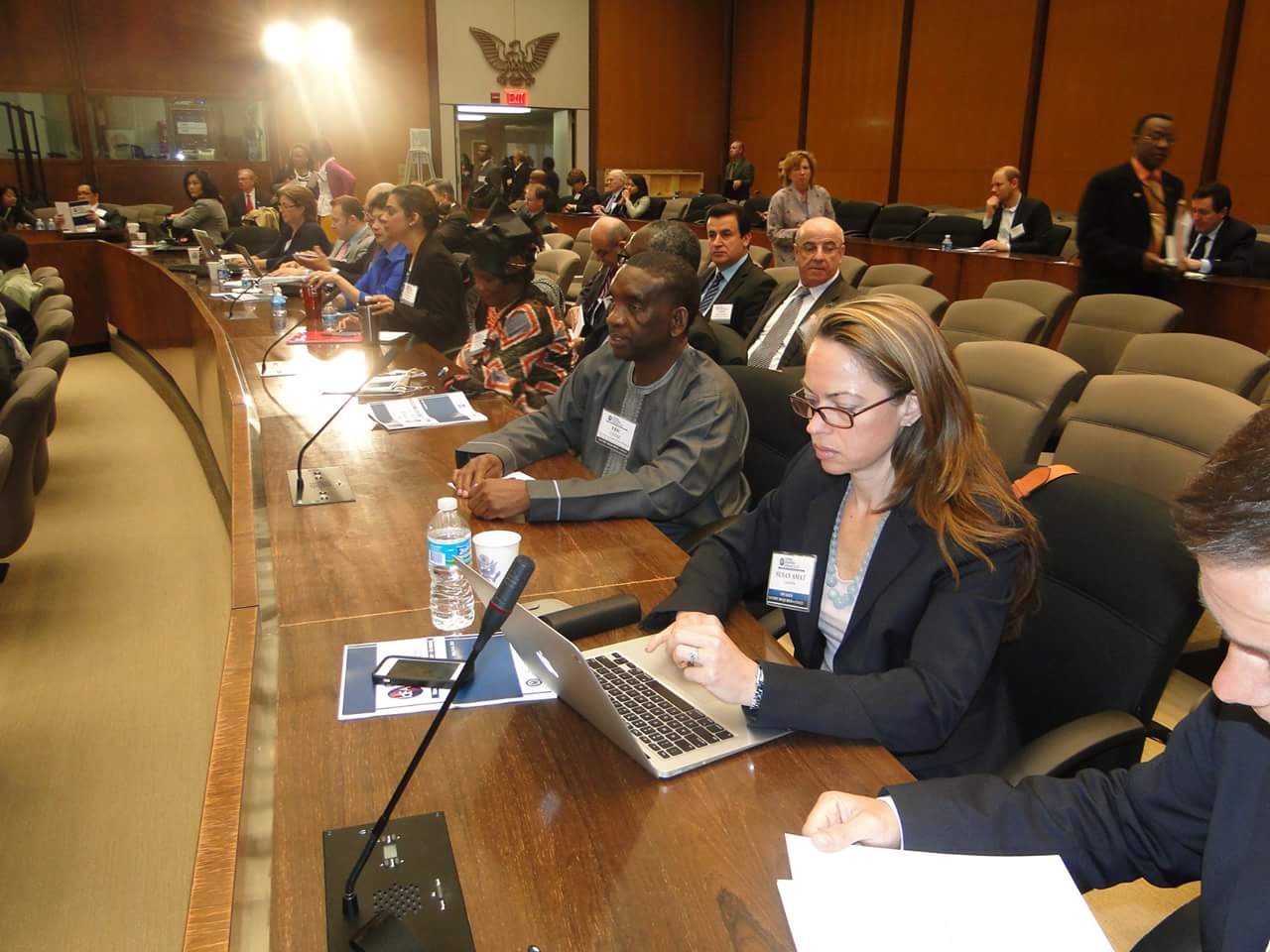
Equal Rights for Persons with Disabilities International (ERPDI) founder Chief Eric Ndubisi Ufom, who is originally from Enugwu-Ukwu in Anambra state but based in the United States, took to social media to thank and glorify God as he recalled his experience in life for the past 32 years on earth, INN reports
INN Quoted his posted and shared message. Ufom recalled with an air of gratitude his life experience; he says, “It was Thirty-two years ago, February 26, 1986, that I was involved in this serious, complex, life threatening auto accident and suffered from a massive Traumatic Head/Brain Injury (TBI). I thank our Lord Jesus Christ for keeping me alive so that I will successfully, continue doing my God’s calling humanitarian jobs for him. I thank God that today, after 32 years I continued to stand on my two legs after being totally crippled for five years, due to Polio virus infection as a child of 4 years old. I thank God for giving me back my eyesight and hearing, after being legally blind and deaf, due to auto accidents. I thank God for saying no to scientific findings on me after multiple traumatic Head/brain injuries (MTBI), and fully restored me against those valid, debatable and verifiable scientific results, to sensibly, continue doing my God’s calling jobs for humanity. “MAN PROPOSES, BUT GOD DISPOSES.” To God be the Glory. I thank God for always answering to my ENTIRE calls and requests, whenever i reluctantly makes such calls and requests. I thank Ndi Nze na Ozo Ozom, Urunnebo Village, Enugwu-Ukwo, Nri, Royal Kingdom for taking the right decision and doing the right things, in continued to follow through excellent legacy our Nri forefathers passed on to them, during their visit to the Hospital 32 years ago, March 6, 1986. Details to be published on March 6, 2018, he concluded.
According to a report published by the Guardians and obtained by INN, Some residents were reportedly killed and many houses burnt in fresh religious violence that broke out in Kasuwan Magani community in Kajuru Local Government Area of Kaduna State on Tuesday..
INN learnt that the police have deployed armed personnel in the troubled commercial town which is about 36 kilometres away from Kaduna metropolis.
An eyewitness account about 20 persons were injured in the fracas between Christian and Muslim youths. Property worth millions of naira, including vehicles, were burnt by the irate youths.
The eyewitness said the crisis erupted following a misunderstanding between some Christian and Muslim youths over an alleged conversion of two Christian girls into Islam.
But some residents of the area, including Ahmadu Dogo and Jummai, told journalists that attempts by Christian and Muslim youths to stop their girls from dating their male counterparts from religions different from theirs was the major cause of the violence. They said some people were killed during the fracas.
The Sole Administrator of the local government, Aminu Rabiu, said the “disagreement among the Christian and Muslim youths led to the loss of lives, property and peace in the area.”
He said the quick response of the security agencies helped in restoring order.
“We have already evacuated the injured persons to the hospital and they are responding to treatment.”
Rabiu appealed to the residents to embrace the culture of living in peace.
The Spokesman of the Kaduna State Police Command, Mr. Murkhtar Aliyu, confirmed the incident and said security agents had been drafted to restore peace.
“There are casualties, but I cannot ascertain the number at the moment. But I can assure you, peace has been restored to the area,” he said.
Governor Mallam Nasir El-Rufai has ordered arrest and prosecution of the culprits.
In a statement, El-Rufai’s spokesman, Samuel Aruwan, said the governor directed the prosecution of the masterminds shortly after receiving a preliminary report on the mayhem.
Aruwan said the government had sympathised with the victims and their families and directed the State Emergency Management Agency to take an inventory of damage and provide relief materials immediately.
Meanwhile, clerics under the Northern Christians Association of Nigeria (CAN) have condemned the religious violence.
In their reaction to the incident, the northern CAN’s Public Relations Officer, Reverend John Hayap said religious leaders must intensify the teaching of right doctrines to their followers.
He said it was sad for youths and followers of two prominent religions in northern Nigeria “in this age of education and technology to be fighting and killing each other because of religion or boy friend and girl friend matter.
“If they don’t have good knowledge of their faith, then their exposure to this modern era should help them stop this shameful act.”
According to CAN, leaders of these youths from both faiths should see this as a sign of failure to teach good morals and the importance of the sanctity of life.
“How can a well-informed religious person fight another because he or she befriends someone from another faith? This is not only shameful but a display of a high level of ignorance.
“Both Christian and Muslim clerics from our religions must step up their teachings to eradicate this shameful act,” he said.