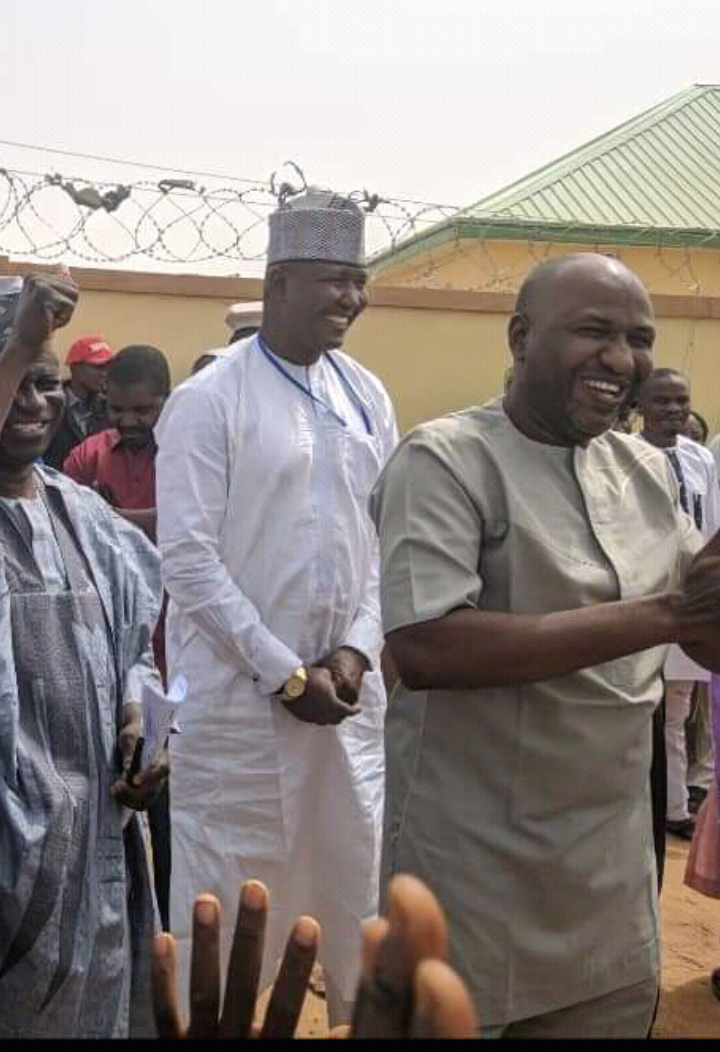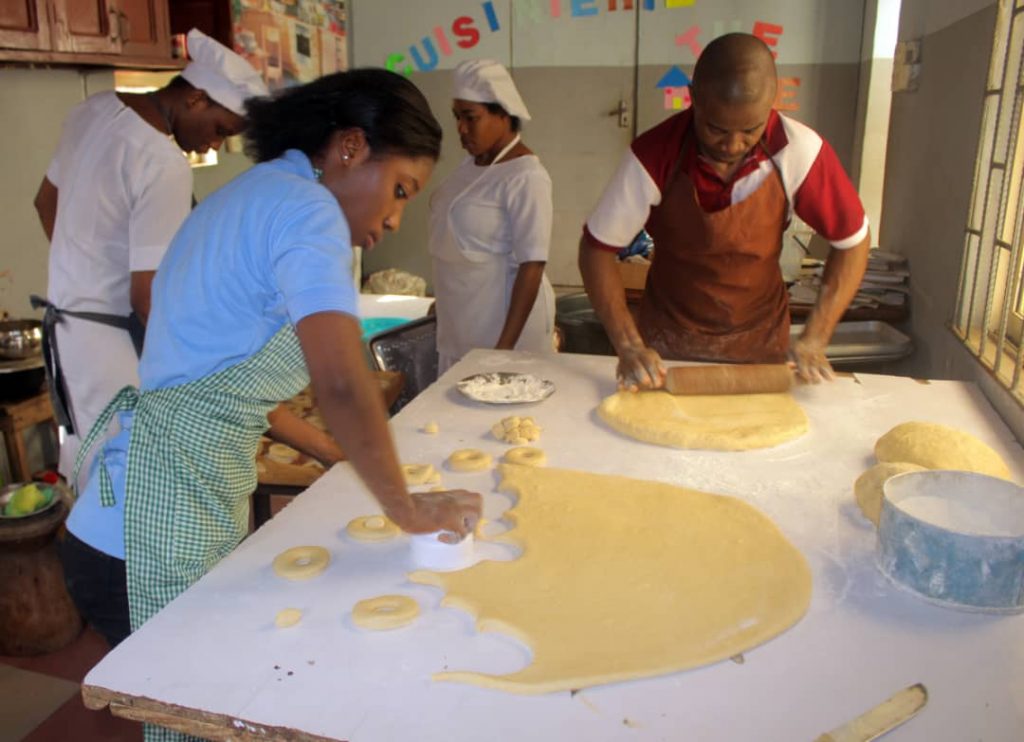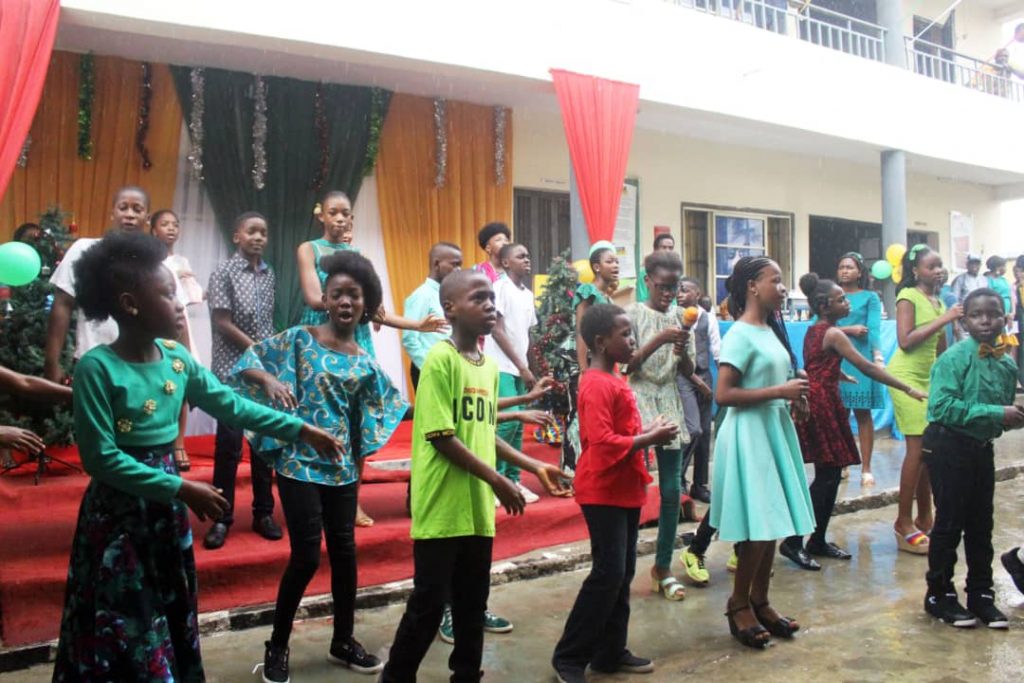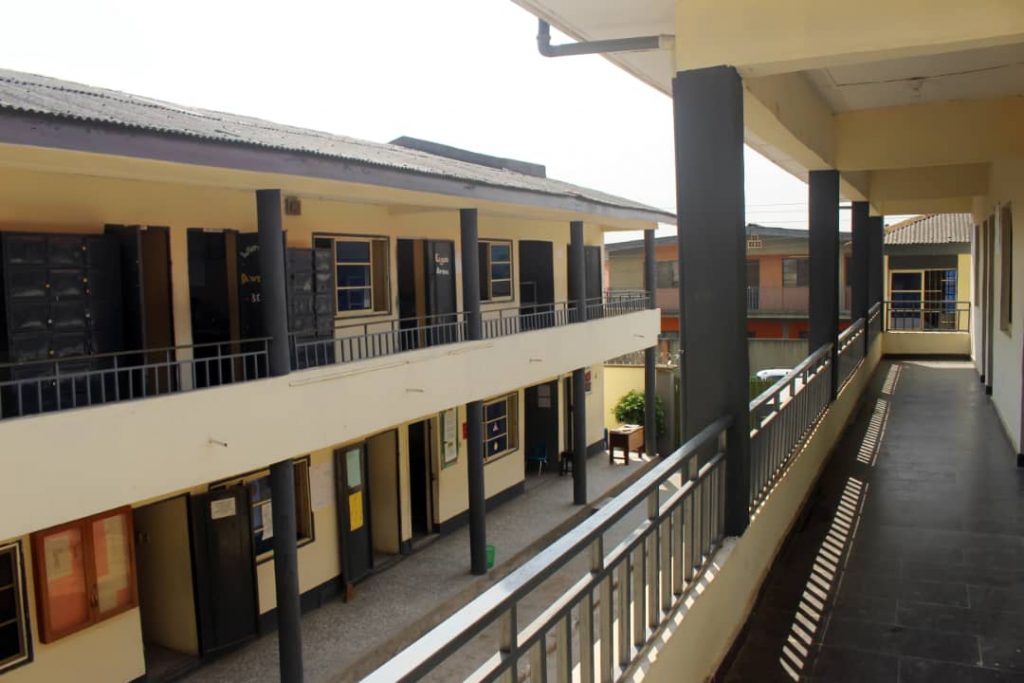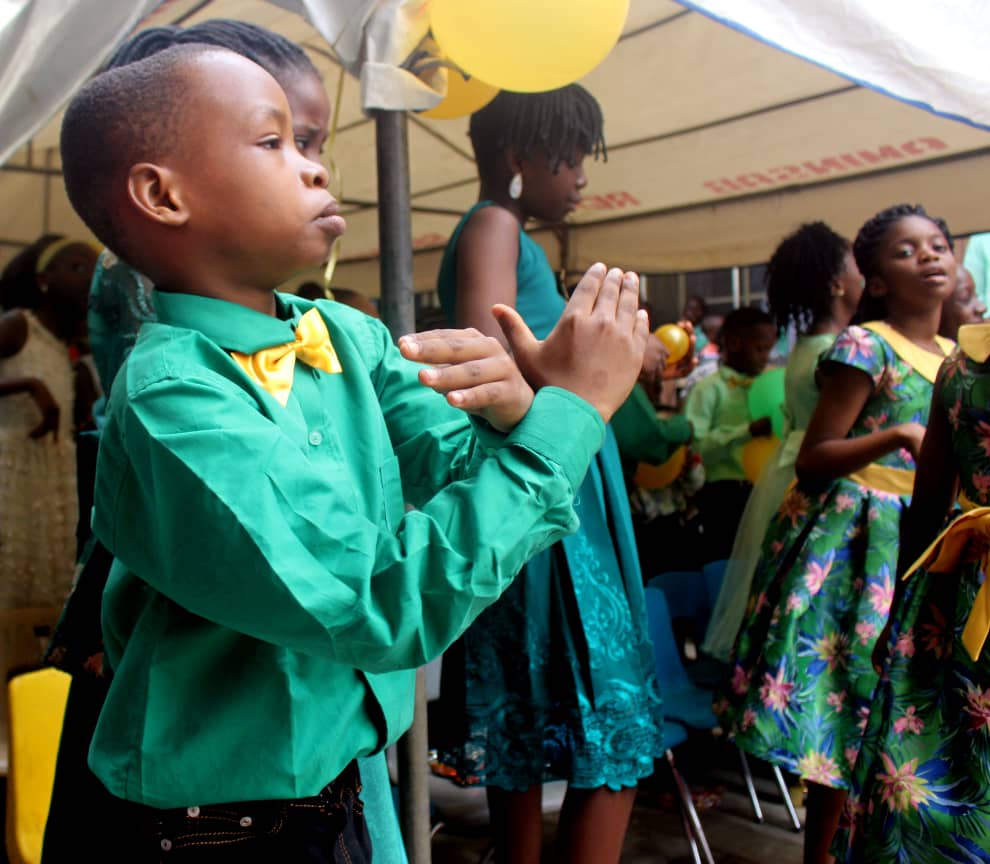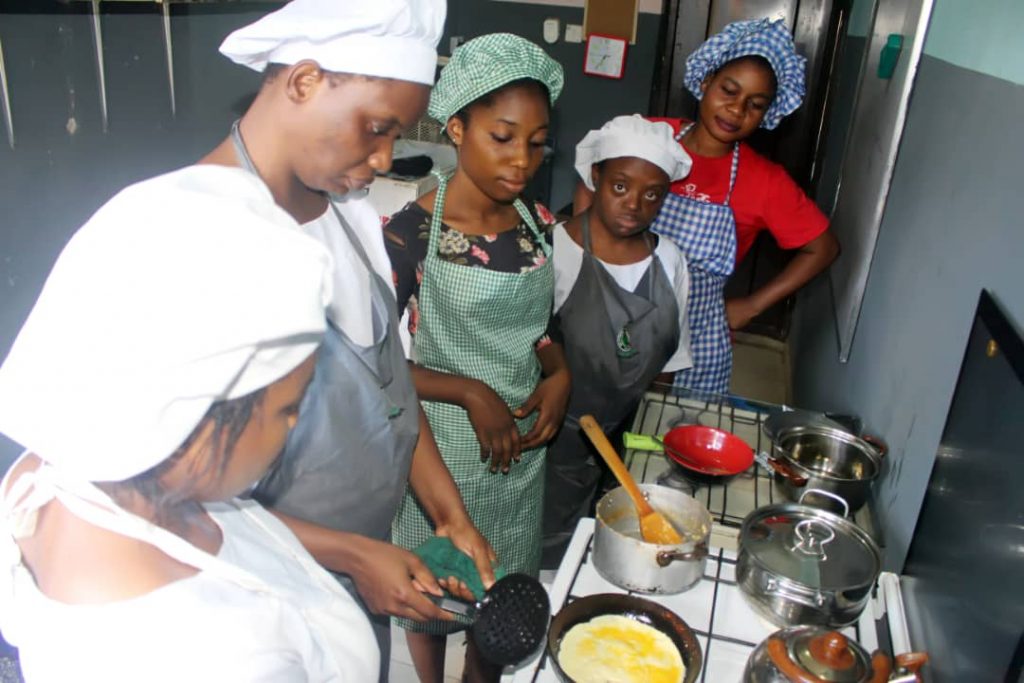
Former undisputed World Heavyweight Champions, Anthony Joshua was at the Modupe Home for the mentally and physically challenged on Wednesday, 17/07/2019, to fete with them and give them sense of belonging.
Watch video here:
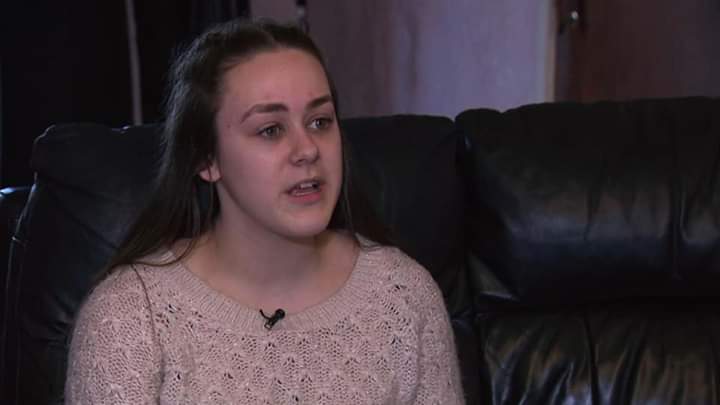
Bethany Baker plans to improve accessibility to education, communication and preventative care in her community as the first Deaf nursing student here at UNF.
Baker’s parents found out she was Deaf when she was six months old. From there, her family decided to move to Florida so Baker could attend the Florida School for the Deaf and the Blind in St. Augustine. After growing up and graduating in St. Augustine, she decided to move to Washington, D.C. to pursue a degree in history from Gallaudet University.
“I know it’s a little bit…not related to what I’m doing, but I did move to Tennessee then, and from there I realized a history degree wasn’t going to get me anything,” Baker said, “so I had to think of another field.”
While in Tennessee, she met a 96 year old deaf woman who she continued to take care of and communicate with during the summer.
“The woman told me ‘Wow, this is the first time a person can not only take care of me but communicate with me.’ And so that kind of made me realize…how many Deaf people would go to a hospital without any access to communication,” said Baker.
Nursing was a natural field to pick for Baker since her family is full of nurses. She decided to go to a CNA program in Tennessee. Baker became completely fascinated and hooked on that kind of care.
Shortly after, she decided to move back to Florida where her family was and began her studies here at UNF. Baker says she fell in love with the area, taking care of and communicating with the people here.
In her spare time, she reads and binge watches “Dexter” on Netflix.
Not only does Baker enjoy helping people, but she also loves animals. She volunteers at the Wild Life Safety and Rescue Association, and also pet-sits as a side job.
Baker believes that it’s extremely important that the Deaf people in her community understand ADA law when going to a hospital. If they ask, deaf people are given access to a translator right away. Sadly, a lot of people don’t know this, and Baker wants to change that.
“I feel as though it’s almost my duty to go around to all the deaf patients and make sure they have accessibility to whatever they need,” she said. “And if they don’t, then I can advocate for them and explain their rights to them.”
Baker believes anyone can do what they set their mind to, and when she was asked if she has any advice to those going through the same process, she went above and beyond in her response.
“Deaf, blind, disability…it doesn’t matter. If there’s a barrier there, well, then the only barrier is actually yourself not doing anything,” she said. “Move the barrier and go ahead and do it. It might be hard, but it is worth it in the end.”(UNF Spinnaker)
Lamenting on how poorly lawyers living with disabilities have been neglected in the legal community the Association of Lawyers with Disabilities in Nigeria (ALDIN) is set to carry out massive advocacy campaign for the accessibility of the Justice administration system to Persons with Disabilities (PWDs).
In a statement by the president of the ALDIN, Daniel Amaechi Onwe, the campaign is supported by Disabilities Rights Fund and objective of the advocacy is to make the court environment and procedures as well as the policing system to be inclusive of PWDs generally.
According to him a situation where our systems and structures do not accommodate the peculiarities of PWDs is no longer acceptable. PWDs suffer diverse form of injustice, but cannot approach the courts to obtain justice due to the existence of different architectural, attitudinal and procedural barriers.
The trauma of suffering injustice on the one hand and on the other hand realizing that the justice administration system, where you should seek redress, does not even contemplate your existence is unimaginable.
“The situation is even worse with our policing system. The architectural setting in the average police station loudly tells you that PWDs are not welcome there.
“A deaf person, who has a complaint to make at the police station is on his or her own, as there is no provision for sign language interpretation.
Those on wheelchair cannot even enter the police stations in the first place. And those with psycho-social disability who gets to the police station to lodge reasonable complaints may be treated with ignominy or chased away as nuisance.
“The lot of lawyers with disabilities is not even better. Lawyers on wheelchairs cannot access our courts unless they crawl on all fours. Our courts have no provision for Braille, tactile marks or other media of assistive literacy.
“There are no provisions of sign language interpreters either. Rules of Courts and Practice Directions do not make any accommodation for lawyers or litigants with disabilities. Lawyers with disabilities are discriminated against when it comes to employment in chambers and other workplaces. You can imagine the pain of going through all the hog of legal training to become a lawyer, and then be rendered redundant. This ugly situation should stop.
“So, in this project, we shall be strategically engaging the critical stakeholders with a view of collaboratively working out solutions. Every aspect of the project shall be measured and profiled, including the level of responsiveness of each stakeholder engaged. At the end of the day we will come out with an objective report.
“The Association in it’s bid to achieve this goal will be engaging the Chief Justice of Nigeria (CJN), the Chief Judge of the Federal High Court, the Chief Judge of the FCT, the Attorney-General or Solicitor-General, the Inspector-General of Police, the Commissioner of Police FCT, the NBA President, the NBA Chairman FCT among others.
“Fortunately, we now have a legal framework to work with – Discrimination against Persons with Disabilities (Prohibition) Act. So, this project is about giving effect to the provisions of this Act. It also aligns with Article 13 of the United Nations Convention on Rights of Persons with Disabilities, dealing with Access to Justice, and goal 16 of the Sustainable Development Goals (SDG), dealing on Peace, Justice, and Strong Institutions.
The justice administration system is expected to take the lead and show others example with regards to compliance with newly enacted Act and international best practices.
“On the part of the NBA, which is our primary constituency, we are lucky we now have a President who campaigned on issues of PWDs. These were his exact campaign words:
“Another category of lawyers whose welfare I will work towards ameliorating, from a professional standpoint, is that of the aged and disabled lawyers. If I am elected as the NBA President, I will work towards achieving better welfare programmes for these categories of lawyers and generally for all lawyers…
…Persons living with disability and the aged have special needs which unfortunately are not generally catered for in our Nigerian environment. These needs include access facilities into buildings, toilet facilities, specialized reading and legal practice materials and aids, customized technology aids and facilities. My administration as the NBA President will work at installing these facilities at the NBA Secretariat where the model law office would be located.
The model law office at the National Secretariat would also be made friendly to and usable by aged persons and persons living with disability. These facilities would gradually be expanded and provided at the NBA Zonal Offices in the 3 Zones of the NBA.
We would also open dialogue with the Chief Justice of the Federation and the heads of various courts in the Federation and the States on the required modifications for making the courts and the court facilities accessible to and usable by the aged and persons living with disability. More importantly, we shall dialogue constantly with these categories of lawyers to continually understand their needs and how best we can assist in meeting them.”
ALDIN further stated that they intend to collaborate with NBA President, Paul Usoro, SAN, in delivering on this lofty promise.
“We must admit that in the past two years, before the current regime, the NBA has incrementally been accommodating of lawyers with disabilities. This was reflected in the 2017 and 2018 NBA Annual General Conferences. With the kind of promises made by the incumbent NBA President, Mr. Paul Usoro, SAN it is expected that the standard will go no other way, but upwards.
“By the end of this project we are optimistic about having a justice administration system that we all can be proud of and that will better serve the interest of all.
We, therefore, use this medium to, in advance, call for the maximum cooperation of all the relevant stakeholders, as this is a mutually beneficial project that will foster national development.,” he stated (thenigerialawyer.com)
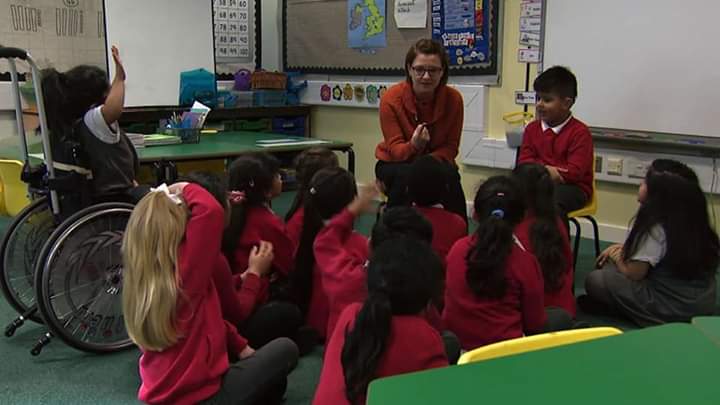
The National Resource Centre for Children with Disabilities (NRCCD), an NGO committed to the inclusion of children with disabilities, will in September this year, open a model inclusive school to welcome children to school.
The school, located at Agbogba in Accra was adopted by the African Rights Initiative International (ARII) and refurbished, with the support of Ecobank Foundation.
It has an assessment unit, counselling and placement unit, academic resource centre, sick bay, conference room for teachers and other facilities to cater for children with all kinds of disabilities.
As part of preparation to have a smooth opening and operations of the school in September, Ms. Cynthia Tysick, Associate Professor at the Department of Education in the University at Buffalo, is in Ghana to train various stakeholders on disability issues as well as on inclusive education.
Ms. Tysick has had training with the Education Directorate at the Ga East Municipal Assembly and has also trained personnel in non-governmental organizations engaged in advocacy on disability issues.
Mr. Prince Oduro, Founder and Executive Director of ARII in an interview with the Ghana News Agency said the Agbogba Anglican School is a government school and thus, affordable to all.
He said the ARII and NRCCD have engaged with various stakeholders to ensure that the school becomes a real inclusive model for other schools to follow.
Mr. Paul Anoma-Kodee, Executive Director of the NRCCD, who is leading the model inclusive school project said opening the school in September was the first concrete step towards ensuring that “we move from talking about inclusive education to actually implementing inclusive education.” (GNA)
More than 821 million people suffered from hunger worldwide last year, the United Nations reported Monday — the third year in a row that the number has risen.
Robin Willoughby, the head of food and climate policy at Oxfam GB, said women were hit hardest by the rise in hunger.
“A toxic brew of climate shocks, inequality and conflict is unravelling years of progress,” he said.
“If we are to meet the target of ending hunger by 2030, governments must urgently cut greenhouse emissions, provide more support for small-scale agriculture and increase efforts to end violent conflicts
After decades of decline, malnutrition began to increase in 2015, mainly because of climate change and war. Reversing the trend is one of the 2030 targets of the UN’s Sustainable Development Goals which aim to improve the planet and its people.
But getting to a world where no one is suffering from hunger by then remains an “immense challenge,” the report said, noting the number of people without enough to eat had risen from 811 million in 2017.
“We will not achieve zero hunger by 2030,” said David Beasley, head of the World Food Programme, one of the UN agencies contributing to the report.
“That’s a bad trend. Without food security we will never have peace and stability,” said Beasley, deploring that the media carry more talk about Brexit and Donald Trump than children dying of hunger.
He warned that extremist groups were using hunger and control over food supplies as a weapon to divide communities or recruit new members.
“The State of Food Security and Nutrition in the World” report was produced by the UN Food and Agriculture Organization (FAO) and other United Nations agencies including the World Health Organization.
“To safeguard food security and nutrition, it is critical to already have in place economic and social policies to counteract the effects of adverse economic cycles when they arrive, while avoiding cuts in essential services, such as healthcare and education, at all costs,” it said.
A “structural transformation” was needed to include the poorest people in the world, the authors said.
This would require “integrating food security and nutrition concerns into poverty reduction efforts” while tackling gender inequality and the exclusion of certain social groups, they said.
Malnutrition remains widespread in Africa, where around 20 percent of the population is affected, and in Asia where more than 12 percent of people experience it. In Latin America and the Caribbean, fewer than seven percent of people are affected.
Adding those hit by food insecurity gives a total of more than two billion people, eight percent of whom are in North America and Europe, who don’t regularly have access to enough nutritious, safe food, the report said.
The FAO said current efforts were insufficient to meet the goal of halving the number of children whose growth is stunted by malnutrition by 2030.
The Human Rights Advocacy Centre (HRAC) and Mind Freedom Ghana in collaboration with Star Ghana have organized a two-day workshop in Takoradi for community psychiatric nurses and operators of traditional and faith-based healing centers.
The workshop, held under the theme: “Promoting quality access to mental healthcare and rights for persons with mental disabilities in traditional mental health centers in Ghana”, was to promote the rights of people living with mental ill health and sensitize duty bearers on how best to discharge their duties.
The workshop discussed stigma and discrimination most especially of the “differently abled” persons who encounter series of challenges in the family, society and workplace. It also deliberated on how to curtail the dehumanizing treatments meted out to persons with mental illness when they seek orthodox treatment in health facilities and traditional centers.
Ms Cynthia Nimo – Ampredu, the Executive Director of HRAC, addressing the participants, said human rights are entitlements to everyone including the mentally disabled as dignity is inherent and cannot be violated.
“The mentally challenged persons should by no reason be rendered incapacitated since they all play a role and have the right to life, right to education and health”.
“Such persons have the right to work for equal pay, fair remuneration and in a safe and healthy environment and under no circumstances should these rights be infringed upon.”
Ms Nimo- Ampredu said persons with mental health challenges are to enjoy the right to work, shelter and to spend personal money for personal purchases, stressing that depriving mentally ill patients of enjoying these rights was against the law.
She said it was unjust and unfair to stigmatize and discriminate against persons with mental illness, “Stigmatization is a deeply discrediting attribute associated with a particular circumstance, quality or person which often leads to shame, blame, hopelessness and distress”.
Ms Nimo-Ampredu said in many cases families of mental health patients and practitioners working in this area are also affected by this stigma.
The HRAC Executive Director said disability is an evolving concept and that about 2.8 million of Ghana’s population lived with mental illness with 650,000 suffering severe forms of mental illness.
She said persons suffering from mental illness were just like any human being suffering from a health issue such as high blood pressure but in this case, the illness affects the mind.
The participants expressed gratitude to HRAC for organizing such a programme saying the knowledge gained was helpful and would enhance their work.
Madam Mary Owusu – Manu a mental health nurse at the Takoradi hospital in an interview with Ghana News Agency appealed to the public to debunk the notion that nurses were abusive and bring patients to the hospital for treatment.
Mr Abu Osman, CEO of Smart herbal center at Beposo, said the training had helped him gain additional knowledge in his field of work and also broadened his understanding of human rights.
Source: Ghananewsagency.org
Former President John Dramani Mahama has admonished the people of Ghana to give equal opportunities to people with disabilities instead of sympathy.
Speaking at the launch of the CEM Ability Village, a charity project focusing on the empowerment of persons with disability (PWD) to live more dignified lives in the society, former President Mahama said Persons with Disability want to be given a place in society to contribute their quota towards national development.
He touted software engineer Farida Bedwei, who has proven that given the opportunity, PwDs can even do better than many with no disability.
Former President Mahama joined Rev. Steve Mensah and his Charismatic Evangelistic Ministry today to launch the Charity project.
Mr Mahama said Ghana has many legislations intended to help protect and improve the lives of PwDs but enforcement has not been effective.
He has since promised to focus his attention as leader of the National Democratic Congress and President of Ghana in 2021 when elected into power in 2020.
The proposed that 2,000 acre CEM Ability Village will be a purpose-built community for PwDs in Ningo, in the Greater Accra Region, where PwDs will enjoy full and equal rights and actively participate in nation building.(Modern Ghana)
“THE human spirit is one of ability, perseverance and courage that no disability can steal away and it’s not our disabilities that count but our abilities.”
This is a living philosophy for a 23-year-old Deaf Bulawayo model Thandinkosi Sibanda also known as Thandy who has been in the shadows despite making recognisable progress on the ramp.
Thandy as Sibanda is affectionately known in the modelling industry is the reigning Miss Deaf Zimbabwe and is set to defy odds as she is representing the country at the Miss Deaf World 2019 to be held in South Africa this Friday.
Speaking to B-Metro through her manager who is also her interpreter, Madeline Johana, Thandy said despite facing challenges in her preparations she was hopeful that she was going to bring home the coveted prize.
“I am so proud to be representing my country-Zimbabwe — at the Miss Deaf World 2019 in South Africa.
“I love what I do, it’s not easy as a hearing impaired young lady but through hard work, perseverance, determination it’s possible to attain what others have achieved in the world of modelling.
“I believe I am the African Queen who speaks a language known by a few and I represent a community that is talented and silent in your own eyes but vibrant to those who we are,” said Thandy.
The reigning Miss Deaf Zimbabwe and Bulawayo-born model was one of the judges at the recently held Pupu Tshangane Carnival in Lupane.
Co-ordinator of Pupu Tshangane Carnival Soneni Gwizi hailed Thandy’s participation saying: “She is the first deaf model to have been given that mandate as we wanted the carnival to be disability inclusive and accessible.”
The carnival was held by Amakhosi Theatre head Thabo Siziba and Cont Mhlanga.(B-Metro)
As part of its 7th Anniversary celebration, Konga, Nigeria’s foremost composite e-commerce giant, embarked on a visit to orphanage homes in Lagos and Abuja to spread love to the needy and less-privileged.
The event, which saw Management and staff turn out in their numbers at both locations, was held on Saturday, July 6t, 2019.
The visit was anchored under the auspices of Konga Kares – a Corporate Social Responsibility (CSR) initiative through which the company has identified with and empowered critical segments of the population in need of a helping hand.
With the theme, Sharing the Konga Love to Help Alleviate Poverty, a visit was made simultaneously to the Heritage Orphanage Homes in Lagos as well as the Abuja Children’s Home, Karu and the Christ Foundation Orphanage Home and Widow Outreach, Abuja.
In their numbers, Executive Management and staff of Konga stormed the orphanage homes with household items, consumables, educational materials and other items to support their physical, mental and emotional needs.
Leading the Lagos team was Co-CEO, Konga Group, Prince Nnamdi Ekeh, who did not fail to engage and interact with the children of the Heritage Orphanage.
Ekeh expressed excitement and satisfaction about the visitation, describing his interaction with the children as an overwhelming experience.
“Giving material support is fantastic but providing opportunities and other forms of empowerment is critical.
“You cannot over-emphasise the generational benefits of creating a life-changing platform which focuses on abandoned and vulnerable children who are future leaders.
“We hope to embark on this kind of visitations on a regular basis and also partner with other institutions that are need of encouragement and empowerment such as skill acquisition which will have great impact in transforming their lives,” Ekeh said.
In Abuja, hundreds of lives were touched at both orphanages as the Konga team put smiles on the faces of children at the centres.
Led by Business Manager (North), Yvonne Enwerem games, Konga made it an enriching experience for the children with several fun activities including musical chairs, card games and board games such as Chess, Checkers, Scrabble and Ludo.
Furthermore, a quiz competition was organised for children within the ages of 7 and 17. Winners of the quiz were rewarded with mouth-watering prizes including Kiddies Tablets and writing materials, among others.
Essentially, the visitation did a lot to lift the moods of the children across all the beneficiary homes and imbue them with hope in a brighter future – a point that was not lost on the recipients.
Mrs. Patricia Agho is Director of the Christ Foundation Orphanage Home, Kuje
“We are so grateful to the management of Konga for this gesture. The happiness and joy on the faces of the children is proof of how delighted we all are. May God bless Konga and continue to elevate the business,” said an obviously elated Mrs. Agho.
Also speaking, Mrs. Attah who oversees the Abuja Children’s Home expressed deep gratitude to Konga, even as she disclosed that the memories of the visit will remain indelible in the minds of the children.
“I am indeed overwhelmed by this show of love from Konga and so are the kids. In fact, I have never seen them this happy. Our appreciation knows no bounds and our prayer is that Konga reaps bountifully from this gesture,” she said.
Through Konga Kares, the company hopes to reach millions of needy, disadvantaged, physically-challenged and voiceless members of the society nationwide and give back in line with its mission of spreading love and alleviating poverty.
Source News Express
Kgothatso Montjane wants more assistance and support provided to disabled sports codes Supplied
Johannesburg – South Africa’s wheelchair tennis ace Kgothatso “KG” Montjane has pleaded with authorities to give more support to disability sport.
Montjane, South Africa’s highest-ranked female wheelchair tennis player, was in London this week, competing at Wimbledon.
“Supporting disability sport is seen as charity, but the fact is, that it’s not,” Montjane told the Saturday Star. “We are professional, dedicated athletes who are here to compete because we are good at our respective sports. We are differently abled and there is no need to feel sorry for us. We are here to play and to win.”
The 32-year-old, who became the first black South African to qualify for all four tennis majors, wants more support to be given to disabled athletes in South Africa so they can thrive.
“I’m not there yet with all the backing and support, but I do have some behind me. It’s better than not having anything at all. There is always room for improvement, to grow and drive more support for the sport, so hopefully, with wheelchair tennis now being part of Tennis SA, there is an opportunity to support me and the other wheelchair tennis players more.”
Montjane, who is ranked seventh in the world, also believes that not enough attention is being paid to wheelchair tennis players in particular.
“Disability sport is a minority sport, so I guess that’s why it doesn’t get that much attention. Across the world, there are always competitions, but one will hardly hear about or see them anywhere in South Africa.”
“In my case, all the major wheelchair tennis tournaments are played overseas, so it’s even more difficult for us athletes to participate and improve ourselves.
“We need to travel long distances, which costs money, and there are not always funds available for us to participate in these international competitions or tournaments.”
“It’s a sad state of affairs because there are really great athletes out there and it’s only realised when we win lots of medals at the Paralympics, but people don’t know the struggle we go through to get there.”
Montjane was the only African woman participating at this year’s Wimbledon tournament.
She made her second appearance at Wimbledon, taking on Germany’s Sabine Ellerbrock in the quarter-finals of the draw on Thursday afternoon. Montjane defeated Ellerbrock to progress to the semi-finalm, where she faced off against top seed Diede de Groot.
Montjane has spoken of her pride in playing at a second consecutive Wimbledon tournament.
“It’s a really prestigious tournament to be part of and being the only African woman participating makes me feel extremely proud.”
Montjane said she felt much more prepared compared to last year’s appearance.
“I feel better prepared this time around because I tried to make preparations on a similar surface. In SA, there aren’t any grass courts available so I had to do my preparations at Tuks HPC Hockey fields, initially to try to get a similar surface but luckily at Irene Country Club they drew a tennis court on a cricket field and I was able to train there.
“This resulted in much better grass to practise on.
“It is hard to push a wheelchair on grass, so in my preparation, we focused more on resistance and strength training. But it’s important for the mind to get used to uncomfortable situations. But I was satisfied with the preparation.
“I am also grateful that since the beginning of this year, I have been able to participate in some of the top-level tournaments like the Australian Open, the Japan Open and Roland Garros, which have all provided me with important lessons on how to improve myself each time.”
She said the preparation was different on grass, but each tournament helped her improve physically and mentally.
“Together with my coach, we made sure I received the best training for this type of tournament.”
Having played in several major competitions, Montjane felt she had evolved as a tennis player over the past year.
“I think I have improved quite a lot and I can still get better as I get to understand more of the game.”
“This year I have a new coach who prepares me for each and every match, so that has also helped a lot, from analysing my opponents, to the proper physical preparation. Knowing that I have enough funds to participate in each tournament this year has also alleviated a lot of stress.”
“I still have a lot in me and I am learning more and more about myself, my capabilities, my strength, my weaknesses with each match and each tournament I participate in so I can definitely say I have evolved and I am a better player than I was last year.”(The Saturday Star)
The Bongo District Assembly in the Upper East Region has disbursed an amount of GH¢65,634.00 to persons with disability (PWDs) in the area to assist them to undertake income generating activities to better their lives.
This is the third time, this year, that the PWDs in the area have received their stated percentage share of the District Assemblies Common Fund (DACF).
The total comes up to GH¢178,723.50.
Unlike the previous payment system that involved cash, the beneficiaries were issued to the beneficiaries.
Mr Peter Ayamga Ayinbisa, the District Chief Executive (DCE, said the assembly had approved an additional amount of GH¢18,170.00 for the procurement of deep freezers, tricycles and sewing machines for 13 of the PWDS.
Another amount of GH¢28,200.00 was going to be used to buy goats and sheep for supply to 52 other beneficiaries to start animal rearing.
He said the goal was to transform their lives by helping them to go into economic activities – petty trading, rope making, basket and hat weaving.
They were supposed to use the money either as start-up capital or to expand their businesses.
Mr Ayinbisa admonished them to make the most out of the opportnity and said that was in their own interest.
He underlined the determination of the assembly to collaborate with Management Committee Disability Fund to effectively monitor how the money was utilized.
He warned that anyone found to have misused the money would not benefit from any future support.
The DCE assured every registered PWD in the area that they would be denied their share of the fund.
Mr Clement Mba, President of Bongo District Chapter of the Ghana Federation of Disability, expressed gratitude to government for increasing the disability fund from two to three per cent.
He said it had enabled children of disabled parents to be respected in the society as their parents were able to cater well for their needs.(GNA)
After a string of conversations via WhatsApp, finally I got a perfect timing to talk to Susan Njogu Eling together with her husband Phillip Eling. She is miles away in Adelaide, Australia and the time difference had been a constant barrier. It was just before they headed out for their anniversary dinner, but she promised she’d get back to me.
Susan is a 27-year-old native Kenyan born in Matuiku village, Elburgon sub-location, Nakuru county. She is the last-born in a family of seven. She attended a local school known as St Peter’s Girls then joined high school at Bright Light Girls and completed in 2012. It was in 2015 that Susan travelled abroad as an international student to study for a diploma in disability at Equals International School.
“My childhood was not easy and nothing came to us on a silver platter. This prompted me to work extra hard to get to where I am today. My parents, staunch Sabbath keepers, had always been supportive and made me believe I could be anything I wanted to be. Nothing was handed to me and that made me a better person. I was always drawn to helping people, especially those in need. I always saw myself as a person who can bring change to the society, however small the contribution may be,” says Susan.
In 2017, Phillip worked for a service provider company in the support field for the disabled as a customer engagement officer. It so happened that he was part of a board conducting interviews, and Susan was an interviewee. That marked the beginning of their journey.
Phillip was born 30 years ago in Australia. He was a special child since infancy. He was born with muscular myopathy, a progressive muscle weakness that leads to loss of muscle mass. This is as a result of abnormal gene mutation. Phillip, who is the middle child out of three siblings, spent most of his childhood in and out of hospital because of his condition. “My parents and siblings were supportive both physically and mentally, and that really helped me navigate through my condition,” he says.
For 27 years, Phillip remained inconclusively undiagnosed, but in 2015 he had some rather intensive investigative genetic testing, which was released in 2016, and he was diagnosed with Bethlem myopathy, a rare form of muscular dystrophy – a defect in the collagen A1G. The condition affects the skeletal muscles and causes breathing difficulties.
“It was the first severe case to be reported in this part of the world. Basically I have very loose joints and that means I have to be very cautious in what I do and what I expose myself to. A simple cold could escalate to something life threatening. Due to this condition, I have limited movements on my arms, so I often need assistance in doing even the most basic of things such as hygiene or feeding myself. My wife is always there to help. To me, it is not why she does it, but how she does it. It’s so effortless and with passion. I never feel like I am asking for too much from her. That makes her a rare gem,” he elucidates.
For a condition as Phillip’s, emotional support is important to cope every day. The condition is not curable, but there are numerous ways to manage it. As much as it affects his routine, Phillip remains positive and never lets his situation run his life.
Negativity
“When I first saw Susan, I was struck by her beauty. Also, she was smart and very soft spoken. I mustered courage and asked for her phone number, and she agreed to go out on a date with me,” he narrates. After dating for a few months, in mid-2017, Phillip proposed. Fortunately, once they broke the news to their parents, they were all overjoyed. The challenge was dealing with social media and also some friends. “The period from the engagement to the wedding was challenging to us. We expected backlash from intolerant people. There were questions of why I would marry a disabled man.
‘We know you wouldn’t marry a disabled African man. You are probably marrying a disabled white man because you want to get papers to settle in the country, or he’s rich’, were some of the comments I had to deal with,” remembers Susan. “It got really bad that some people claimed that Susan would probably murder me once she became an Australian citizen and take all my money. I recall one comment with laughter emojis that read; ‘Is it really that bad in Africa’,” adds Phillip.
Susan and Phillip would soldier on and get married in January 2018, but they were never quite off the hook. “There were certain instances while at work, some colleagues would make funny jokes or comments like ‘I heard you got yourself a handsome man’, and I would say, ‘Yes, so what about it?’, to which they would have nothing to say. But I could tell the nuances. They were not genuine remarks,” regrets Susan. They explain that comments by trolls online and offline can be very hurtful, but they tried to learn how to deal with it all. “People are not aware that every time you judge someone you reveal a part of yourself that needs healing,” she adds.
So far, their married life has been blissful. Over time, they have grown thick-skinned from facing all the trolls and negativity from the society. “My husband is like any other man. He provides and tends to the household needs just like any other man. I don’t see anything different. People forget that if you are okay and your husband got into an accident and lost both his limbs, would you love him any less or would you take care of him? Nothing changes. Phillip is the love of my life and I am proud to be his wife,” asserts Susan.
Phillip remembers when he was once asked ‘Why did God make you disabled?’, and his response was, ‘So that the miracles of God can be manifested through me for the world to see’. Indeed, he says, since marrying the love of his life, those miracles have been shown to the world. Millions of people have been and continue to be inspired by the power of true love. Being believers, they are thankful and give all the glory to God for their marriage and success in life.
Kazakh police on Tuesday detained a woman with cerebral palsy as she protested against the daughter of former strongman Nursultan Nazarbayev for calling people with disabilities “freaks”, local media reported.
The slogans referred to comments by Senate Speaker Dariga Nazarbayeva, the daughter of the long-serving former president of the Central Asian country.
Police detained Kamilla Shokanova as she staged a one-woman picket in front of the city hall in Almaty, Kazakhstan’s largest city, two independent news sites reported.
Almaty police could not immediately be reached for comment.
Photos posted on social media showed Shokanova holding a placard saying “We are not freaks! Power to the people! Dariga, resign!”
In 2013 Nazarbayeva caused uproar by calling disabled children “freaks”.
She suggested that sending teenagers with disabilities to state-run residential homes was a good way to stop them having a sex life.
Nazarbayeva was an MP at the time but now leads the Senate and is constitutionally second in line to President Kassym-Jomart Tokayev.
Tokayev, 66, became president after 79-year-old Nazarbayev shocked Kazakhs in March by resigning the office he had held for nearly three decades.
Nazarbayev retains the lifelong title of Kazakhstan’s “Leader of the Nation” as well as chairing the powerful security council.
Some regime opponents have suggested that Tokayev is a stop-gap figure and predict that Dariga Nazarbayeva — the eldest of Nazarbayev’s three daughters — will ascend to the presidency while her father is alive.
Kazakhstan police have detained thousands of people for demonstrating against the weakly contested presidential polls last month that Tokayev won with ease.(AFP News Agency)
Kwara State Governor Abdulrahman Abdulrazaq has apologised to pupils of School for Special Needs in Ilorin over the poor condition of the school.
A statement issued by Media Aide to the governor, Rafiu Ajakaye on Saturday in Ilorin, said Abdulrazaq gave the apology when he visited the school.
The governor who expressed displeasure at the poor facilities at the school said “now that I have seen things for myself, I know the depth of the problem we have in this sector and we will be responsible in allocating scarce resources.
“We will come back here to ensure that basic standards are met. The truth is that basic needs are not met and it is a shame.
“As a government, we want to apologise for living in this kind of condition and we will make sure that minimum standards are met,’’ the governor said.
Abdulrazaq directed the Permanent Secretary, Kware State Ministry of Education and Human Capital Development, Hajia Mariam Garuba to urgently submit a recommendation to the government on what the school needs to give the children a good head start in life.
He also commended the pupils and teachers of the school for their resilience and commitment.
Also speaking, Aroyehun Faoziyah, principal of the school said they lacked basic amenities to take care of the children, including modern infrastructure as the classrooms were totally dilapidated.
She said that the school’s clinic also needs essential drugs to treat the pupils when they fell ill.
Exactly a year ago, Form Three student Irene Mumbi’s life changed after she ran into a burning house to rescue her disabled mother. She ended up sustaining life threatening burns for her gallant efforts.
On Sunday June 9, the Temple Road Secondary School student was discharged from Tenri Embu Children Hospital.
Staff at the hospital could not hold tears of joy as they bid farewell to Mumbi whom they had gotten attached to during her battle with burns wounds.
The hospital’s administration and the medical team handed her a plaque containing a certificate of appreciation that was inscribed; “For the fearlessness and the bravery you exhibited in saving your mother from a burning house”.
Mumbi, 18, will have to live with severe scars caused by burns from the house a year ago and which left her unable to go to school.
NO REGRETS
During an interview with Nation in November, she said she did not regret her decision to save her mother and the baby.
“Though the child succumbed to the burns, I am happy to see my mother alive without any injuries,” said Mumbi during the interview.
On that fateful day, at around 6:30pm, a neighbour complained that her gas cylinder was leaking. Mumbi advised her to replace the burner and continued to watch her favourite programme as she cooked.
Barely an hour later, she heard a loud blast from her neighbour’s house. The cylinder had exploded and burst into flames.
Mumbi quickly dragged her disabled mother Ann Wangeci to safety outside the gate as her neighbours also scampered for safety. (Nairobi news)