


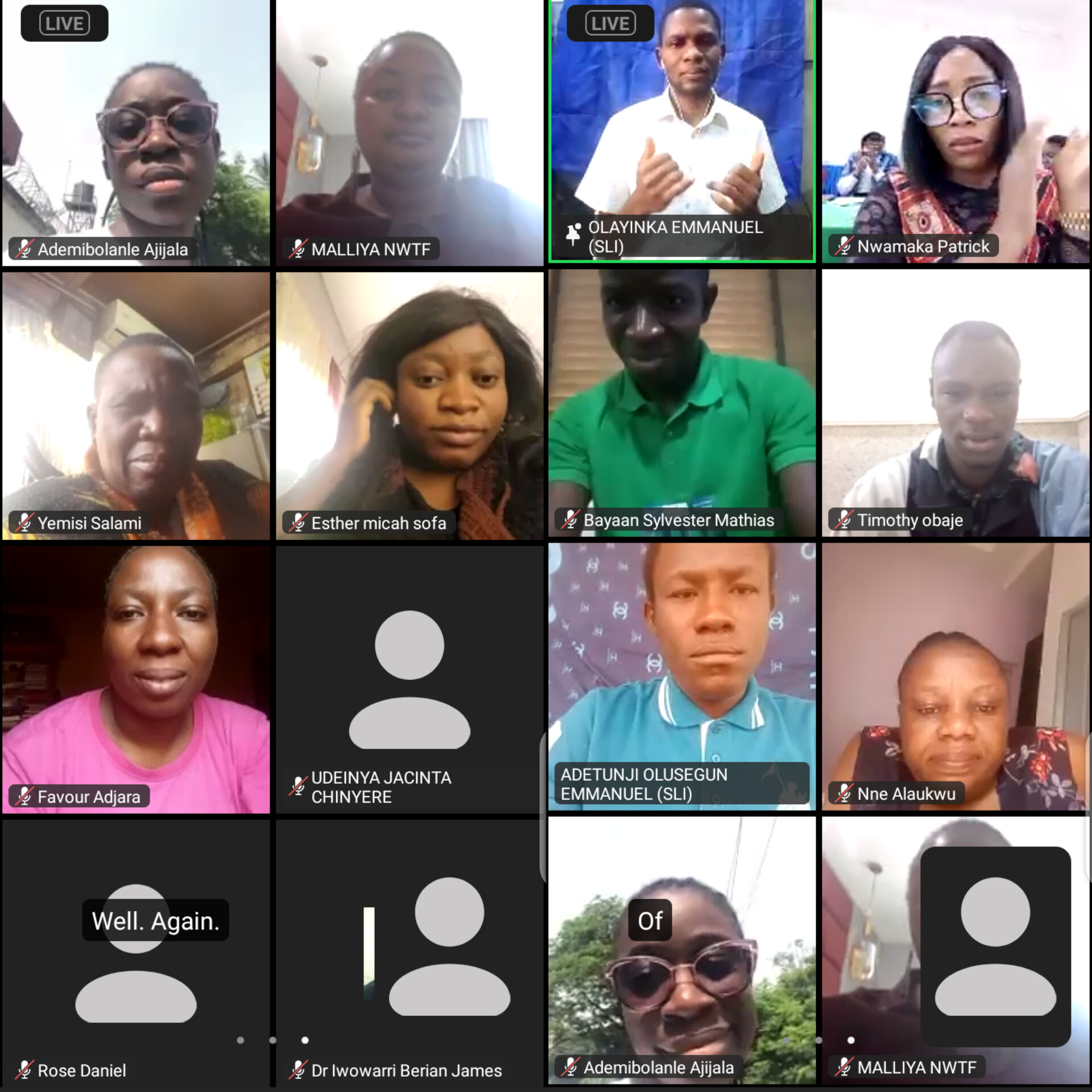
Stakeholders have called for more inclusion of women with disabilities in decision making table and government appointments in Nigeria.
The stakeholders made the call at the Disability Inclusion in Governance event organised by Cedar Seed Foundation (CSF) with support from Policy and Legal Advocacy Centre and MacArthur Foundation on Friday.
This event was created as a result of lack of inclusion of women with disabilities at the decision making table.
Speaking in her welcome remarks, the Founder and Executive Director of CSF, Lois Auta said “for a long time women with disabilities have been excluded and under-represented in government structures in Nigeria.
According to her, “When it comes to leadership positions, women and girls with disabilities are obviously excluded due to gender, disability and the barriers that they face in their day to day lives.
Speaking further, Auta said the event was initiated to ensure women and girls with disabilities are carried along in government and private organisations. And send a strong message that enough is enough of this Discrimination and misrepresentation.
“We are telling the world that we have the passion, we have the capacity and we have what it takes to become great leaders. We need the platforms, we need the support and we need the opportunity to showcase our abilities in elective offices and also appointive positions.”
Patience Ogolo, Director, Gender Affairs, National Commission for Persons with Disabilities (NCPWD) said there is 5% reservation in appointment and employment opportunities for PWDs that are available in Nigeria.
She said the practice has been implemented at the commission because there are sections that were passed by the Executive Secretary of the commission, Dr James Lalu.
“What we do at the commission is that when a Ministry, Department or Agency is about to recruit, they will notify us at the commission through a letter that they are looking for a certain number of people with disabilities to recruit. We basically recruit PWDs by sending out letters to different NGOs.
” One of the challenges we face at the commission is data collection. Having data will help us in pursuing our strategic plans. We need data for the percentage of women with disabilities and persons with disabilities and it’s something we are working on.
Habeebat Jatto from the INEC, speaking on things that will make PWDs accessible to electoral process said “the INEC is still educating and creating awareness on what to do in the areas of inclusion. It aims to conduct free, fair and inclusive elections at all times.
The INEC has a framework on access and participation of PWDs in electoral process. The document is aimed at reducing barriers faced by PWDs, same goes with the candidates, even as staff of the commission.
Habeebat noted that, “the marginalised group has been mainstreamed into the election process. It allows them to have equal access to participation.
She added that there is a law that empowers INEC to take steps to ensure PWD and special needs persons are given supports and put in place provision for assistive devices.
“We have made voting a priority for persons with disabilities. They are allowed to cast their votes without joining a queue.
“Considering the population of PWDs in the country, they cannot be neglected, their participation in the election process must be protected and ensure that they are provided assistance and educate them through engagement and sensitisation.” Habeebat said.