


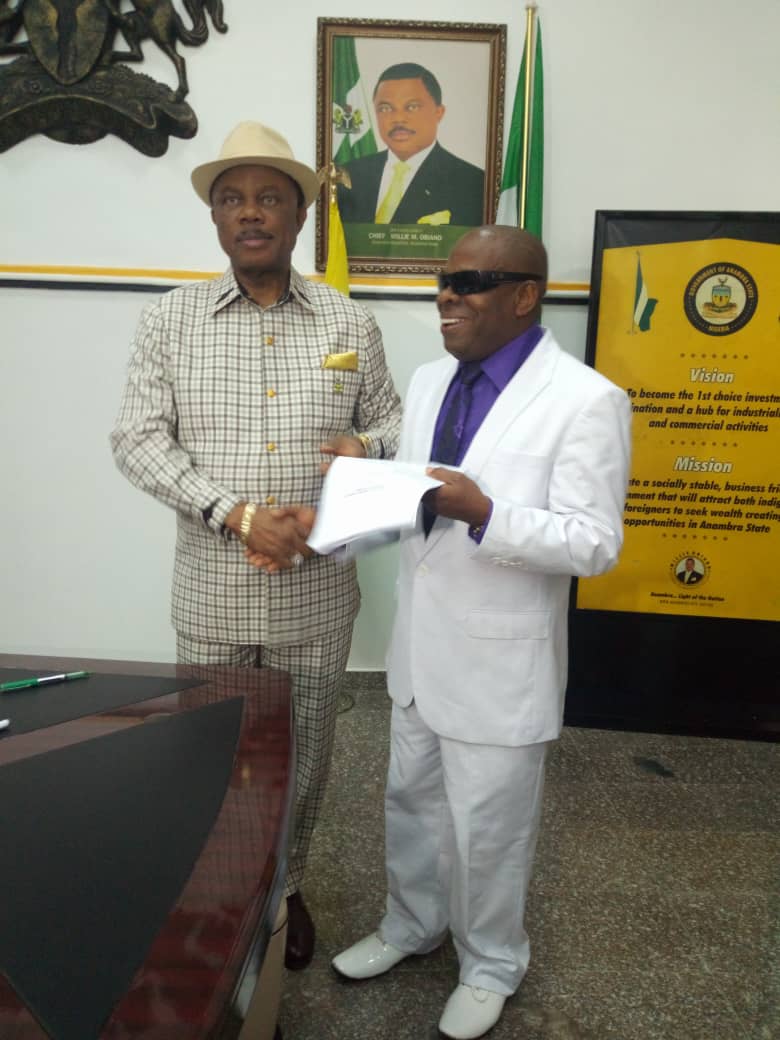
Special Adviser to the Anambra State Governor on Disabilities Matters, Barrister Chuks Ezewuzie has recommended best practical measures to curb the spread of Coronavirus also known as COVID-19.
The virus which is ravaging the whole world has spread fear among Nigerians including Person’s with Disabilities as it spreads across several states with a toll of people infested now 65 as at Thursday 9:30pm.
Barrister Ezewuzie, in a statement said the virus will hit the disability community harder unless and until stakeholders take necessary steps to help save this most vulnerable group.
For instance, the World Health organization (W.H.O) recommends “DO NOT TOUCH” as a measure to prevent contracting the highly contagious disease.
Unfortunately, Chuks said, “do not touch” is not for the blind and the visually impaired who must necessarily touch and be touched.
“The hand of the blind is their eye, they feel their way and touch the things around.
“WHO also recommends “social distancing” but this is not for persons on wheelchair.
“In the absence of motorized wheelchair, the physically challenged on the wheelchair must depend on the personal care attendant (PCA) to push the wheelchair. The blind and persons on crutches will of necessity, hold unto staircase hand rails for support or guide.
“For the deaf persons, they do not hear the announcements, radio Jingles or community alerts,” he explained.
On the best possible measures that will curb the spread of COVID-19 among Persons with Disabilities, Ezewuzie recommended that the blind and all personal care attendants must, in addition to the frequent washing of hands, wear gloves.
He said the sighted guides of the blind must in addition to wearing glove and masks, allow the blind to hold unto the guide’s shoulder and avoid holding hands or dragging with a stick.
He said this has become necessary as the conventional practice of holding unto elbow is now discouraged because “W.H.O” advised people to cough on their elbow.
“The further challenge for the blind is fact that the blind read Braille with their fingers and wearing gloves will constitute a barrier to this process. Volunteer readers are therefore needed to bridge this gap. Volunteer readers must maintain 6ft space between the reader and the blind.
“The blind are also encouraged to utilize the computer based speech synthesizer for their reading if and when available.
“The personal care attendants, in addition to wearing gloves, must wear mask, only hold unto the wheelchair and avoid touching the person on the wheelchair,” he said.
He also said that family members of the Deaf person must explain the announcements and jingles to the deaf or call their attention to OGDM messages in sign language.
Besides, he said members of the public must avoid touching the deaf as a way of communicating with the deaf but should rather maintain eye contact with the deaf.
“Deaf persons and sign language interpreters are advised to limit the frequency of touching their face when communicating or interpreting messages to the Deaf.”
“Families, offices and agencies should utilize the services of professional sign language interpreters employed by His Excellency Governor Willie Obinabo in Anambra state.”
“Sign language interpreters and protective gloves are available through of the office of the Governor on Disability Matters for people who need them, courtesy of His Excellency OGUGUA NDI OLUSI (The Comforter of persons with Disabilities)” Ezewuzie said.