


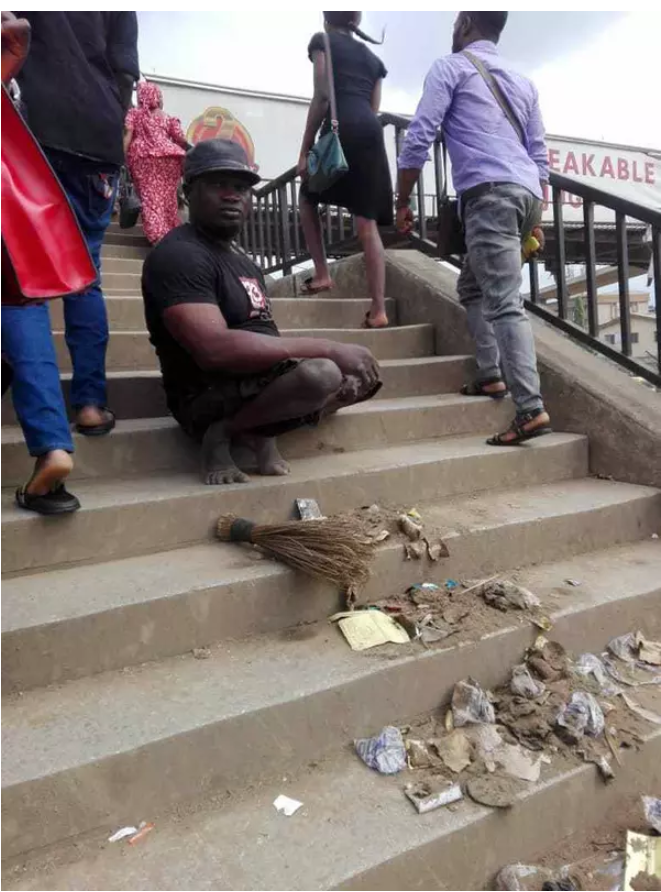
…Owns Houses, Transport Company, Pure Water Factory
Hardly can one make a trip around Lagos and not come across a road side beggar. Despite the State’s Government frequent clampdown on them, they are a regular scene especially in traffic prone areas, pedestrian bridges and markets.
But Alhaji Umar Dikko is not the regular day to day beggar you come across on the streets of Lagos begging for alms from public spirited Nigerians who out of pity, hand over stipends to them.
Dikko may be a beggar but he is a beggar with a difference as he has not only earned the title of Sarkin Maroka (King of Beggars) in the Ajegunle area of the state, he can beat his chest as one of the richest beggars in Nigeria.
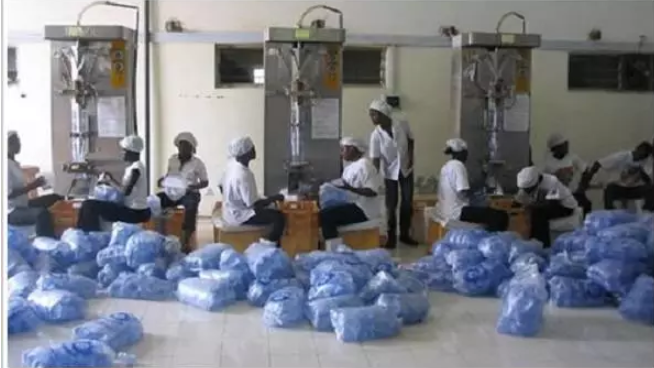
Though physically challenged, he is a wealthy man in every sense of the word, with four wives and 18 children to boast of, a thriving transportation business, a pure water factory and five houses he built in his home state of Kano
And all of these came from the proceeds of begging over the years. He has also been able to undertake the Muslim pilgrimage to Mecca on three occasions, hence the appellate of Alhaji attached to his name.
Explaining how he ventured into begging, Alhaji Dikko said he lost the use of his limbs when he was only three-years-old and when he became older, he was left with no other option but to hit the streets to fend for himself as his parents and family had abandoned him to his fate.
“I became crippled when I was three-years-old due to polio. My father had other children and did not care that much for me,” he narrated.
“The burden of taking care of me fell on my mother who had seven other children to take care of. By the time I was six, it was apparent that I had to look for a means to take care of myself as my parents practically abandoned me.
“One of my elder brothers would take me to the markets to beg for alms and we would give the proceeds to our mother to buy what we needed to eat.
“When I was 15-years-old, I decided to come to Lagos to fend for myself. When I arrived Lagos, I linked up with some Hausa beggars who lived in Agege and we would go out in the morning to beg for alms from Nigerians.
“But one thing I noticed was that the man who accommodated us would always collect whatever money we made in the day and only gave us stipends to feed with.
“After spending three years with the man, I moved to Ajegunle where I met one of my town’s man and he became my guide.
“He would push me around the area and at the end of the day, I would give him some percentage of the money we made.
“I began to save my money and after two years, I was able to buy a second hand bus which I gave to someone to use for commercial purposes,” he said.
From the proceeds, Alhaji Dikko was able to purchase another bus, a development that triggered the business into a full transportation business. Today, he boasts of a thriving transportation company with over 20 buses plying Lagos, Kano, Abuja, Kaduna, Jos and other some other northern states.
Within a short period after the business boomed, he proceeded to Kano to build a house which I put out on rent. His change of fortune though didn’t make him quit begging. According to him, it had become a lucrative business for him.
“After my first house, I built four other houses with three of them given out for rent while the other two are for my family.
“I later got married to my first wife who helped me in managing my business. Over the years, I have expanded my transport business and two years ago, I set up my sachet water business which is also doing very well.
“I have also gone on Hajj about three times. I have four wives and 18 children who are doing very well because I am taking good care of them all.
“They are not ashamed that their father and husband is a beggar because they know it was from the proceeds of begging that they are enjoying today,” Dikko explained with nostalgia.
His popularity earned him the title of Sarkin Maroka (King of Beggars) of Ajegunle five years ago and his new role meant he had to mediate over the affairs of beggars in the area, settle disputes and also look after their welfare.
Today, he has quit begging, but still earn some form of ‘royalties’ for his deeds and is still a role model to his contemporaries.
“I have stopped active begging but my members often pay me homage and pay some allegiance to me in terms of money, gifts and other items.
“I am not saying that begging is a good profession but when you do not have the means of taking care of yourself, instead of stealing, you have to use what you have to get what you want.
“I am grateful to Allah for making me what I am today because without him I would not have attained the height I have attained today,” he concluded.