


Due to the uncertainty and volatility of time, our society in this present dispensation has become one that increasingly yearns for friendly operating environments where everyone, regardless of class, sex, socioeconomic status, sexual orientation, and disability can function optimally with relatively excellent mental ambience and physical security- the most solemn function of the state. More desirous of friendly ecological environments include individuals with a disability that accounts for over 2.3% of the population in Africa’s most populous country (2006 Population Census).
As the National Disability Act continues to gather dust in our nation’s federal parliament, more and more persons with various disabilities including visual and hearing disabilities, learning and intellectual disabilities, neuro-motor and physical/bodily impairments have continually faced multitudes of attitudinal, environmental and institutional challenges that practically isolate these population group- questioning our integrity and conscience as a nation with tremendous diversity. No nation succeeds long-term by failing to accommodate and integrate over a quarter of its disabled citizens into a friendlier, less hostile community of nations. And at the outbreak of war or a disaster, we see a predominant number of persons with disability left with the after effects of the catastrophe.

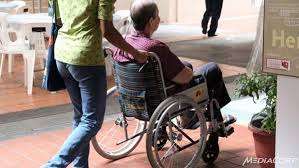
A disability friendly environment is one where persons with disability can function with less strife- minimal emotional and physical strain. A disability-friendly environment is one where child with an intellectual disability is equipped with mechanisms for self-sufficiency in social, self-help adaptive skills, a person on a wheel chair is accommodated for barrier-free movement, a university student with a hearing impairment is provided with necessities for effective communication in the classrooms, a kid with a learning disorder feels loved and essential in the classroom, and an elderly person with a visual impairment who is not only treated with dignity and respect by the community, but as well as provided with assistive devices and care that assist her to live a happier and healthier life.
We choose states in the federation- Plateau, and Lagos, and present evidence-based arguments for why the state of Plateau is more disability-friendly than its Lagos counterpart. We consider access to justice, access to information, access to law, access to free education, access to free health care services and so on. In addition, we consider not only the attitudinal culture of the people of both states toward individuals with disabilities, but importantly, environmental barriers including the roads and adequate road signs, pedestrian walkways, high-rise building and ramps and elevators, banks and their electronic security doors which all dictate the level of accessibility of persons on crutches or wheelchairs, and so forth.

- Population: With a population of about 3.5 million people, compared to Lagos’ over 16 million, Plateau state boasts of low population density that allows it to manage its vast resources with efficacy and efficiency. Apart from the unhealthy competition caused by overpopulation, crime and arson are another issues associated with dense population. A study conducted by the United Nations in 2016 found that states with an enormous population often records a proportionate number of crimes, arson, vandalism and man-made disasters that potentially endanger people with disabilities.
- Culture and Demography: Celebrated as “The Home of Peace and Tourism”, Plateau state is known to be state that has inherently put an emphasis on culture, values from the heartland and respect for all people regardless of who they are, where they come from or what their last name is. Lagos, on the hand, with its rising population explosion, and increased crimes and an unprecedented affinity for western-like attitudes and behaviors, does not obviously represent the very beliefs and needs of persons with disabilities.
- Size and Industry: Size may be said to matter because it burns attitude. Well, the enormous size and “lawless-modeled” industrialization of Lagos State has made it challenging for disability-friendly structures and other utilities to be suitably utilized. Plateau, on the other hand, with its relative size and demography (ethnicity, languages, cultures) potentially accommodates disability-friendly attitude and structures.
- Institutional Systems: The current institutional arrangements of the state of Plateau allow for a room that practically recognizes the needs and uniqueness of persons with disability- in contrast to that of Lagos State that’s volatile and unpredictable as any system there is.
- Climatic Condition: Plateau State has a near temperate climate with an average temperature of between 13 and 22 °C. Climate has been proven to have pretty significance on psychological dispositions of individuals, which in turn can affect how they relate and empathize with others in distress. A raft of research conducted at the University of California, Los Angeles found that people in fairly temperate climatic condition make wiser decisions and live a more humane life that accommodates others.
Conclusion
Persons with disability deserve a life of independence and self-sufficiency. When institutional systems are unresponsive would it be wise to choose to be in a state that provides accessibility options for people with disabilities so that they are better placed in a position where there are opportunities for realizing their full potentials.