


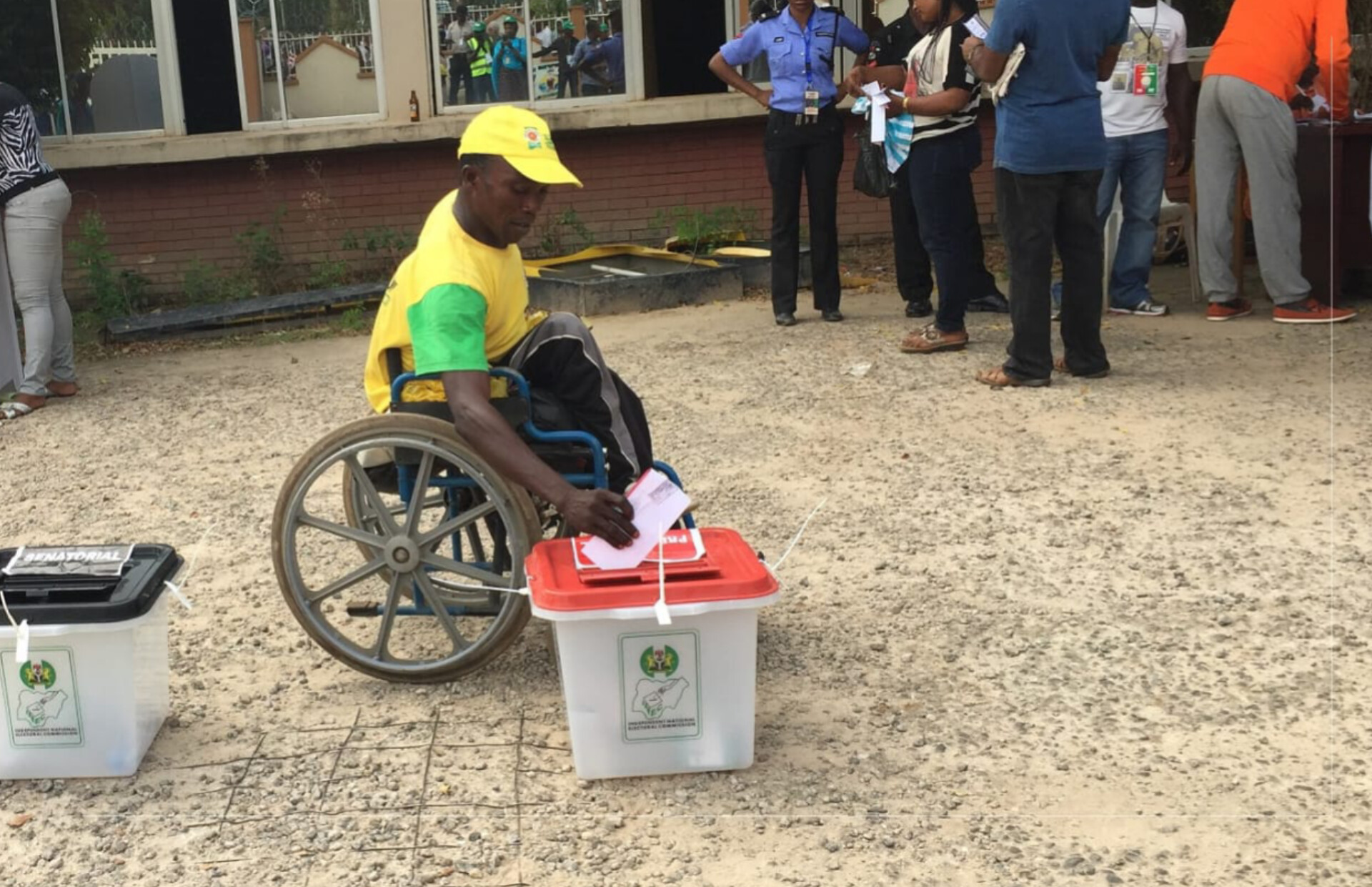
The All Africa Foundation (TAF Africa) has renewed its call for a more inclusive electoral system that guarantees the full participation of persons with disabilities (PWDs) across Nigeria. The organisation made the appeal after its extensive observation of the 2025 Anambra State Governorship Election revealed recurring accessibility barriers and procedural lapses affecting PWD voters.
In a post-election report issued by its Senior Communications Officer, Lynn Agwuncha, and supported by the European Union through the EUSDGN II programme, TAF Africa said it deployed a robust monitoring team comprising 150 trained observers, 25 sign language interpreters, and roving media monitors across all 21 LGAs. Using the TAF Disability Hub App, observers documented real-time data on assistive tools, physical access, and the overall voting experience of PWDs.
The group noted that while sign language interpreters stationed in strategic polling units significantly enhanced communication for deaf voters, several critical shortcomings were observed. At polling units in Awka South LGA, promised magnifying glasses for voters with albinism and Braille ballot guides for the visually impaired were missing, making independent voting difficult. The report also flagged worrying cases of voter manipulation involving PWDs, including attempts by suspected party agents to influence deaf and visually impaired voters. Incidents of vote buying were recorded in Idemili North and Ogbaru LGAs, where PWDs were offered cash by party agents.
Despite these challenges, TAF Africa reported that the election remained largely peaceful, with over 99% of monitored polling units experiencing calm proceedings. Data showed that INEC officials arrived early at 62% of polling units, voting began on time in 67.6%, and security personnel were present in more than one-third of locations. Although 89.4% of polling units were physically accessible, assistive devices were available in only 32%. Priority voting was implemented in most polling units, and some PWDs served as INEC ad hoc staff, reflecting gradual progress.
The organisation praised INEC for the introduction and partial implementation of Form EC40H, which captures disability voter statistics—a step it described as vital for evidence-based planning. TAF Africa also lauded the professionalism of security personnel and the generally positive attitudes of voters toward PWDs but stressed the need for stronger institutional commitment.
To strengthen disability inclusion, the organisation recommended regular updates to disability-disaggregated voter data, improved logistics for distributing assistive tools, and compulsory disability inclusion training for all election personnel. It urged political parties to integrate PWDs into their structures and campaign teams, encouraged CSOs and the media to sustain advocacy, and called on security agencies to swiftly address any case of vote trading or exploitation involving PWDs.
TAF Africa affirmed that it will continue using the TAF Disability Hub to provide data-driven insights for electoral reforms, insisting that Nigeria’s democracy can only be truly representative when persons with disabilities are able to participate fully and independently.
Join Inclusive News Network WhatsApp Community For Quick Access To News and Happenings Around You.