


By Sade Oguntola
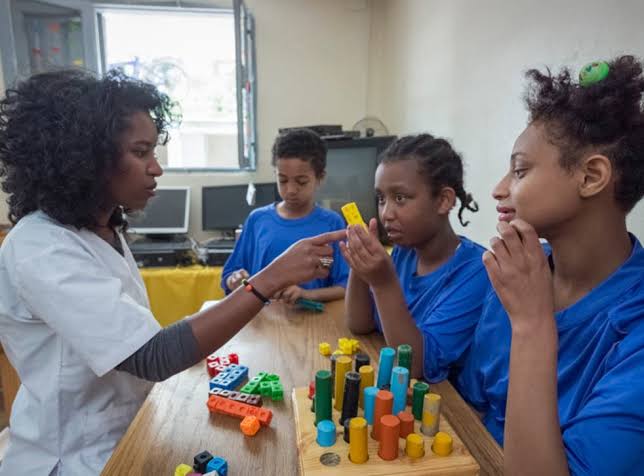
A child psychiatrist, Dr Yetunde Adeniyi, says contrary to parents’ fears, the use of sign language and other assistive devices by children with autism will not prevent them from speaking but rather help them focus, increase their overall attention, reduce their agitation as well as help stimulate the speech area of their brain.
Speaking at the April Interactive Monthly Community Engagement (IMCE) of Asido Foundation, a non-governmental organization for mental health advocacy, Dr Adeniyi said studies have shown that children who use sign language and other assistive devices tend to speak faster than those who are just receiving the traditional therapy without any non-verbal speech training.
“There is no rule against the use of sign language in children with autism. If a child decides to pick sign language, it is quite useful; it is like learning a new language,” she said.
Dr Adeniyi stated that autism is a neurodevelopmental disorder that affects about one in 60 children, tends to occur in more boys than girls and whose presentation varies from one child to another and its diagnosis can be made as early as 18 months.
She stated that its cause is yet to be identified, but it has been linked to such factors as heredity, complications during pregnancy, delivery and shortly after birth, children born to parents older than 40 years and environmental toxins like lead and mercury.
The child psychiatrist said commonly children with autism might have learning or speech delay, difficulty with social interactions, poor eye contact, obsessive interests and repetitive behaviours, persistent repetition of words and actions, sensitivity to sounds, reliance on rules and routines, being upset by relatively minor changes and difficulty understanding other people’s emotions.
According to her, early diagnosis of autism is important to ensure such children could assess treatment, including specialist therapy such as speech-language and physical therapy as well as medication for those that also have other conditions such as epilepsy, sleeping problems and Attention Deficit hyperactive Disorder (ADHD).
Dr Adeniyi stated that although some nutrition therapy had been reported to be helpful with autism, none had been established scientifically to be beneficial in all cases.
She stressed the need for support for couples with autistic children because it was not caused by their fault, and that there is hope for children with autism because research is ongoing to know autism’s cause, interventions that work and cure.
She added, “Parents should accept that a child with autism is different and will grow differently from others. They need to look for what facilities are available to help in their vicinity, have realistic expectations from the child both in the short and long-term and be involved in research and community advocacy on autism.
“Individuals should not be quick to judge a parent struggling with a child in the mall or in gatherings; children with autism may be very agitated when they go out of their environment.”