


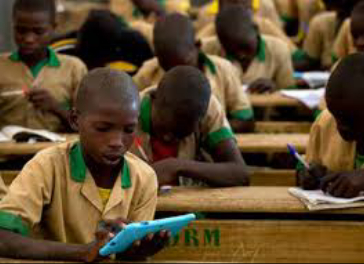
Two training events have been planned for teachers with special early childhood education needs.
ICT is a valuable tool for learners with disabilities who are often victims of the digital divide and exclusion from educational opportunities. Inclusive ICT can improve the quality of the education they receive by increasing participation and reducing social exclusion. Providing inclusive ICT for learners with disabilities involves removing barriers and enabling all learners to access the same educational opportunities as their peers.
As part of the Accessible Digital Manuals project funded by the United Nations Partnership on the Rights of Persons with Disabilities (UNPRPD), the UNESCO Regional Office for East Africa with partners, including ministries of Education, supports teacher training on the use of Assistive Technologies and interactive digital textbooks in teaching and adaptation of content to improve learning outcomes in Kenya, Rwanda and Uganda. The trainings to be conducted by the Global E-Schools and Communities Initiative (GESCI) are scheduled to take place from October 2 to 10, 2021.
Read Also: Buhari Approves Special Salary For Teachers; Increases Years Of Service And Age Of Retirement
The overall objective of this training is to ensure that teaching and learning for learners with disabilities is made more inclusive and accommodating, in accordance with the United Nations Convention on the Rights of Persons with Disabilities (2006) and the Goal Sustainable Development 4 which aims to ensure inclusion and equitable quality education and promote lifelong learning opportunities for all.
Two training events have been planned for teachers with special early childhood education needs.
Training on assistive technologies to ensure inclusive education and access to information for people with disabilities; and Training on the use of interactive accessible digital textbooks in teaching and adaptation of content to improve learning outcomes.