


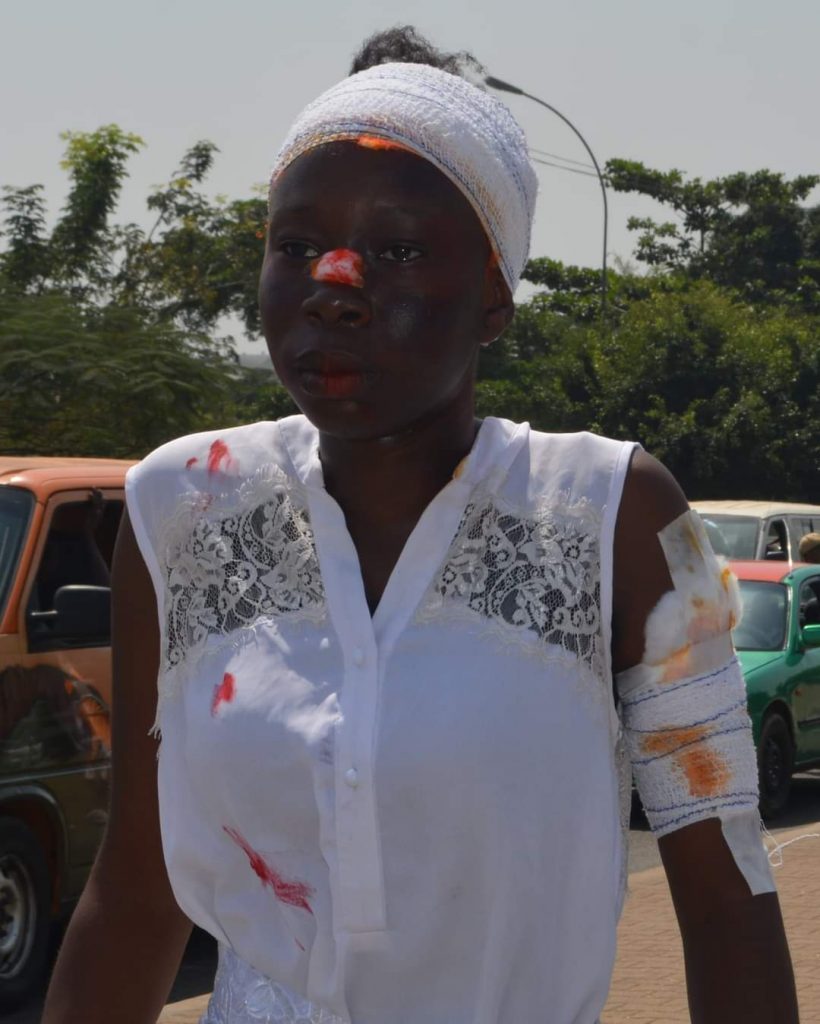
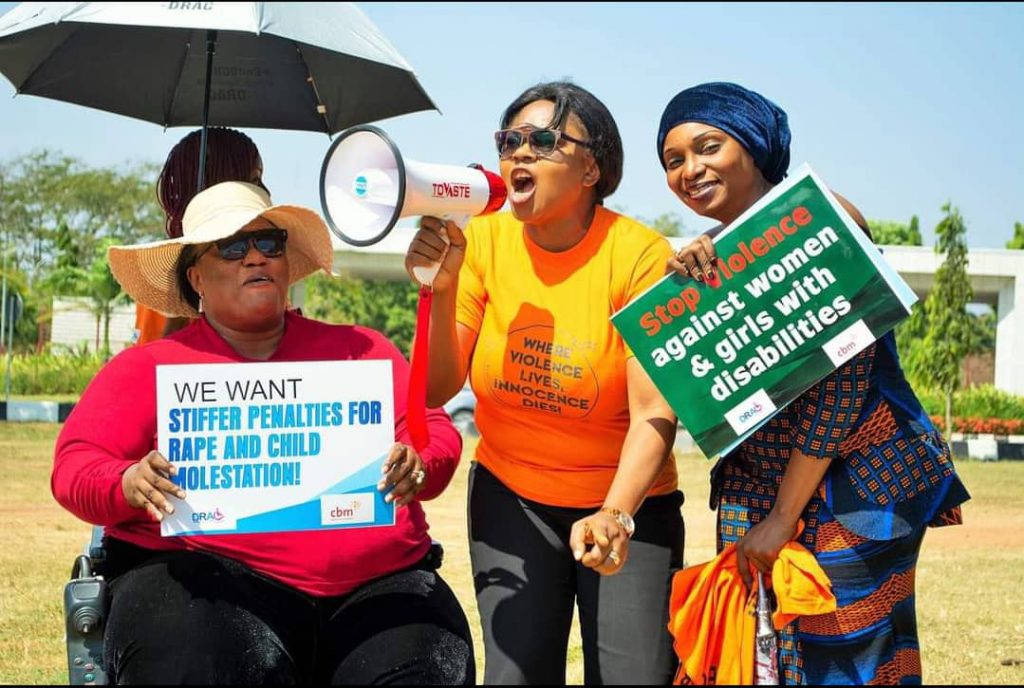
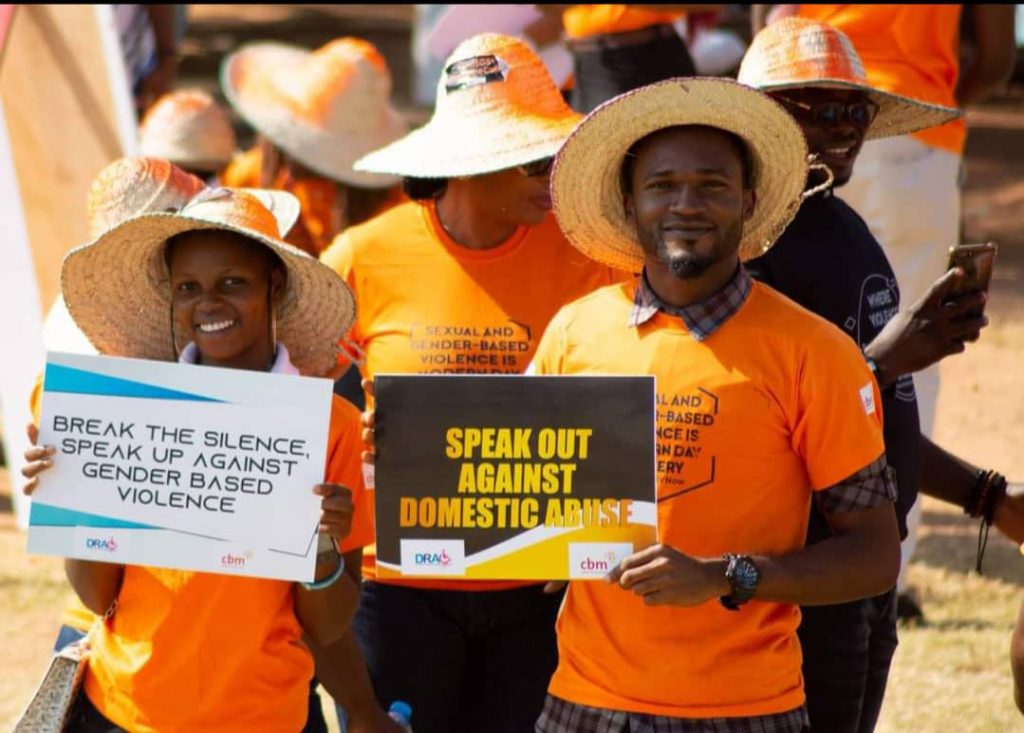
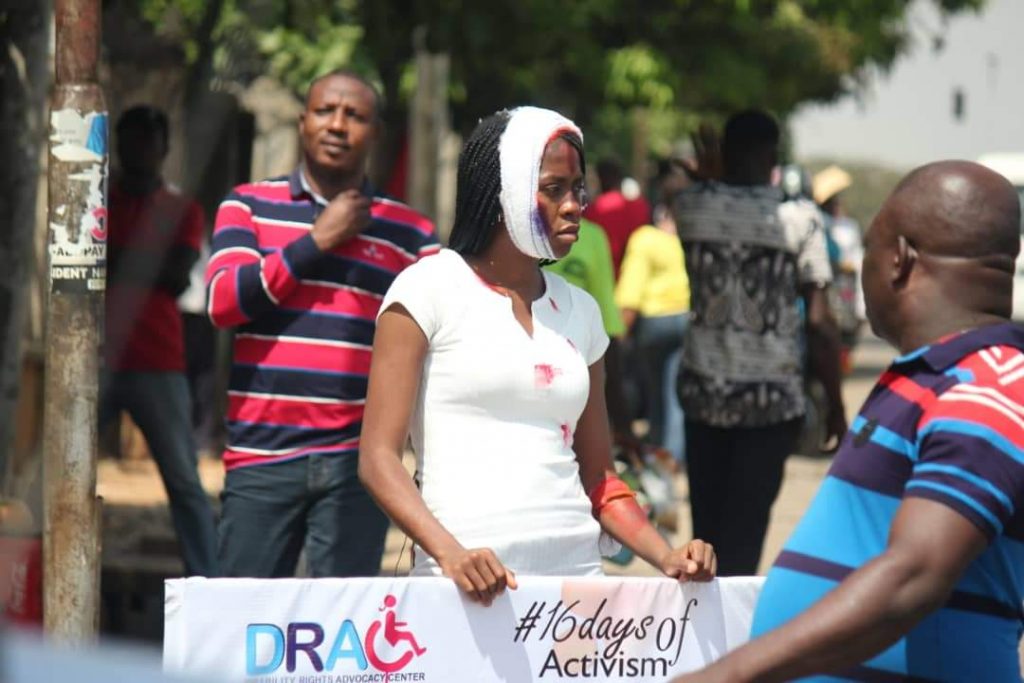
To mark this year’s edition of 16 days of activism, the Disability Rights Advocacy Center (DRAC) has tasked relevant authorities and stakeholders on the current plight of women and girls with Disabilities in Nigeria.
Executive Director, Irene Ojiugo Patrick-Ogbogu disclosed this in a press statement made available to Inclusive News Network, INN.
The 16 Days of Activism against Gender-Based Violence is an annual international campaign that kicks off on 25 November, the International Day for the Elimination of Violence against Women, and runs until 10 December, Human Rights Day with the theme for this year titled, Orange the World: Fund, Respond, Prevent, Collect.
According to her, women and girls with disabilities who represent one-fifth of the global female population and 60 percent of the population of persons with disabilities in Nigeria, face significant barriers in living violence-free and independent lives across the world especially in Nigeria.
She noted that these barriers were still in existence despite the fact that the rights of women and girls with disabilities are human rights that are protected in numerous International human rights treaties which Nigeria is a signatory to, including the Convention on the Rights of Persons with Disabilities; the Convention on the Elimination of All Forms of Discrimination against Women, and the Convention on the Rights of the Child.
Each of these international human rights treaties, she said, imposes specific legal obligations on States that have ratified the treaty.
“Nigeria also has laws and policies which prohibit all forms of violence and discrimination against women and girls with disabilities such as the Child Rights Act, the Violence Against Persons Prohibition Act and the Discrimination against Persons with Disabilities (Prohibition) Act,” Patrick-Ogbogu said
She noted that DRAC has facilitated the development of the National Policy on the Sexual and Reproductive Health and Rights of Persons with Disabilities with emphasis on Women and Girls.
“The issue however remains that even with the ratification of international treaties and the enactment of these local laws by the Nigerian government, violence against women and girls with disabilities remains a major problem in the country.
“Women and girl with disabilities often do not receive critical services for all victims and survivors of gender-based violence (GBV) which include health services, justice and policing services, social services and coordination at both the national and local level. This is because these prevention efforts and services, in both design and implementation are often inaccessible to them. Service providers regularly demonstrate a lack of knowledge, sensitivity, and expertise about how to serve women and young persons with disabilities, which results in a failure to identify survivors with disabilities who have experienced or are experiencing GBV, conduct outreach, or offer key services.”
“Furthermore, women and girls with disabilities whose rights are violated often lack recourse because of exclusion from access to justice mechanisms. Such exclusion further perpetuates violence because it permits abusers to continue with impunity. To further compound the problem, there is a dearth of accurate and comprehensive research and data on violence against women and girls with disabilities to guide the development and provision of appropriate and responsive GBV services,” The Executive Director said.
She noted that the situation has been further worsened in light of the recent Covid-19 pandemic which ravaged the whole world, submitting that women and girls with disabilities who are usually on the lowest rungs of the economic ladder are worst hit in the aftermath of the pandemic which has left them unable to afford basic provisions such as portable water, food, clothing, shelter, sanitation etc.
The absence of these, coupled with the already existing cycle of violence, according to her, further reduces the dignity of this group of people whose voices are unheard and as a result forced to remain invisible in a patriarchal society such as Nigeria.
DRAC therefore called on state and non-state actors to channel significant amount of resources towards funding disability-inclusive SGBV interventions, ensure the availability of essential and inclusive response services for SGBV survivors, focus on developing and strengthening SGBV prevention initiatives and dedicate resources towards collecting SGBV data that is disaggregated by disability in order to improve life-saving services for women and girls.
“We believe that only collaborative efforts can create an inclusive society where women and girls with disabilities would be free from all forms of violence and discrimination on the basis of their gender and disability.”
DRAC is a registered, non-profit organization that works to promote the rights of Persons with Disabilities (PWDs) especially women and girls and facilitate their inclusion in the Development Agenda.
More photos ;
1 comment
[…] Also Read: DRAC Tasks Stakeholders On Violence Against Women And Girls With Disabilities […]