


Sexuality Education experts have told women with disabilities there should be no restrictions to teaching and learning sexuality education as long as paedophiles are out there enticing and recruiting minors and underage girls into sexual activities and perpetuating other forms of Sexual and Gender-Based Violence (SGBV), a situation which is even worse for Women and Girls with Disabilities.
The admonition came at the Hope Inspired Foundation for Women and Youths With Disabilities (HIFWYD) one day training for thirty Women and Girls With Disabilities on the use of a Sexuality Education Manual developed, as part of efforts in the implementation of their one-year project themed: “Improving Sexuality Education for the Empowerment of Women and Girls with Disabilities in Lagos State” with funding support from the Disability Rights Fund (DRF).
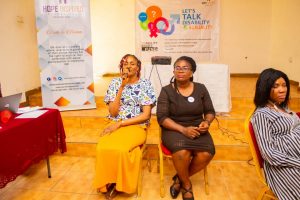
Treasure Uchegbu with Co-facilitator
In her lecture on sexuality education, Mrs. Treasures Uchegbu, President of the Speaking Fingers Network, a facilitator in the training, urged parents to teach sexuality education to their children/wards with Disabilities at early ages. Stressing the importance of imparting sex education to the children. She urged participants to seek for values in any relationships. This, she pointed out helps in determining qualities of engagement, including courtships.
Mrs Uchegbu says “Values are very important, some people value honesty, trusts etc. Likewise cultural values are also important. What we value in our culture like respects for elders etc, should be ingrained into our sub-consciousness.
According to her, “there should be no shame in discussing sexuality and parts of our body. Some teachers are ashamed to teach sex education in schools; some teach sex education but not to the better understanding of their students especially those students with Disabilities.”
Treasures therefore enjoined participants to value discussions about their sexuality, be open and honest with themselves. As such knowledge is crucial to their empowerment, as advocates for themselves and in protecting themselves against any form of gender-based violence (GBV).
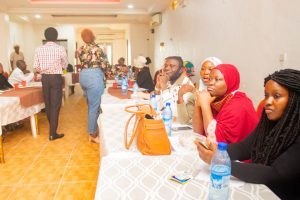
Participants with disabilities
Earlier, the Executive Director Hope Inspired Foundation for Women and Youths with Disabilities- Miss. Janet Adekunle, in her welcome remarks, stressed the need to equip women and girls with disabilities with the knowledge and tools needed to enable them face challenges they encounter in day-to-day living, particularly as it relates to expression and healthy experiences of their sexuality and sexual rights . She added that with this type of training, Nigeria will be a better country to live in if people begin to respect the sexuality and sexual rights of women in general including those of women and girls with disabilities.
She noted that knowledge is power, according to her “this training will empower the Women and Girls with Disabilities to change their approach to issues about their sexuality, and other related topics like personal hygiene, self perception, advocating for an end to sexual and gender-based violence, rape, unwanted pregnancies etc.
Recognizing the remarkable efforts of the Disability Rights Fund (DRF), Miss. Adekunle further spoke on the impact of the Disability Rights Fund on the lives of persons with disabilities. Through their Grants and support to Organizations of Persons with Disabilities (OPD), they seek to create an enabling environment that sustains growth and development in the global disability community. The HIFWYD’s project is one of a handful special projects keenly supported by DRF.
Mrs. Oluwatomisin Adeyefa – another facilitator let the participants know the dangers of having sex with just anybody, stressing that they should keep themselves far away from any unhealthy sexual experience.
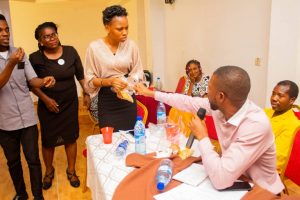
A participant demonstrating assertiveness with sign language interpreter
Adeyefa warned against sexually transmitted diseases(STDs) like gonorrhea, syphillis, candidiasis, genital warts and other sexually transmitted infections (STIs) including HIV/AIDS. According to her, what this means is that “you have to be careful of whom you have sexual relationship with”. There’s the need to protect and have control over your body, as a woman with a Disability.
She however advised those with partners to practice fidelity and faithfulness to them. If we desire healthy bodies , we must adopt healthy lifestyles” she said.
The HIFWYD Sexuality Education manual which the training was drawn from,also took participants through topics such as, personal skills, values development, self-esteem, assertiveness, decision-making and negotiation to help them in their relationship with the opposite sex, enable them build confidence and agency to advocate for themselves,make informed choices and speak up against any form of GBV which will result in an end to GBV or SGBV suffered by women and girls with disabilities . Special emphasis was placed on when to say ‘no’ or ‘yes’, and when to run for their lives where the other partner is not forthcoming or making bogus promises.
Other aspect of the training involved a study of human anatomy, the human reproduction process and functions of reproductive organs. The subject of menstruation and menstrual hygiene; maintaining personal hygiene and cleanliness were also discussed . It was agreed that women with disabilities should maintain cleanliness and avoid things that could encourage foul smells and stench, which in turn may result to people avoiding them, contributing to negative experiences in the expression of their sexuality.

Omolara Daniel besides a sign language interpreter
According to the organizers, knowledge gained from the training will help put the women with disabilities in better position as self advocates in the expression and experiences of their sexuality, sexual rights and to engage the Sexuality manual developed, to educate their peers and colleagues with Disabilities on the subjects treated. With adequate knowledge on sexuality education and sexual rights, women with Disabilities will gain agency over their bodies, be empowered to protect themselves against any form of sexual abuse or gender-based violence (SGBV/GBV), While advocating for their rights to health expression and experiences of their sexuality, which HIFWYD believes will contribute to ending all forms of SGBV/GBV they encounter in society.